Archpriest Oleksandr Fedchuk, Candidate of Historical Sciences, Candidate of Theology, Vice-rector for scientific work of the Volyn Theological Seminary
Almost 33 years ago, at the Council of the Ukrainian Orthodox Church, which took place from November 1–3, 1991, a resolution was adopted to appeal to Moscow Patriarch Alexy II and the episcopate of the Russian Orthodox Church (ROC) with a request to grant the UOC full canonical independence – autocephaly. The resolution emphasized that “granting autocephaly will contribute to the strengthening of Orthodoxy in Ukraine and the elimination of the autocephalous schism that arose, will counteract Uniate and Catholic expansion, serve reconciliation and the establishment of harmony among the currently hostile confessions, and unite all nationalities living in Ukraine, thereby contributing to the strengthening of the unity of the entire Ukrainian people.”
The Council unanimously affirmed that “the Ukrainian Orthodox Church now has all the necessary conditions for its full independent existence.” To support this, the following figures were provided: 22 dioceses, 23 episcopates, 35 millions faithful, 3 theological seminaries, 32 monasteries, and approximately 5,500 parishes. The Council also took into account the interests of the Ukrainian people and the declared independence of Ukraine, as “an independent Church in an independent state is canonically justified and historically inevitable.»
Unfortunately, subsequent events unfolded in a different direction, and at a rapid pace. There were those dissatisfied with the prospect of separating the UOC from the ROC, and several well-known bishops withdrew their support. Kyiv Metropolitan Filaret, who had been advocating for canonical autocephaly, declared it unilaterally, forming the UOC-KP (Ukrainian Orthodox Church of the Kyiv Patriarchate). As a result, by the summer of 1992, religious conflicts in western Ukraine flared up with renewed intensity. Previously peaceful and kind Ukrainians began to hate, beat up, and curse each other, forcibly seizing churches — all in the name of God and higher justice.
One of the most affected regions at that time was Volyn. Recently, the author of this text had the opportunity to familiarize himself with a statement published at the end of 1992 in the newspaper of the Volyn diocese of the UOC, *Dzvony Volyni* (Bells of Volyn), which was adopted at the diocesan assembly on October 23 of that year. In this open address, the clergy and laity of the Volyn diocese appealed to Moscow Patriarch Alexy II, asking him to expedite, as much as possible, the granting of canonical autocephaly to Ukraine, if he truly cared about the Holy Church in Ukraine and was genuinely committed to preserving Orthodoxy here. The appeal noted that after 1989, the UOC had lost about three thousand parishes in Galicia, and now this process had spread to western Ukraine.
“The seizure of our churches by the UOC-KP is rude, uncivilized, and violent,” the document stated. “In everyday life, our clergy and faithful are subjected to persecution. In Lutsk the Cathedral, diocesan offices, and seminary buildings, along with all their property, were seized by force. We are left with only one small church, and even it is under threat of seizure. We are being called ‘katsaps,’ ‘Moskals,’ and are threatened with being driven beyond the Urals.”
Those who signed the appeal expressed their belief that this process would not stop and would soon spread to other regions of Ukraine. “The only condition for preserving canonical Orthodoxy in Ukraine, the condition for ensuring that all clergy and faithful can remain members of the canonical Ukrainian Orthodox Church,” the Volyn clergy stated, “is the granting of full autocephaly to our Church. Any delay may result in there being no one left to grant autocephaly to.”
At the same time, the appeal acknowledged that certain bishops from the eastern dioceses were opposing the UOC’s autocephaly, justifying their stance with the desire to preserve the unity of the Church. However, this was rightfully dismissed: “Such views do not lead to unity, but to the deliberate destruction of both Orthodox unity and the Church itself. Did the establishment of independent Churches, including the Russian Church, tear apart Christ’s Robe and violate the unity of the Ecumenical Church?”
The Volyn clergy even suggested sending some of these bishops to western Ukraine: “Let them serve outdoors in rain and cold, wander as our bishops do—without housing, without a phone, without official transport, and live under constant threat, in a semi-legal status. We are convinced that when they see ‘the wolf coming,’ they will quickly flee back and change their opinion about the organization of the UOC.»
Unfortunately, the clergy and faithful of Volyn were not heard by the Patriarch at that time. By ignoring the above-mentioned request, he clearly had support from others within Ukraine. The question of what opponents of UOC autocephaly would have lost if it had indeed been granted had long turned rhetorical. After all, these believers would not have faced the forceful seizure of their churches, nor would anyone have humiliated them or threatened them with expulsion. Obviously, no one would have even forced them to change the language of worship, which, by the way, was also emphasized in the UOC Council’s statement in November 1991. Yet, their usual mental preferences somehow seemed more important than the tears and blood of the Church members from Right-Bank Ukraine. And one must admit that this has always been the case in our Church: any cautious discussions about autocephaly were deemed untimely because “the East is against it.”
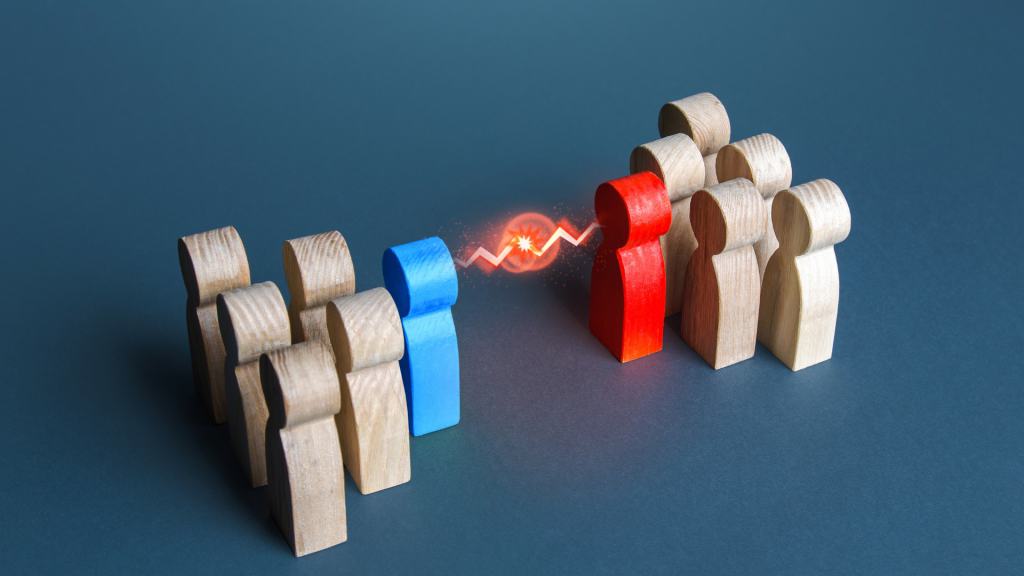
Thirty-three years ago, the UOC episcopate, justifying the appropriateness of granting autocephaly to our Church, presented statistical data, which today seems quite modest compared to current figures: the number of dioceses, seminaries, monasteries, parishes, bishops, and priests has multiplied. Yet, there is still no autocephaly. Instead, both we and our “autocephalous” brothers, in our struggle for our own version of the truth, have sown mutual hatred among the people—a kind of hatred likely unmatched among the citizens of any civilized European country (and it is painful to compare ourselves to the worst examples of tribal relations in some African countries). It’s hard to understand how low the level of awareness must be not to realize that the victors in this war between Orthodox Ukrainians could be anyone, but not the Orthodox themselves.
By refusing to fight for autocephaly, the UOC essentially ceded its right to the UOC-KP and UAOC, who eagerly seized the opportunity, and we can only congratulate them on that. Instead of drawing wise conclusions, we began searching for enemies not only within Ukrainian Orthodoxy but also in the Universal Church. All of this could have dragged on for a long time, especially since there were plenty of people frightened by the idea of “illegal” autocephaly and influenced by various “prophecies” of certain elders. But then came February 24, 2022…
I don’t intend to delve into any moral responsibility, or the position of Patriarch Kirill and the clergy of the Russian Orthodox Church (ROC) in general—this has been discussed at various levels hundreds of times and is beyond doubt. However, I want to understand why, despite all these factors, we are still “stuck.” Currently, it seems that the leadership of the UOC continues to apply a long-standing, questionable strategy, pointing towards the hypothetical “East.” The voices of those advocating not even for hypothetical autocephaly anymore, but for a complete break with the ROC, are being ignored. In fact, the Council in Feofaniya was seemingly organized for them. However, no one explains what to do with the decisions of this Council, as they are simply not being implemented. No one comments on the regular statements made by individual metropolitans, which clearly indicate the place our Church, in their opinion, holds and should hold in relation to the ROC. No one comments on the commemoration of Patriarch Kirill during services in various places.
Of course, I am far from supporting all the baseless accusations aimed at the UOC by a large part of society. I fully understand that Metropolitan Onufriy has long ceased participating in the Holy Synod of the ROC, the ROC is in no way financed by Ukrainian money, and the UOC has no administrative dependence on Patriarch Kirill. I also understand that the clergy and faithful of our Church, for the most part, sincerely support Ukraine’s victory, helping the military in any way they can, like all other Ukrainians. Our faithful, and even our priests, are dying on the frontlines. But I don’t understand why all these Orthodox Ukrainians should remain the de facto hostages of individuals whose views and beliefs they don’t share.
Sometimes, one hears the assumption that the UOC leadership is hesitant to take decisive action, trying to keep all the faithful within the common Ukrainian Church, including those currently under Russian occupation. However, this doesn’t hold up to scrutiny, as all these regions have already been brazenly subordinated to the ROC, and there will be no talk of their return to the UOC until they return under Ukraine’s control.
The only thing that seems weaker than such explanations are our attempts to convince society, or perhaps ourselves, that we are somehow more independent than the Orthodox Church of Ukraine (OCU). To be honest, I doubt the constructiveness of such “measuring contests” between the two Churches of Ukraine. Unquestionable proof of our independence is supposed to come from the production of chrism and the establishment of UOC parishes in European countries. Regarding the former, who doesn’t know that chrism was prepared in Kyiv even during the years when Ukraine was part of the Russian Empire, and the question of any independence for the Ukrainian Church wasn’t even on the table? As for the latter, this might not look so pitiful if, while hiding behind Ukrainian refugees, we didn’t forget about those who still consider themselves UOC faithful, for example, in Lviv and Ivano-Frankivsk regions.
Despite all my sympathy for the spiritual care of Ukrainians who were forced to flee the war to peaceful and calm Europe, I still believe that it is easier for them to find an Orthodox church than for the faithful in Galicia, who have been left without any parental care. Perhaps our Church leaders might want to inquire how these people are living in their native villages and towns, where they face a constant atmosphere of hatred. Sadly, while focusing on emigrants or gesturing toward the residents of annexed territories, we continue to ignore the pain of those who should be the primary object of the Church’s support.
“Delaying is dangerous. Watching as individual parishes are lost one by one, seeing how the people suffer and cry—this is unbearable. We must act and resolve the issue immediately.” These words are found in the aforementioned appeal from the participants of the 1992 Volyn diocesan assembly. This cry from the heart seems even more relevant today. Indeed, parishes are being lost one by one, but the worst part is that the people are suffering and crying. What UOC priest doesn’t know these tears? Who hasn’t heard the inexpressible pain during sincere confessions, about constant insults at work or misunderstandings at home? And what are all these sufferings for? For the sake of an unquestionable unity with the ROC? For identification with the murderers of the Ukrainian people? Is this the only truth worth holding on to? Must the poor Ukrainian find salvation for their immortal soul through such torment, such a mockery of life?
Of course, there are forces that would prefer that these questions were quickly erased from human consciousness and the existing state of affairs begins to be perceived as something self-evident and such that a priori is not open to doubt despite all the absurdity. Something like how it is no longer customary to doubt the “mothership” of the self-proclaimed Moscow Church in 1448 relative to the Kyiv Metropolis formed more than 450 years earlier, whose clergy planted Christianity in and around wild Moscow.
I really want to believe that those questions that everyone on whom the further future of the Ukrainian Orthodox Church depends on have not yet turned into a category of rhetoric: don’t they feel sorry for these little ones? those priests to whom they offer to “put up tents”; those believers whose tears have never been touched by their lips and hands. And how sincere can their care for the Church be considered if they allow themselves to declare that “everything will not be taken away”? Or to what extent do they consider themselves responsible for the salvation of those who do not wish to be in the same Church as the Russian Orthodox Church, but would like to remain Orthodox?
It is quite clear that the problem of breaking with the Russian Orthodox Church is not as easy to solve as many people believe, turning society against the Russian Orthodox Church. The lack of goodwill on the part of the ROC, the lack of unity of Ukrainian Orthodoxy and the autocephaly already granted to the OCU by the Ecumenical Patriarch, the lack of unity in the views of the faithful within the UOC itself, the lack of canonical norms for independent existence outside the autocephalous status, and now the lack of a common calendar – all these ” absences”, so insignificant for non-church people, are of great importance for believers, whether someone wants it or not. And if we add to all this the fear of a schism that threatens the Russian Orthodox Church, which has been cultivated for several decades, then one can finally form the opinion that there is currently no canonical solution to the problem. And yet it seems to me that this is not so. But there is no way to do without reconciliation and concessions.
I do not intend to go into the analysis of possible options. All of them could be considered at the All-Orthodox Council, to which our hierarchy likes to appeal (it seems that more often our respected bishops are born on this topic only with an epic opus about the fact that “autocephaly is not achieved, it is given”). Here, however, it is not clear who should be the first to be interested in convening such a Council? And why is it not initiated by the bishopric of the Ukrainian Orthodox Church, if we are so interested in it and there are no other ways out? However, there are already too many questions in this material that pretend to be rhetorical.
But no Council can take place without reconciliation. First of all, we should restore the Eucharistic unity with those with whom we broke it on our own initiative. On the other hand, it seems frankly strange from our side to say (and they are heard more than once from the mouths of various speakers of the Ukrainian Orthodox Church) that we in Ukraine exclusively have Eucharistic unity with all Local Churches. Do we no longer consider those who recognized OCU to be such? This reconciliation is necessary primarily because without an understanding with the Ecumenical Throne there can be no authoritative decision on our issue. It also seems that early understanding with world Orthodoxy will avoid harm even from the harshest actions of the Russian Orthodox Church against those who dare to depart from it.
The issue of concessions should be considered in a separate article, because there are so many complex questions that sooner or later we will have to give a frank answer to ourselves. We, in the UOC, like to ask about “impostors” among the early episcopate of the UOC-KP or UAPC, about the validity of ordinations performed by excommunicated persons, or about the right of the Ecumenical Patriarch to single-handedly reinstate. However, I have not yet heard any reasoned explanation why overcoming the schism in Bulgaria with the full acceptance of excommunicated bishops led by Metropolitan Pimen (Enev) is not the same. Or why not the sudden recognition of the Macedonian Church by the Serbs. Here, however, there are at least some attempts to explain it, for example, with a tangible difference between the decision of the All-Orthodox Council and the single act of the Ecumenical Patriarchate (a number of historical examples, one way or another connected with the actions of the Russian Orthodox Church, for some reason no one takes into account). But no one has ever even tried to explain why it was possible to recognize thousands of Uniates consecrated by Latinized bishops in 1796 or in 1946 (this is only about what is closer to us), closing their eyes not even to the schism, but to the fact that we call heresy! And cases of Catholic priests joining the ranks have also happened more than once. I will not develop this topic further. But we definitely have only two options: to seek understanding for the return of peace between Orthodox Christians to Ukraine, or to condemn the country to eternal discord, the terrible consequences of which we are reaping just a few dozen years after gaining independence.
It is difficult for me to imagine that in 2024, with the experience of all the disaster that Russia, with the blessing of its church, brought to Ukraine, we would still not be ready to insist on theses, which were substantiated by Ukrainian bishops back in 1991 or in 1992 – Volyn priests and laymen. But I fully agree that there are such people for whom spiritual and administrative unity with the Russian Orthodox Church is above all else. Well, this is their conscious choice, but personally, for me, the tears of the burnt wife, mother or child of a Ukrainian soldier killed by the Russians are much more important than the mental comfort of these people. How important is the despair of those who were unfairly labeled as sellers because of these champions of the “three-united Russia”.
Therefore, I believe that it is time for everyone to be responsible for their own choices and their own position. If there are people in Ukraine who want to remain united with the Russian Orthodox Church and are ready to defend it, let such people finally formalize their relations with Moscow in an appropriate way and not hide behind those who love Ukraine and who want to feel like a free citizen in it, who has the full right to go to one’s native church without unfair insults and accusations against oneself. All such members of the Church have long matured to the complete independence of the UOC, the historical prerequisites of which are multiplied a hundredfold by the actions of Russia and the behavior of the Russian Orthodox Church.
In the end, I want to emphasize that I am far from naively thinking that the reflections I have proposed can have at least some influence on the formation of a position within the Church. There is nothing new and original here, or anything that could ignite other hearts. But this is my duty to my own conscience, which does not allow me to silently observe how our Church is dying in this crucial time for Ukraine. I call on other representatives of the Ukrainian Orthodox Church, who share the theses expressed by me, not to remain silent, because even those who create a negative image of the Ukrainian Orthodox Church with their statements, who continue to tie it to the Russian Orthodox Church, are not going to remain silent. Let’s be braver and not take responsibility for what is happening in our Church.