
Introduction
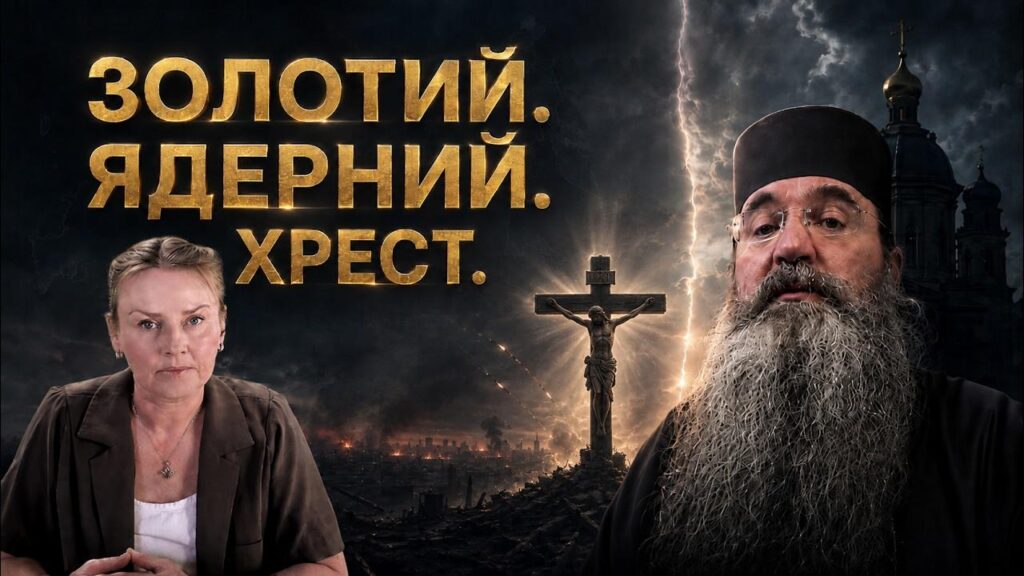
In recent years, assertions about Russia’s special divine calling, its supposedly sacred imperial status, and its unique historical mission have become increasingly common in Russian ecclesiastical and para-ecclesiastical circles. Such views are expressed not only by politicians but also by certain Orthodox publicists and bloggers, including Pavel Grammatik.
This article offers a theological and historical-ecclesiological reflection on these claims, particularly the insistence that Ukrainians should submit to the “Caesar” and accept his authority as divinely ordained in a sacred sense. Such an understanding requires critical examination in the light of Holy Scripture, Church Tradition, and the history of states.
Are There Any “God-Ordained Empires”?
Holy Scripture teaches that all authority is permitted by God (Romans 13:1). However, this does not mean that every state or form of government possesses a special sacred status or an eternal divine mandate.
In the Bible, we encounter the Assyrian, Babylonian, Persian, Greek, and Roman Empires. All of them existed by God’s providential permission, yet none was proclaimed the eternal bearer of divine truth. The Book of Daniel depicts the successive rise and fall of mighty kingdoms according to God’s plan.
Moreover, in Daniel’s prophecy (Daniel 2), the image of the great statue, symbolizing successive earthly empires, is shattered by a stone cut out without human hands. This stone becomes a great mountain and fills the whole earth. In the patristic tradition, this image is understood as a sign that all human empires, founded upon violence and despotism, are temporary and must eventually disappear, giving way to the eternal Kingdom of God.
The only eternal Kingdom is the Kingdom of God, not any earthly empire.
Byzantium and the Problem of Sacralizing the State
Supporters of imperial messianism often appeal to Byzantium. Yet even Byzantium was not a necessary condition for the existence of the Church. After the fall of Constantinople in 1453, the Church did not cease to exist. This demonstrates that no empire is indispensable to the Church’s saving mission.
In Christian tradition, the state is understood as an instrument of order, not as a bearer of salvation.
The Heresy of Ethnophyletism
The Council of Constantinople of 1872 condemned ethnophyletism—the subordination of the Church to national or political identity.
Any idea of a “chosen nation” or a “sacred state” shifts the center of the Church from Christ to a political community. The Church is universal: “There is neither Jew nor Greek” (Galatians 3:28).
“Moscow — The Third Rome”: Historical Myth or Dogma?
The concept of “Moscow as the Third Rome” emerged after the fall of Constantinople and is associated with the monk Philotheus, who wrote: “Two Romes have fallen, the third stands, and there will be no fourth.”
However, this is not a dogma of the Church. It was never approved by an Ecumenical Council and does not belong to the patristic Tradition as a binding doctrine. Rather, it is a historical and political idea of the Muscovite state in the fifteenth and sixteenth centuries, which later became an ideological foundation for imperial messianism.
The Church existed before Moscow, continued after Rome and Constantinople, and is not dependent on any state. Therefore, identifying Orthodoxy with Moscow’s political mission is an ideology, not theology.
Why Should Ukrainians Obey a “Foreign Caesar”?
If one accepts the logic of those who advocate a special Russian imperial mission, an obvious question arises: why should Ukrainians submit to the ruler of another state?
Following the declaration of independence on August 24, 1991, and the national referendum of December 1, 1991, Ukraine became a sovereign state. Even earlier, Russia had proclaimed its own sovereignty on June 12, 1990. In December 1991, Russia, Ukraine, and Belarus signed the Belavezha Accords, formally dissolving the Soviet Union and mutually recognizing each other’s independence.
Thus, modern Russian statehood is based on the same principle of sovereignty as Ukrainian statehood.
The Apostle Paul’s teaching on obedience to authority (Romans 13:1–7) refers to one’s own legitimate civil authority, not to the rulers of foreign countries.
Symphony Between Church and State or Imperial Sacralization?
In the Byzantine understanding, symphonia meant cooperation between Church and state for the sake of justice, not the sanctification of political power.
However, the history of contemporary Russia—the wars in Chechnya, the aggression against Georgia (2008), the annexation of Crimea and the war in Donbas (2014), the full-scale invasion of Ukraine (2022), and military involvement in Syria—raises serious questions about the extent to which this state corresponds to the ideal of a Christian polity.
Christianity and Political Messianism
Jesus Christ clearly declared: “My kingdom is not of this world” (John 18:36).
Any attempt to identify a state with the Kingdom of God is a theological error that replaces the Gospel with political ideology.
“Babylon” and the “Beast” in Light of Imperial Ideology
The Book of Revelation speaks of “Babylon the Great” (Revelation 17–18) as a symbol of a proud political system ruling over nations, and of the “Beast” (Revelation 13) as an image of a power demanding absolute obedience.
For ethical and theological reasons, we do not identify any contemporary state with these images. Such judgments belong to God and to history.
Nevertheless, an ideology that grants the state a sacred status, justifies violence through a “higher mission,” and demands spiritual loyalty to political authority bears an obvious structural resemblance to the spiritual temptations against which the Book of Revelation warns.
The danger lies not only in political practice but also in attempts to provide theological justification for imperial claims. When an earthly kingdom begins to be perceived as the bearer of God’s will, the Church is effectively replaced by the state.
Conclusions
The claim that Russia is a “God-ordained empire” lacks sufficient biblical, patristic, and canonical foundation.
The Church of Christ is not bound to any empire or state. It has existed, exists, and will continue to exist independently of political systems.
Christians are called to seek first the Kingdom of God, not the sacralization of earthly empires. For this reason, all imperial ideologies must be evaluated through the lens of the Gospel and the universal experience of the Church.
The only absolute Lord of the Church is Christ. All earthly kingdoms, regardless of their power, remain temporary realities of history and are subject to God’s judgment, just as Assyria, Babylon, Persia, Rome, and every other empire of the past were.