Archpriest Vitalii Kuzmych, Orthodox Church of Ukraine (OCU), Sofia Brotherhood
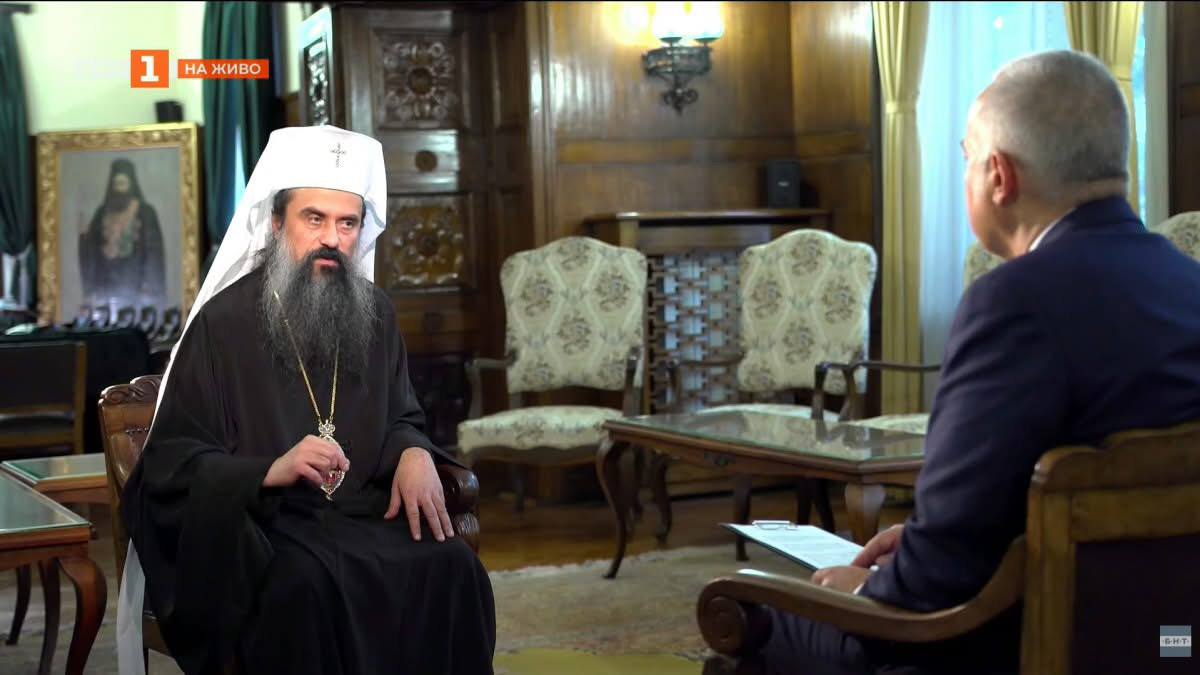
Recently, Patriarch Daniil of the Bulgarian Orthodox Church once again expressed doubts regarding the canonical status of the Orthodox Church of Ukraine. One of his principal arguments was the assertion that the majority of the Local Orthodox Churches have still not recognized the OCU and that, therefore, the Tomos granting its autocephaly is allegedly open to question 1.
At first glance, this argument may seem convincing. However, let us not rush to conclusions. First of all, we should answer a simple question: does the canonicity of a Local Church really depend on how many other Churches recognize it?
I am convinced that it does not, because the canonical status of a Church does not arise as a consequence of the general agreement of other Local Churches. It is established through a lawful decision of the ecclesiastical authority to which the sacred canons grant the relevant competence. If this were not the case, we would have to conclude that every newly autocephalous Church remained “non-canonical” for a certain period after receiving autocephaly until all the others recognized it. Yet the Orthodox Church has never known such a teaching.
Recognition, therefore, does not create canonicity; recognition merely bears witness to the fullness of Eucharistic communion among the sister Churches. It is not a juridical act that “legalizes” the existence of a Church, but rather a testimony that it has been received into the full communion of the Local Orthodox Churches.
A telling example is what happened after the Tomos was granted to the Orthodox Church of Ukraine in 2019. The Russian Orthodox Church unilaterally severed Eucharistic communion with the Ecumenical Patriarchate 2, and subsequently with those Local Churches that recognized the OCU. This naturally raises the following question: did the Ecumenical Patriarchate cease to be the Church as a result? Did the Russian Orthodox Church lose its canonical status? Did the canonical status of, for example, the Bulgarian Orthodox Church change because it preserved Eucharistic communion both with the Ecumenical Throne and with the Russian Orthodox Church? Clearly, the answer is no.
As one wise bishop aptly remarked – although, unfortunately, I do not remember his name—people may build high walls between themselves, but, thanks be to God, those walls do not reach Heaven.
Therefore, the non-recognition of the Orthodox Church of Ukraine by certain Local Churches cannot, in itself, constitute evidence of its non-canonicity. It merely demonstrates that the wound of ecclesiastical division has not yet healed. This is a problem affecting the fullness of the Orthodox Church as a whole, not merely the Orthodox Church of Ukraine.
If there are no doctrinal differences whatsoever between the Orthodox Church of Ukraine and the other Local Orthodox Churches, then the entire discussion naturally shifts into the canonical sphere. Specifically, the question becomes: Did the Ecumenical Patriarch possess the canonical authority to receive the appeals of the Ukrainian hierarchs, revoke the validity of the 1686 Letter of Issue 3, and grant the Tomos of autocephaly?
In my view, this is the key question. For more than seven centuries, the Metropolis of Kyiv belonged to the Ecumenical Patriarchate of Constantinople. In 1686, taking into account particular historical circumstances, the Ecumenical Patriarch granted the Patriarch of Moscow the right to ordain the Metropolitan of Kyiv 4. However, this letter did not constitute a complete transfer of the Metropolis of Kyiv to the jurisdiction of Moscow. It contained explicit conditions, the most important of which was the obligatory commemoration of the Ecumenical Patriarch as the First Hierarch. This very condition demonstrated that Constantinople had not relinquished its canonical rights over the Metropolis of Kyiv.
It is no coincidence that the distinguished canonist Metropolitan Grigorios Papathomas emphasizes that Canon 28 of the Fourth Ecumenical Council 5 defines the special prerogatives of the See of Constantinople, including the authority to exercise its ministry wherever the good of the Church requires it. For this reason, the decision of the Ecumenical Patriarchate in 2018 was not an arbitrary intervention into “someone else’s canonical territory,” but rather the exercise of those canonical rights which, according to Constantinople itself, had never been definitively relinquished.
Equally important in this context is the right of appeal. Canons 9 6 and 17 7 of the Fourth Ecumenical Council grant the See of Constantinople the authority to hear appeals submitted by bishops and clergy. It was precisely this right that was exercised by the hierarchs of the former Ukrainian Autocephalous Orthodox Church (UAOC) and the Ukrainian Orthodox Church–Kyiv Patriarchate (UOC-KP).
Having examined their appeals, the Ecumenical Patriarchate lifted the canonical penalties that had been imposed upon them, restored them to their episcopal rank, convened the Unification Council, and, following its conclusion, issued the Tomos of Autocephaly for the Orthodox Church of Ukraine 8. Opponents may debate particular aspects of this decision. They may interpret historical documents or the sacred canons differently. Nevertheless, they must acknowledge that the Tomos was issued on the basis of the canonical prerogatives of the Ecumenical Throne. The decision of the Ecumenical Patriarchate is supported by a coherent canonical argument grounded both in the canons of the Ecumenical Councils and in the centuries-old practice of the Orthodox Church.
It is precisely for this reason that, when Patriarch Daniil questions the canonicity of the Orthodox Church of Ukraine solely because it has not yet been recognized by the majority of the Local Churches, he effectively substitutes the concept of canonicity with that of recognition.
Orthodox ecclesiology has never taught that a Church becomes canonical only after it is recognized by the majority. Truth is not determined by a majority vote. Otherwise, we would have to reinterpret the history of many Local Churches, which likewise passed through lengthy periods before achieving universal recognition.
The real question is not how many Churches have already recognized the Orthodox Church of Ukraine. The real question is whether the Ecumenical Patriarch possessed the canonical authority to do what he did.
In my conviction, this is the context in which an honest theological discussion ought to take place. For the canons were given to the Church not in order to deepen divisions, but to heal them. It was precisely with this purpose that the Mother Church of Constantinople intervened in the Ukrainian ecclesiastical crisis, seeking to restore millions of Orthodox Ukrainians to full ecclesial communion.
And if we truly believe in the One, Holy, Catholic, and Apostolic Church 9, then we must seek not new reasons for mutual estrangement, but ways to restore the unity for which Christ Himself prayed.
- Interview of Patriarch Daniil of Bulgaria on the programme “Vapros na Myara” hosted by Parvan Simeonov: https://www.youtube.com/watch?v=TQQz55NKiP8[↩]
- On 15 October 2018, the Holy Synod of the Russian Orthodox Church decided to sever Eucharistic communion with the Ecumenical Patriarchate. The reason given was the Ecumenical Patriarch’s intention to grant autocephaly to the Church in Ukraine and his decision to revoke the legal force of the historic 1686 Letter concerning the transfer of the Metropolis of Kyiv.[↩]
- On 11 October 2018, the Holy Synod of the Ecumenical Patriarchate annulled the legal force of the 1686 Letter, accepted the appeals of Filaret Denysenko and Makarii Maletych, restored them to the episcopal office, and announced the beginning of the process of granting autocephaly to the Church in Ukraine.[↩]
- The Letter of Ecumenical Patriarch Dionysios IV (1686) authorized the Patriarch of Moscow to ordain the Metropolitan of Kyiv, while preserving the obligation that the Ecumenical Patriarch should be commemorated first in the Divine Liturgy. This demonstrated the special canonical status of the Metropolis of Kyiv.[↩]
- Canon 28 of the Fourth Ecumenical Council granted the See of Constantinople equal privileges with Old Rome and defined its special canonical prerogatives regarding Churches situated beyond the jurisdiction of the other Local Churches.[↩]
- Canon 9 of the Fourth Ecumenical Council: “If any cleric has a dispute with his own bishop or with another bishop, let him appeal either to the Exarch of the Diocese or to the Throne of the Imperial City of Constantinople.”[↩]
- Canon 17 of the Fourth Ecumenical Council confirms the right of the See of Constantinople to hear appeals in ecclesiastical cases.[↩]
- The Tomos of Autocephaly of the Orthodox Church of Ukraine was solemnly signed by Ecumenical Patriarch Bartholomew on 5 January 2019 and presented to Metropolitan Epiphaniy on 6 January 2019.[↩]
- The Nicene-Constantinopolitan Creed professes faith in the “One, Holy, Catholic, and Apostolic Church,” emphasizing that ecclesial unity is fundamentally Eucharistic in nature rather than dependent upon administrative or political recognition.[↩]