
By Hennadii Khrystokin and Vasyl Lozovytskyi
Hennadii Khrystokin, Doctor of Philosophical Sciences, Professor at the Department of Advertising and Public Relations of National Aviation University, Kyiv, Ukraine; graduated from the doctoral program of the National Pedagogical Drahomanov University; author of the monograph “Methodology of Orthodox theology in its paradigmatic transformations”
Vasyl Lozovytskyi, candidate of theological sciences, Associate Professor, Head of the Department of Holy Scripture and Theology of Volyn Orthodox Theological Academy, Lutsk, Ukraine
Introduction
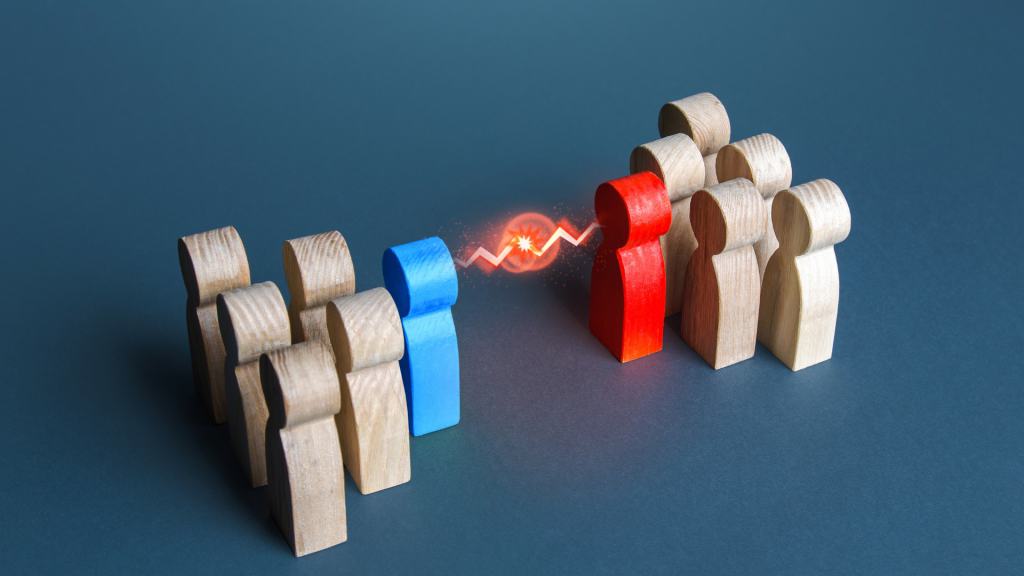
After 24 February 2022, Ukrainian society found itself in a new political reality provoked by russian aggression. Against the backdrop of a cohesive society united in opposition to russia, we are witnessing a significant increase in confrontation between Orthodox denominations in Ukraine, the use of rhetoric and actions that lead to heightened tensions. The Ukrainian Orthodox Church (UOC) and the Orthodox Church of Ukraine (OCU) “are currently in a state of confrontation.”1 The confrontation is particularly acute in the media, whose influence on Ukrainian society is crucial. The explanations given in the media for the conflict between the Orthodox denominations are largely self-evident. Among the reasons for the conflict between the UOC and the OCU are, on the one hand, that the UOC is a “Moscow church”, that it “acts in the interests of the Kremlin”, that it “does not want to officially break relations with the ROC”, that “the process of reconciliation and unification of the churches is hindered by the position of Metropolitan Onufriy and the bishops”. Similarly, on the other hand, there are accusations that there is “persecution of the Church in Ukraine”, that the OCU is interested in “political pressure on the UOC”, which is “non-canonical” and “not a Church at all”. We do not set ourselves the task of finding out the truth/falseness of these statements, we do not try to assess the activities of Orthodox confessions from the point of view of their compliance with state and national interests, this is the subject of a separate study, we only note that the positions of the UOC and the OCU are narrative and should be analysed as a conflict of narratives. Do Orthodox confessions and researchers have the necessary language and tools to critically analyse the conflict of Orthodox narratives?
In our opinion, Orthodox confessions assume that they are able to correctly explain the crisis situation on the basis of a religious understanding of politics, history and the present. In fact, Orthodoxy does not have such a uniquely correct understanding of history, the main problems of the present and a vision of the future. There is no theological discourse or political language in Orthodoxy that would allow conflicts to be avoided and solutions to be agreed. Each confession develops its own language and explanations, which are disseminated in the public space. Finding a way out of the Ukrainian church crisis is an important task for society, the state, the world and Ukrainian Orthodoxy, but it is also a challenge for the expert community, which should propose a methodology for studying narrative conflicts. Does such a methodology exist in the Ukrainian public and academic space?
Historiography
Existing publications on the Ukrainian Church can be divided into narrative, narrative-analytical and analytical-reflective. The advocates of the narrative approach use a binary discourse in which logic operates – “either, or”, “either Moscow or Ukrainian”, “either canonical or non-canonical”, “either ours or someone else’s”, etc. In the media it is easy to find numerous publications by experts and church commentators who use binary discourse to assess historical and contemporary events. This approach is not always wrong; it makes sense in the media in the context of the struggle against the ideologies of the Kremlin and the russian Orthodox Church in Ukraine2. Representatives of the scientific community in popular and professional publications and speeches study the religious and political situation in Ukraine, deconstructing the narratives of the “russian world” with more complex analytical tools, although their analyses are based on a clear narrative foundation3. Such a narrative-analytical approach is quite understandable and justified in times of war, and it aims to actively resist russian aggression and form alternative Ukrainian narratives. However, this important approach needs to be significantly complemented by an approach that does not offer binary tools for analysing the situation, but a reflexive and analytical methodology for studying religious conflicts. An attempt to apply N. T. Wright’s five-act narrative methodology to the analysis of the historical myths of Christianity seems interesting4. In particular, Y. Chornomorets, analysing Orthodox narratives, describes the narrative of the UOC as follows “The traditional narrative of the Ukrainian Orthodox Church in unity with the Moscow Patriarchate was a story about the following drama: 1) the Orthodox Church in Ukraine should be the only one, the dominant one, uniting all believers in the Orthodox faith, being a peacemaker for society and a healer of political nationalism in the religious sphere; 2) the drama of the “fall” is the division of the Church and political discord in Ukraine; 3) the UOC has repeatedly called on the schismatics to negotiate and the politicians to agree; 4) the UOC is now being persecuted by politicians at the local and central levels, by “schismatics” and their supporters; 5) the suffering of the UOC will end in an eschatological triumph when the schismatics return to the bosom of the Church, abandoning nationalist and secular thinking in favour of the Church’s way of thinking and acting.”5
The author presents the history of the OCU (UOC-KP) in a completely different way: “The traditional narrative of the UOC-KP concerned the history of the formation of the local Orthodox Church in Ukraine. According to this narrative, the Kyiv Metropolis was de facto independent and Ukraine has the right to its own autocephalous church in an independent state (Act 1). This natural development is obstructed by russia and the moscow Patriarchate (Act 2). The establishment of the Kyiv Patriarchate in 1992 lays the foundation for the normal development of Kyiv Orthodoxy (Act 3). The unification of all Ukrainian Orthodox in the Kyiv Patriarchate will become possible after the UOC-MP loses political support and when society will know the whole truth about russian Orthodoxy (Act 4). The unity of Ukrainian Orthodoxy will ensure the stable development of Ukraine and its entry into Europe (Act 5).”6
We fully agree with this approach, and in general we share and will use this description of narratives, but in addition to Wright’s methodology we will apply other methods of narratology and discourse analysis to the analysis of the narratives of the Orthodox confessions of Ukraine. In our previous studies we have attempted to conduct an impartial reflexive analysis of the discourses of the actors of the church crisis in Ukraine, critically analysing the problem of reforming Orthodoxy and the importance of creating a theology of renewal7.
The task
Our starting point is that the inter-Orthodox conflict in Ukraine should be seen as a conflict of power narratives, a clash of identities of confessions that have certain political and institutional interests. We want not only to confirm the existence of the political interests of the Orthodox confessions, but also to show how this conflict arises from the conflict of their narratives. It is important for us to understand how the political language of the religious community works and how it reacts to encounters with opponents. Which narratives exist in the Orthodox environment, which are conflicting and which are unifying? What are the political and institutional interests behind certain narratives, and how do they generate conflict? What are the prospects for conflict resolution? What methodological tools should be used to find an adequate discourse for analyzing and resolving the situation?
The methodological tools of the study
After the linguistic turn of the second half of the twentieth century, the understanding of the problems of religion, and Orthodoxy in particular, is the understanding of the problems of religious language (discourse). Theological (dogmatic, hermeneutical, historical) themes and questions should be understood in the framework of language problems. Also methodologically important for the analysis of social processes is the “narrative turn” in the culture of the late twentieth century. The narrative is based on the structure of history, events unfolding as a historical drama with structure and logic and with clear judgments. Narratives impose simple explanations, push for quick decisions, require faith and strong beliefs, and avoid criticism and analysis. The analysis of narrative consciousness shows that its explanations are self-evident; for its bearer, his beliefs correspond to reality, which he seems to know deeply and to understand adequately8. The carrier of the narrative perceives the events of our time as the continuation of a certain imaginary history and assesses the situation through a narrative frame, a set of beliefs that define his or her identity. This is also true of religion, which is deeply rooted in history through its own narrative – the message that reality is part of a sacred myth. Global political or local events for religious consciousness are part of its sacred tradition, church doctrine and self-narrative.
Our approach emphasises the distinction between analytical (critical) and narrative (ideological, dogmatic) discourses as two alternative representations of reality. Analytical discourse aims to understand and describe reality and is organised according to the type of “understanding of reality”. Narrative discourse aims at “interpreting reality”. It forms a world view of reality according to the interests of social groups (structures) that have a certain discursive power. In our opinion, the problem of church conflict cannot be adequately analysed through narrative discourses (political, theological). The narrative and analytical tools that are used by researchers to analyse the causes of the conflict are important, but they are also insufficient. In our opinion, there is a need for an analytical and reflexive methodology that allows us to make the main narratives of the participants in the church conflict, as well as the tools of their study, the subject of research. The discourses of the actors in the church conflict in Ukraine have already been analysed using this approach9. Now we need to reveal the structure of the religious discourse of the Orthodox confessions, to show the narratives of the UOC and the OCU, to show on which “horizontal” and “vertical” levels the conflicts arise and how a dialogue between them is possible.
Characteristics of the organization of the structure of religious discourse
In our opinion, Orthodox discourse has a rather complex socio-political structure: as an ideal religious community – the Church; as a real religious community – the parish; as an organization of the Church – the structures of Church authority; as a civil and political community. The discourse of the church as an ideal community is found in the gospels – it is a horizontal discourse of love, mutuality and communication. The Gospels do not know and do not contain the discourse of power of church structures. The discourse of church structure (jurisdiction) is a vertical discourse of church authority that preserves the rules and customs of tradition and produces and broadcasts modern power narratives of church organization. The discourse of the community (congregation) is a horizontal discourse that transmits and combines gospel narratives and power decisions and represents relationships in the community. Finally, there is the horizontal civil and political discourse, which expresses the social ideals of the denomination, shaped by the cultural environment and the dominant political theology. In general, in the Orthodox socio-political discourse, a believer (community) simultaneously identifies itself as a member of a certain ideal religious community and a bearer of its values and norms (the Church of Christ); as a representative of the local community (parish, congregation); refers to a certain church structure (jurisdiction); identifies itself with a certain ideal imaginary social group (ethnic, national, cultural), and finally correlates itself with the actual state. Therefore, it is important to identify the basic narrative frameworks of the identities of the UOC and the OCU and to find out the causes of conflict between them. Each confession builds its own narrative framework in which it reconciles all these types of discourses.
Orthodox rhetoric can be recognized when it coincides with the cultural language of a society of a certain time and implies certain values and meanings prepared by the society. The range of cultural, historical, political and economic discourses of a society determines the external context in which the internal religious discourse is manifested and actualized. At the same time, a denomination’s discourse is always an extrapolation of and an influence on public rhetoric, cultural context, and political reality.
Structural analysis of the discourses of the official structures of the UOC and the OCU
If we compare the socio-political discourse of the UOC and the OCU in the aspects we have identified, we will see that there is no conflict between the Ukrainian jurisdictions at the level of evangelical ideals, doctrine, conciliar tradition and church rituals. They have the same basic soteriological narratives. The difference between denominational discourses begins to manifest at the level of sermons, and this is due not only to the (non-)use of Ukrainian in preaching and worship, but also to the emphasis priests place when addressing the people. Covertly or overtly, the theme of war is present in both denominations. Now, not only direct speech, but also silence about the war has a political flavor.
The differences between the narratives of the UOC and the OCU on the judicial level are fundamental. They are generated, to some extent, by the conflict of interests of the structures and the different histories of their formation. Both recognize the importance of canonical norms, but have different interpretations of their application. In short, the UOC does not recognize the OCU as a canonical church. The resolution of the UOC Council of 27 May 2022 states that in order to begin a dialogue, the OCU must “resolve the issue of the canonicity of the OCU hierarchy, because for the Ukrainian Orthodox Church, as well as for most local Orthodox Churches, it is quite obvious that in order to recognize the canonicity of the OCU hierarchy, it is necessary to restore the apostolic succession of its bishops”10. This means that the UOC does not recognize the OCU as a church and deprives it of the right of church subjectivity. The proclamation of the “non-canonicality” of the OCU hierarchy (despite the reception of the Tomos) hides a power component – the refusal to engage in dialogue on an equal level. For its part, the OCU considers the UOC “part of the ROC” and denies it “independence” – to become autocephalous, the UOC must join the OCU. In this way, the OCU seeks to politically delegitimize the UOC. In other words, the conflict between the UOC and the OCU revolves around the question of legitimacy – the right to sacred authority.
To justify its right to power, the OCU assumes that the Ukrainian Church should not derive legitimacy from the “imperial structure” of the russian Orthodox Church. The only source of legitimacy is the Ecumenical Patriarchate, which has the right to grant autocephaly. While the UOC is in a different situation, since it received its legitimacy from the ROC, it does not need to be confirmed by the Phanar. The proclaimed “independence” from the russian Orthodox Church in 2022 seems to only strengthen this legitimacy. Such conflicting visions of how to obtain canonical status are the result not only of the lack of an agreed procedure for obtaining autocephaly in the worldOrthodoxy, but also of the polar narratives of the UOC and the OCU.
The basis for the difference in the narratives of the two confessions is a different combination of canonical and national factors. For the OCU, the national aspect is part of its canonical legitimacy – to be legitimate, the church must position itself as national. For the OCU, a church can be legitimate if: 1) it has no relations with the ROC; 2) it criticizes russia’s armed aggression; 3) it has received the Tomos of autocephaly from the Ecumenical Patriarchate; 4) it identifies itself as Ukrainian. In contrast, the national factor does not play an important role for the UOC – a legitimate church is one that: 1) derives its right from the “Mother Church” (legalized by the ROC); 2) cannot break ties with the ROC, even in the face of war and aggression by the Russian Federation; 3) cannot proclaim its own autocephaly, but cannot ask for it from the VP (in order not to question the existing legitimacy); 4) nominally identifies itself as Ukrainian. These two alternative versions of legitimation narratives, which have historical precedents in canon law, have clashed in Ukraine mainly for political reasons. In fact, each of them has received its status in a legal way, and it is worth recognizing the de facto equality of the two structures, but the ambitions of the authorities do not allow this.
The conflict of narratives is exacerbated by political and ideological reasons. The basic political narrative of the OCU is that Ukrainians are a separate “church body” formed in opposition to the “imperial church”, an independent political nation formed by separation from the “russian/soviet people”, and an independent state opposed to the Russian imperial state. While the basic political myth of the UOC is different – Ukrainians are “one Orthodox people with russians and Belarusians”, who historically and mystically constitute “one church”. The military conflict is not between peoples, but between the political authorities of states. Admittedly, in addition to this official narrative, other versions of political narratives can be found in the UOC, including those more favorable to autocephaly or unification with the OCU, but they remain on the margins. As we can see, it is the symbolic conflict between two opposing ecclesiological and political images of the world that makes the situation irreconcilable.
A particularly destructive role in the Ukrainian situation is played by the church-political ideology of the “russian world,” around which the narratives of the confessions clash. This political myth speaks a clear language to those for whom “rus”, “russia”, “russian culture”, “russian Orthodoxy” are close to the narratives of “one church”, “one people”, “one fatherland”. The ideology of the “russian world” was conceived as an ideological affirmation of a single cultural and spiritual community of people living in all post-Soviet countries. And then this initially marginalized ideology of the russian Orthodox Church gradually became the official ideology of the Kremlin. This political mythology was born out of the cultural and political context of the Russian Federation, and when this mythology began to be spread outside the Russian Federation, it turned out that it was not recognized by the citizens of other countries as their own, even if these citizens were Orthodox. This is because the “russian world ideology has nothing to say about the national culture of other countries, nothing about their political and cultural customs, nothing about Christ, but a lot about the cultural context of the russian-soviet world, which after the collapse of the USSR stopped being relevant outside the Russian Federation.
The doctrine of the “russian world” has been sharply criticized in the OCU and in Ukrainian society. Although it is not officially recognized in the UOC and has many opponents, it has many supporters among bishops and laity. How did this happen? For some time, especially at the beginning of Ukrainian independence, the discourse of the UOC was in line with the post-Soviet narratives of Ukrainian society. However, after the Maidans of 2004 and 2014, the political narrative of the UOC gradually began to contradict the public discourse of the Ukrainian state and the narratives of society. This is precisely the case when the discourse of the UOC ceased to correspond to the civil and state-political context of Ukraine. In the last twenty years, especially after the annexation of Crimea and the war in Donbass, Ukrainian society has been actively moving towards Europe, while the UOC continued to focus on the narratives of the “unity of fraternal peoples”, which society no longer understands. Thus, citizens lost the semantic key to the UOC’s preaching, as it spoke a language they did not understand. The discourse of the OCU, on the other hand, was fully in line with national demands for independence from Moscow. Therefore, the UOC and the OCU adopted different national and political bases for their legitimacy, which became the basis of their conflict.
Finally, the UOC and the OCU have become hostages to other factors of a psychological, cultural, spiritual and image nature. Over the last 30 years, the two confessions have developed a strong psychological aversion to each other. The UOC has created a kind of anti-brand of the OCU (UOC-KP) as “schismatics”. And this image has become so deeply rooted in the minds of its supporters and has become part of the image of the UOC that it is no longer able to change or abandon it. Likewise, the OCU has made great efforts to create the image of the UOC as “Moscow”, which it is unable to overcome. Although these structures are quite similar in terms of their management style. As we can see, the narrative frameworks of the UOC and the OCU are different, which leads to a conflict of narratives at different levels of church discourse. Even more deeply rooted in each confession is the conflict between the evangelical narratives on the one hand and the political narratives on the other. This is the main crisis, but both confessions do not pay attention to it.
Conflict of authority narratives of the subjects of the Orthodox crisis in Ukraine
The media often present a position that identifies the entire UOC with the “moscow church”11. In fact, the UOC is a complex and rather diverse entity with several alternative narratives. It coexists with the narrative of “Ukrainian independence” and the ideology of the “russian world”. Is it possible to explain the actions and rhetoric of the UOC only in terms of its dependence on the ROC? We recognize the fact of such dependence, which is greatly reinforced by the strong corporate solidarity of the UOC structures, the fear of losing the sources of sacred power (“grace”), multiplied by the belief in the canonicity (“truth”) of their corporation. According to the supporters of the UOC, the combination of these factors makes the existence of their confession “special”, “sacred”, different from the “non-canonical” existence of its competitors. The fear of losing its sacred privileges, its corporate and discursive power over society and the truth, and even deeper, the fear of destroying the integrity of the ecclesiastical structure and the fear of change and modernization, is the main motivation of the UOC. The component of dependence on the structures and ideology of the russian Orthodox Church is an additional one. In order to preserve its symbolic power (“sacredness”) and structure (“canonicity”), and to avoid change and renewal, the UOC proclaims its “independence” from the ROC and at the same time continues to avoid breaking relations with it. The concealment of the connection to the ROC is evidence not so much of real administrative dependence (in fact, the UOC makes all decisions independently) as of a dubious belief that the connection to the source of higher sacred power (“grace”) is through the ROC.
This is also the reason why the OCU is not recognized as a canonical church. The granting of the Tomos to the OCU and the possibility of unification is a direct threat to the loss of the sacred power of the UOC and the destruction of the foundations of its ecclesiastical and political theology. The UOC leadership perceives dialogue and reconciliation with the OCU as humiliation and loss of image. To agree to an association of equals means for the UOC the risk of losing its legitimacy. There is no question of unity in Christ; the UOC leadership is the guardian of its jurisdiction, discursive power and material interests, which it does not want to share with the OCU. The UOC would rather imitate the condition of a victim of “persecution” than recognize the canonicity of the OCU.
Then why the public positioning as “independent” from the ROC, why the statements about “persecution”? This is a complicated game – with the Ukrainian state, not to be banned; with the Ukrainian society, to demonstrate the breakdown of relations with the aggressor; with the international community, to demonstrate “persecution”; with the ROC, not to frighten them with autocephaly. But in reality it is to preserve the integrity of the church structure, sacred power, property, and to prevent the threat of unification with the OCU. It is known that the russian Orthodox Church did not like the declaration of “independence” of the UOC, but the appeal to international structures and church organizations about “persecution” in Ukraine: allows the ROC to retain the status of “Mother Church”; is a factor of symbolic binding of the UOC; a game in front of its own electorate and the Kremlin; a reminder to the universal Orthodoxy that the ROC will never let go of the UOC.
What is the OCU’s policy here? It wants to weaken the legitimacy of the UOC as much as possible, to destroy its symbolic power, to show that after receiving the Tomos, the OCU has a legitimate right to equality in the system of the Ecumenical Church and to symbolic power in Ukraine. The OCU is trying to force the UOC to enter into a public dialogue of equality, to officially break relations with the ROC, and to bring the ecclesiastical issue into the canonical mainstream of Constantinople. In this scenario, the UOC would have to enter into dialogue with the Ecumenical Patriarch and join the OCU or lose its legitimacy. At the same time, the political “neutrality” of the UOC and its hidden ties to the ROC would only confirm its lack of loyalty to the government and its lack of patriotism.
The state must unite the two jurisdictions into a single Ukrainian Local Church, or show the intention to do so, in order to unite the people and demonstrate a symbolic victory over Russia. Therefore, the state cannot afford to liquidate the UOC, as this would be a sign of repression. In fact, the government is interested in direct and quick negotiations between the two structures and their unification. But it cannot force them to do so, because it must take into account both the right of the denomination to exist freely and the interests of national security, which compel it to ban a religious organization linked to the aggressor country. And the UOC can avoid dialogue by using the constitutional rights guaranteed to it, which allows the UOC to proclaim its right to independence from the state, but in reality to defend its corporate interests. Therefore, the unification of the confessions is only possible with the cooperation of all parties.
Narratives that unite and divide the Orthodox in Ukraine
The clash of Orthodox narratives contains the hidden causes of jurisdictional conflicts. Peace/conflict between church structures is the degree of (un)acceptance, (un)coherence of narratives, and discursive power of religious actors. Conflict arises when symbolic meanings are disagreed upon, when narratives clash, or when parties cease to respect the sacredness of others. Are there narratives around which the unification of Ukrainian Orthodox confessions is possible? And which narratives slow this process down?
The analysis conducted by us and other researchers confirms that the dominant message around which Ukrainians and religious communities can unite in times of war is the narrative of “independent Ukraine” as a common home for all who value freedom. The narrative of “civil peace and partnership, dialogue between church, state and society” is also widely accepted. Similarly, those in the UOC and OCU who accept the narrative of an “independent church” find common ground. The majority of Orthodox Christians in Ukraine identify themselves with the Ukrainian Church, which may be a promising factor of unity in the future. Even when it comes to the actuality of autocephaly, it divides the Orthodox to a lesser extent; they generally recognize the importance of obtaining autocephaly, especially in recent years.
At the same time, the ways of achieving canonical autocephaly polarize the supporters of both churches. The division of public opinion is significantly influenced by the politicization of the issue, hidden polarized assessments of each other by competitors as “schismatics” – “moscow”, “graceless” – “FSS officers in robes”, “nationalists” – “imperialists”. All these messages create diametrically opposed narratives that exclude dialogue. It is important to note that these polarized assessments are not always mirrored, they are diagonally opposed – the UOC accuses the OCU of violating church unity and lack of priestly succession, while the OCU accuses it of political imperialism and cooperation with moscow. An incorrect assessment of the phenomenon of cross-over narratives leads to the fact that all actions of the UOC are assessed by its opponent as a manifestation of dependence on the ROC, and all actions of the OCU are assessed as non-canonical.
The Analysis of the possibilities of the settlement of the conflict in Ukraine
The prospects for resolving the conflict are rather pessimistic. In our opinion, if the current policy continues, the UOC has a chance to be marginalized. Fear of transformation and ambitions for power are preserving the UOC, and it is becoming more and more a closed corporation, not fulfilling the functions of the church for the whole society. There is a very small chance that the UOC leadership will change its policy, open up to dialogue, break relations with the ROC, start a dialogue with the EP and establish partnerships with the state. But there is some hope. The public discussion on ways out of the conflict situation offers several options. One of the options is to unite the two confessions into a single Orthodox Church of Ukraine, and the other is to recognize and cooperate with them. In our opinion, the possibility of unification of the Orthodox confessions in Ukraine is insignificant; there are too many canonical, political, administrative and psychological differences between them that make unification impossible in the short and even medium term. There are also few grounds for mutual recognition and cooperation. Although the reception of the Tomos by the OCU makes it as canonical as the UOC, and similarly the failure to obtain autocephalous status does not make the UOC illegitimate, we have serious doubts that the two confessions are capable of recognizing each other’s equal legitimacy. Without an external authoritative Orthodox arbitration, they will not be able to agree on a procedure for cooperation between them, and the separation of the UOC from the VP actually deprives the situation of any legal means of resolution. The different understanding of the nation-building factor for the ecclesial community demonstrates the difference in political theologies, which in turn complicates the situation. There is every reason to believe that the UOC will not be able to accept a nation-centered ecclesiology and abandon the idea of “unity of brotherly nations”. Likewise, it is unlikely that the OCU will abandon the positioning of the conflict with the UOC as a struggle against pro-russian identity. The factors of organizational and psychological confrontation should not be ignored; here the interests of the two structures clashed on the level of the struggle for parishes. Thus, we are faced with a situation where differences in ecclesiological models, political theologies, administrative interests and a mentality of mutual devaluation hide the power interests of the church bureaucracies.
Now there is a de facto state of mutual rejection, but also of independent existence. Efforts to overcome this situation and to begin a dialogue of unification are accompanied by upheavals in the leadership of the structures, to the point of threatening internal division. In order to protect itself from this, the leadership of the UOC will continue to follow its ecclesiological model, choosing outward integrity over transformation. The OCU will continue to stereotype the UOC as “moscow” whose interests are at odds with those of Ukraine. It will be all the more difficult for the OCU to abandon this image as it is in great demand among the public.
In our opinion, both jurisdictions have sufficiently stable canonical grounds to consider themselves legitimate; they have gone their own way, created their own structures and leadership, approved charters and customs, have support among a certain circle of believers, influence on society, and can justify their right to independence by conciliar decisions and canons. In other words, their existence is actually and practically realized independently, they do not need each other for their legitimation, and they have acquired it in different ways. This means that these structures do not need to be united internally. Any attempt to unify them will contradict their original principles, so each of them understands unification as joining together to keep these principles unchanged. The unification of the UOC and the OCU is actually their destruction in their present state, and this is not beneficial to either of these denominations. For this reason, it is impossible to unite these structures without significant changes in their basic narratives, either ideologically, politically, or even organizationally. They were formed as antipodes to each other. Therefore, it is possible and worthwhile for individual priests or parishes to change jurisdictions, but the structures will not be able to unite in the foreseeable future. It will be especially difficult to achieve unity in the context of the military confrontation with Russia.
Is dialogue and cooperation between the Orthodox faithful of the UOC and the OCU possible? We believe that it is possible and necessary. Where sacred histories collide, people can find understanding if they can get out of their influence. It would be ideal to reach a state where both structures recognize each other and coexist in joint cooperation (like the OCU and the UGCC), but until that happens, the main emphasis should be on dialogue between the faithful, priests and theologians of both jurisdictions. And there are already successes in this direction in Ukraine. Recently, a group of proactive theologians, clergy and laity of the UOC and OCU founded the “Sophia Brotherhood”. It aims to promote the unification of Orthodoxy in Ukraine and dialogue for peace12.
The theological methodology for Orthodox dialogue is a critical approach that allows us to see the position of each party as a narrative and to subject it to a certain deconstruction. A significant role in Orthodox dialogue is played by unifying narratives around which communication is possible. A critical reading of one’s own and others’ narratives should not become a war between them. For example, identifying and deconstructing narratives of canonical exclusivism and the “russian world” is an important work of analytical and critical discourse, but these efforts should not turn into repressive practices of fighting the carriers of these ideas. The very fact of recognizing the threat of these narratives largely neutralizes them, since we now know that they are false and can freely criticize them, thereby reducing the negative power of their influence. At the same time, we should not generate anti-narratives, because this only triggers the logic of polarized discourse and creates a repressive atmosphere of conflict. The united Ukrainian Orthodoxy should create unifying stories.
Civil society is an important condition for realizing cooperation and reducing inter-Orthodox conflicts. It is a meeting place for different communities and structures. Civil society has interests that are not structural, but functional and value-based. The task of civil society is to proclaim ideals and values for all of Ukrainian society around which Orthodoxy, the state, and various social groups should unite: freedom, solidarity, openness, interaction, communication, and tolerance13. The church is also a civil community capable of offering its own strategies for the theological justification of common values, and this is its mission and vocation to society. The symbolic space of civil society is also a precondition for social peace and productive interaction between church and state.
Conclusion
As a result of the research we were able to establish that the crisis of Ukrainian Orthodoxy is a conflict that has a clear linguistic and symbolic dimension. In our opinion, in order to analyze the conflict between Orthodox actors, it is advisable to use not only narrative, narrative-analytical, but also critical-reflective methodology, which allows to analyze both the theological language and the tools that form this language. We were able to establish that the Orthodox crisis in Ukraine reflects a conflict of religious narratives and practices. It is a conflict between the evangelical and political narratives of the UOC and the OCU. The root cause of this conflict is the internal crisis between the narratives of the evangelical community and the narratives of the confession, when the governing church structures pass off self-preservation goals as the ideals of the Church of Christ. The impossibility of a productive dialogue between the UOC and the OCU is due to different assessments of history and current events, as well as different political and corporate interests. In the situation of the UOC we are faced with the phenomenon of a stable conservative corporate identity based on sympathy for the ideas of the “russian world”, strengthened by the fear of losing symbolic power, unwillingness to enter into dialogue with the OCU and unwillingness to modernize. The OCU successfully breaks the monopoly of the UOC on symbolic power, showing that after receiving the Tomos it has canonical equality in the Ecumenical Church and symbolic power in Ukraine. The OCU is trying to force the UOC to enter into a public dialogue on an equal level, to officially break relations with the ROC, and thus to weaken its legitimacy by bringing the church issue in Ukraine into the canonical mainstream of Constantinople. The main problem of the UOC is that it has lost its vital connection with the political and cultural context of society, which has changed dramatically, and its unwillingness to change leads to its marginalization. A situation of polarization and conflict of canonical and political narratives has developed between the jurisdictions, which the confessions cannot overcome on their own. At the level of church leadership of both confessions, it is impossible to resolve the issue of unification. However, Ukrainian Orthodoxy is capable of a productive dialogue at the level of the laity, priests and theologians. Unification efforts should focus on unifying narratives and use a methodology of criticizing the negative narratives of both sides. Civil society is an important social base around whose values Orthodoxy should unite. The symbolic space of civil society is also a precondition for social peace and productive interaction between church and state.
References
Баркар, Дмитро. [Barkar, Dmytro]. Як УПЦ переконувала, що вона не МП. Виправдання та заперечення – 2022. [How the UOC convinced that it is not the MP. Justifications and objections – 2022]. 13.01.2023. https://imi.org.ua/monitorings/yak-upts-perekonuvala-shho-vona-ne-mp-vypravdannya-ta-zaperechennya-2022-i50165
Горєвой, Дмитро. [Horyevoy, Dmytro]. Як Московський патріархат працює проти України на зовнішній арені? [How does the Moscow Patriarchate work against Ukraine in the foreign arena?] 28.02.21. https://www.radiosvoboda.org/a/upc-mp-moskovsky-patriarkhat-viyna/31124061.html
Громенко, Сергій. [Gromenko, Sergiy]. Московському православ’ю в Україні кінець. У Росії церковна криза відкладається – ненадовго. [Moscow Orthodoxy in Ukraine is over. In Russia, the church crisis is postponed – for a while]. 20.09.2023. https://lb.ua/society/2023/09/20/575420_moskovskomu_pravoslavyu_ukraini.html
Гулямов, Богдан. [Gulyamov, Bogdan.] Московський патріархат в Україні: причини сучасної кризи. [The Moscow Patriarchate in Ukraine: Causes of the Current Crisis]. 5.07.2023. https://lb.ua/blog/bogdan_guliamov/563726_moskovskiy_patriarhat_ukraini.html
Денисюк, Едуард. [Denysiuk, Eduard]. Герменевтика критичного реалізму Н.Т. Райта [Hermeneutics of critical realism of N.T. Wright]. Богомыслие. № 27. 2020. С. 79-97. [Bogomyslyie. № 27. 2020. P. 79-97.] http://almanah.bogomysliye.com/article/view/208148/208426
Державно-церковні та суспільно-релігійні відносини в умовах війни Росії проти України : аналітітична доповідь / [С. І. Здіорук, В. В. Токман] ; за ред. С. І. Здіорука. Київ: НІСД, 2023. 36 c. [State-church and socio-religious relations in the context of Russia’s war against Ukraine: analytical report / [S. I. Zdioruk, V. V. Tokman]; edited by S. I. Zdioruk. Kyiv: NISS, 2023. 36 p.] https://niss.gov.ua/sites/default/files/2023-07/religiini_vidnosyny_dopovid_13072023_zdioruk.pdf.
Драбинко, Олександр. [Drabynko, Oleksandr]. Українська Церква: шлях до автокефалії. До дискусії навколо канонічного статусу, богослужбової мови та історії української Церкви. [The Ukrainian Church: The Path to Autocephaly. To the discussion around the canonical status, liturgical language and history of the Ukrainian Church]. К.: Фонд пам’яті Блаженнішого митр. Володимира, Дух і Літера, 2018. 684 с. K.: Foundation in Memory of His Beatitude Metropolitan Volodymyr, Spirit and Letter, 2018. 684 с.
Єресь “русского міра”. Бесіда з о. Кирилом Говоруном. [The Heresy of the “Russian World”. Interview with Fr. Cyril Hovorun]. https://risu.ua/yeres-russkogo-mira-besida-z-o-kirilom-govorunom_n127439.
Ковальова, Анастасія. [Kovaleva, Anastasia]. ПЦУ чи УПЦ: яка різниця, до якої церкви ходити. [OCU or UOC: what difference does it make which church to go to]. 07.02.2023. https://dostyp.com.ua/novini/pcu-chi-upc-yaka-riznicya-do-yakoyi-cerkvi-hoditi/
Коли московське православ’я стало знаряддям Російської імперії. [When Moscow Orthodoxy became a tool of the Russian Empire]. 26.08.2022. https://localhistory.org.ua/texts/statti/koli-moskovske-pravoslavia-stalo-znariaddiam-rosiiskoyi-imperiyi/
Кошкіна, Соня. [Koshkina, Sonya]. Віктор Єленський: “Структури Московського патріархату не повинні бути в Україні. Таким є суспільний запит”. [Victor Yelensky: “Structures of the Moscow Patriarchate should not be in Ukraine. This is the public demand”]. 23.12.2022. https://lb.ua/news/2022/12/23/540088_viktor_ielenskiy_strukturi.html.
Московська церква в Україні пішла в підпілля. Що відбувається? [The Moscow Church in Ukraine has gone underground. What is happening?] 31.01.2024. https://bukinfo.com.ua/religiya/moskovska-cerkva-v-ukrajini-pishla-v-pidpillya-shcho-vidbuvayetsya
Постанова Собору Української Православної Церкви від 27 травня 2022 року. [Resolution of the Council of the Ukrainian Orthodox Church of May 27, 2022]. 27.05.2022. https://news.church.ua/2022/05/27/postanova-soboru-ukrajinskoji-pravoslavnoji-cerkvi-vid-27-travnya-2022-roku/#2023-11-26
Райт, Николас Томас. [Wright, Nicholas Thomas]. Новый Завет и народ Божий. Коллоквиум. Т. 1. [The New Testament and the People of God. Colloquium. Vol. 1]. Черкассы, 2013. [Cherkassy, 2013].
Саган, Олександр. [Sagan, Oleksandr]. Діяльність моспатріархату в Україні об’єктивно є загрозою нацбезпеці нашої країни. [The activities of the Moscow Patriarchate in Ukraine are objectively a threat to the national security of our country]. https://armyinform.com.ua/2023/04/13/diyalnist-mospatriarhatu-v-ukrayini-obyektyvno-ye-zagrozoyu-naczbezpeczi-nashoyi-krayiny-profesor-oleksandr-sagan/.
Софійське братство. [Sophia Brotherhood]. https://sofiyske-bratstvo.org/
Українське суспільство, держава і церква під час війни. Церковно-релігійна ситуація в Україні-2023. (Інформаційні матеріали). [Ukrainian society, state and church during the war. Church and religious situation in Ukraine-2023 (Information materials)]. Kyiv-2023. https://razumkov.org.ua/images/2023/12/19/2023-Religiya-F.pdf
Чорноморець, Юрій. [Chernomorets, Yuriy]. Криза ідентичності християнських церков в Україні під час війни. [Identity crisis of Christian churches in Ukraine during the war]. 13.02.2017. https://www.religion.in.ua/main/analitica/35595-kriza-identichnosti-xristiyanskix-cerkov-v-ukrayini-pid-chas-vijni.html.
Як аналіз дискурсу може розпізнати загрози національній безпеці. Просвітницькі матеріали. Серія: Свобода слова і національна безпека; Текст: Ольги Дзюби. [How discourse analysis can recognize threats to national security. Educational materials. Series: Freedom of Speech and National Security; Text: Olga Dziuba]. Київ: УНЦПД, 2022. ХХХ с. [Kyiv:UCIPR, 2022. XXX p.]
Ishchuk, Nataliia and Khrystokin, Hennadii. Civil Society Valuesas a Uniting Factor of the Ukrainian Orthodox Community // Journal of Ecumenical Studies University of Pennsylvania Press. Volume 57. Number 2, Spring 2022. pp. 282-296. https://muse.jhu.edu/article/860556ent_ua/k_zgurnalistiki/магістратура/
Khrystokin, Hennadii and Lozovytskyi, Vasyl (2024) “Analysis of Public Media Discourses of the Main Actors of the Church Crisis in Ukraine,” Occasional Papers on Religion in Eastern Europe: Vol. 44: Iss. 1, Article 4. https://digitalcommons.georgefox.edu/ree/vol44/iss1/4/
Khrystokin, Hennadii and Lozovytskyi, Vasyl (2023) “Reform of Orthodoxy: Current Challenges and Tasks,” Occasional Papers on Religion in Eastern Europe: Vol. 43: Iss. 8, Article 2. Р. 1-18. DOI: https://doi.org/10.55221/2693-2148.2467. Availableat: https://digitalcommons.georgefox.edu/ree/vol43/iss8/2
Khrystokin, Hennadii and Lozovytskyi, Vasyl (2023) “The Orthodox Theology of Modernity: Problem Statement and Prospective Tasks,” Occasional Papers on Religion in Eastern Europe: Vol. 43: Iss. 9, Article3. Р. 27-46. DOI: https://doi.org/10.55221/2693-2148.2474. Availableat: https://digitalcommons.georgefox.edu/ree/vol43/iss9/3
- Державно-церковні та суспільно-релігійні відносини в умовах війни Росії проти України: аналітична доповідь / за ред. С. І. Здіорука. [State-church and socio-religious relations in the context of Russia’s war against Ukraine: analytical report / edited by S. I. Zdioruk. Kyiv: NISS, 2023. 36 p.]. Київ: НІСД, 2023. 36 c. https://niss.gov.ua/sites/default/files/2023-07/religiini_vidnosyny_dopovid_13072023_zdioruk.pdf; Єресь «русского міра». Бесіда з о. Кирилом Говоруном. [The Heresy of the “Russian World”. Interview with Fr. Cyril Hovorun]. https://risu.ua/yeres-russkogo-mira-besida-z-o-kirilom-govorunom_n127439[↩]
- Дмитро Горєвой [Dmytro Horyevoy]. Як Московський патріархат працює проти України на зовнішній арені? [How does the Moscow Patriarchate work against Ukraine in the foreign arena?] 28.02.21. https://www.radiosvoboda.org/a/upc-mp-moskovsky-patriarkhat-viyna/31124061.html; Коли московське православ’я стало знаряддям Російської імперії. [When Moscow Orthodoxy became a tool of the Russian Empire]. 26.08.2022. https://localhistory.org.ua/texts/statti/koli-moskovske-pravoslavia-stalo-znariaddiam-rosiiskoyi-imperiyi/; Московська церква в Україні пішла в підпілля. Що відбувається? [The Moscow Church in Ukraine has gone underground. What is happening?]. 31.01.2024. https://bukinfo.com.ua/religiya/moskovska-cerkva-v-ukrajini-pishla-v-pidpillya-shcho-vidbuvayetsya[↩]
- Дмитро Баркар. [Dmytro Barkar]. Як УПЦ переконувала, що вона не МП. Виправдання та заперечення – 2022. [How the UOC convinced that it is not the MP. Justifications and objections – 2022]. 13.01.2023. https://imi.org.ua/monitorings/yak-upts-perekonuvala-shho-vona-ne-mp-vypravdannya-ta-zaperechennya-2022-i50165; Сергій Громенко. [Sergiy Gromenko]. Московському православ’ю в Україні кінець. У Росії церковна криза відкладається – ненадовго. [Moscow Orthodoxy in Ukraine is over. In Russia, the church crisis is postponed – for a while]. 20.09.2023. https://lb.ua/society/2023/09/20/575420_moskovskomu_pravoslavyu_ukraini.html; Богдан Гулямов. [Bogdan Gulyamov]. Московський патріархат в Україні: причини сучасної кризи. [The Moscow Patriarchate in Ukraine: Causes of the Current Crisis]. 5.07.2023. https://lb.ua/blog/bogdan_guliamov/563726_moskovskiy_patriarhat_ukraini.html; Державно-церковні та суспільно-релігійні відносини в умовах війни Росії проти України: аналітична доповідь / за ред. С. І. Здіорука. [State-church and socio-religious relations in the context of Russia’s war against Ukraine: analytical report / edited by S. I. Zdioruk. Kyiv: NISS, 2023. 36 p.]. Київ: НІСД, 2023. 36 c. https://niss.gov.ua/sites/default/files/2023-07/religiini_vidnosyny_dopovid_13072023_zdioruk.pdf; Олександр Драбинко. [Oleksandr Drabynko]. Українська Церква: шлях до автокефалії. До дискусії навколо канонічного статусу, богослужбової мови та історії української Церкви. [The Ukrainian Church: The Path to Autocephaly. To the discussion around the canonical status, liturgical language and history of the Ukrainian Church]. К.: Фонд пам’яті Блаженнішого митр. Володимира, Дух і Літера, 2018. 684 с. [K.: Foundation in Memory of His Beatitude Metropolitan Volodymyr, Spirit and Letter, 2018. 684 p.]; Єресь «русского міра». Бесіда з о. Кирилом Говоруном. [The Heresy of the “Russian World”. Interview with Fr. Cyril Hovorun]. https://risu.ua/yeres-russkogo-mira-besida-z-o-kirilom-govorunom_n127439; Анастасія Ковальова. [Anastasia Kovaleva]. ПЦУ чи УПЦ: яка різниця, до якої церкви ходити. [OCU or UOC: what difference does it make which church to go to]. 07.02.2023. https://dostyp.com.ua/novini/pcu-chi-upc-yaka-riznicya-do-yakoyi-cerkvi-hoditi/; Кошкіна Соня. [Koshkina Sonya]. Віктор Єленський: “Структури Московського патріархату не повинні бути в Україні. Таким є суспільний запит.” [Victor Yelensky: “Structures of the Moscow Patriarchate should not be in Ukraine. This is the public demand”]. 23.12.2022. https://lb.ua/news/2022/12/23/540088_viktor_ielenskiy_strukturi.html; Олександр Саган. [Oleksandr Sagan]. Діяльність моспатріархату в Україні об’єктивно є загрозою нацбезпеці нашої країни. [The activities of the Moscow Patriarchate in Ukraine are objectively a threat to the national security of our country]. https://armyinform.com.ua/2023/04/13/diyalnist-mospatriarhatu-v-ukrayini-obyektyvno-ye-zagrozoyu-naczbezpeczi-nashoyi-krayiny-profesor-oleksandr-sagan/.[↩]
- Едуард Денисюк. [Eduard Denysiuk]. Герменевтика критичного реалізму Н.Т. Райта [Hermeneutics of critical realism of N.T. Wright]. Богомыслие. № 27. 2020. С. 79-97. [Bogomyslyie. № 27. 2020. P. 79-97.] http://almanah.bogomysliye.com/article/view/208148/208426; Богдан Гулямов. [Bogdan Gulyamov]. Московський патріархат в Україні: причини сучасної кризи. [The Moscow Patriarchate in Ukraine: Causes of the Current Crisis]. 5.07.2023. https://lb.ua/blog/bogdan_guliamov/563726_moskovskiy_patriarhat_ukraini.html[↩]
- Юрій Чорноморець. [Yuriy Chernomorets]. Криза ідентичності християнських церков в Україні під час війни. [Identity crisis of Christian churches in Ukraine during the war]. 13.02.2017. https://www.religion.in.ua/main/analitica/35595-kriza-identichnosti-xristiyanskix-cerkov-v-ukrayini-pid-chas-vijni.html.[↩]
- Ibid.[↩]
- Hennadii Khrystokin; Vasyl Lozovytskyi (2023) “The Orthodox Theology of Modernity: Problem Statement and Prospective Tasks,” Occasional Papers on Religion in Eastern Europe: Vol. 43 : Iss. 9, Article3. Р. 27-46. DOI: https://doi.org/10.55221/2693-2148.2474. Availableat: https://digitalcommons.georgefox.edu/ree/vol43/iss9/3; Hennadii Khrystokin; Vasyl Lozovytskyi (2023) “Reform of Orthodoxy: Current Challenges and Tasks,” Occasional Papers on Religion in Eastern Europe: Vol. 43: Iss. 8, Article 2. Р. 1-18. DOI: https://doi.org/10.55221/2693-2148.2467. Availableat: https://digitalcommons.georgefox.edu/ree/vol43/iss8/2; Hennadii Khrystokin; Vasyl Lozovytskyi (2024) “Analysis of Public Media Discourses of the Main Actors of the Church Crisis in Ukraine,” Occasional Papers on Religion in Eastern Europe: Vol. 44: Iss. 1, Article 4. https://digitalcommons.georgefox.edu/ree/vol44/iss1/4/[↩]
- Як аналіз дискурсу може розпізнати загрози національній безпеці. Просвітницькі матеріали. Серія: Свобода слова і національна безпека; Текст: Ольги Дзюби. [How discourse analysis can recognize threats to national security.Educational materials. Series: Freedom of Speech and National Security; Text:Olga Dziuba]. Київ: УНЦПД, 2022. ХХХ с. [Kyiv:UCIPR, 2022. XXX p.][↩]
- Hennadii Khrystokin, Vasyl Lozovytskyi (2024) “Analysis of Public Media Discourses of the Main Actors of the Church Crisis in Ukraine,” Occasional Papers on Religion in Eastern Europe: Vol. 44: Iss. 1, Article 4. https://digitalcommons.georgefox.edu/ree/vol44/iss1/4/[↩]
- Постанова Собору Української Православної Церкви від 27 травня 2022 року. [Resolution of the Council of the Ukrainian Orthodox Church of May 27, 2022]. 27.05.2022. https://news.church.ua/2022/05/27/postanova-soboru-ukrajinskoji-pravoslavnoji-cerkvi-vid-27-travnya-2022-roku/#2023-11-26[↩]
- Олександр Саган. [Oleksandr Sagan]. Діяльність моспатріархату в Україні об’єктивно є загрозою нацбезпеці нашої країни. [The activities of the Moscow Patriarchate in Ukraine are objectively a threat to the national security of our country]. https://armyinform.com.ua/2023/04/13/diyalnist-mospatriarhatu-v-ukrayini-obyektyvno-ye-zagrozoyu-naczbezpeczi-nashoyi-krayiny-profesor-oleksandr-sagan/.[↩]
- Софійське братство. [Sophia Brotherhood]. https://sofiyske-bratstvo.org/[↩]
- Nataliia Ishchuk, Hennadii Khrystokin. Civil Society Valuesas a Uniting Factor of the Ukrainian Orthodox Community // Journal of Ecumenical Studies University of Pennsylvania Press. Volume 57. Number 2, Spring 2022. pp. 282-296. Видання Scopus та Web of Science. https://muse.jhu.edu/article/860556ent_ua/k_zgurnalistiki/магістратура/[↩]