Part of the “Thoughts Aloud” mini-series created jointly by the “Sofia Brotherhood” and the German foundation Renovabis, within the project “Contemporary Ukrainian Orthodoxy: Breaking Myths for Reconciliation and Societal Consolidation.” Statements do not necessarily represent the official view of the Sofia Brotherhood.
Protopriest Oleksandr Fedchuk, Vice-Rector for Research, Volyn Theological Seminary of the UOC (candidate in theology and history), Lutsk
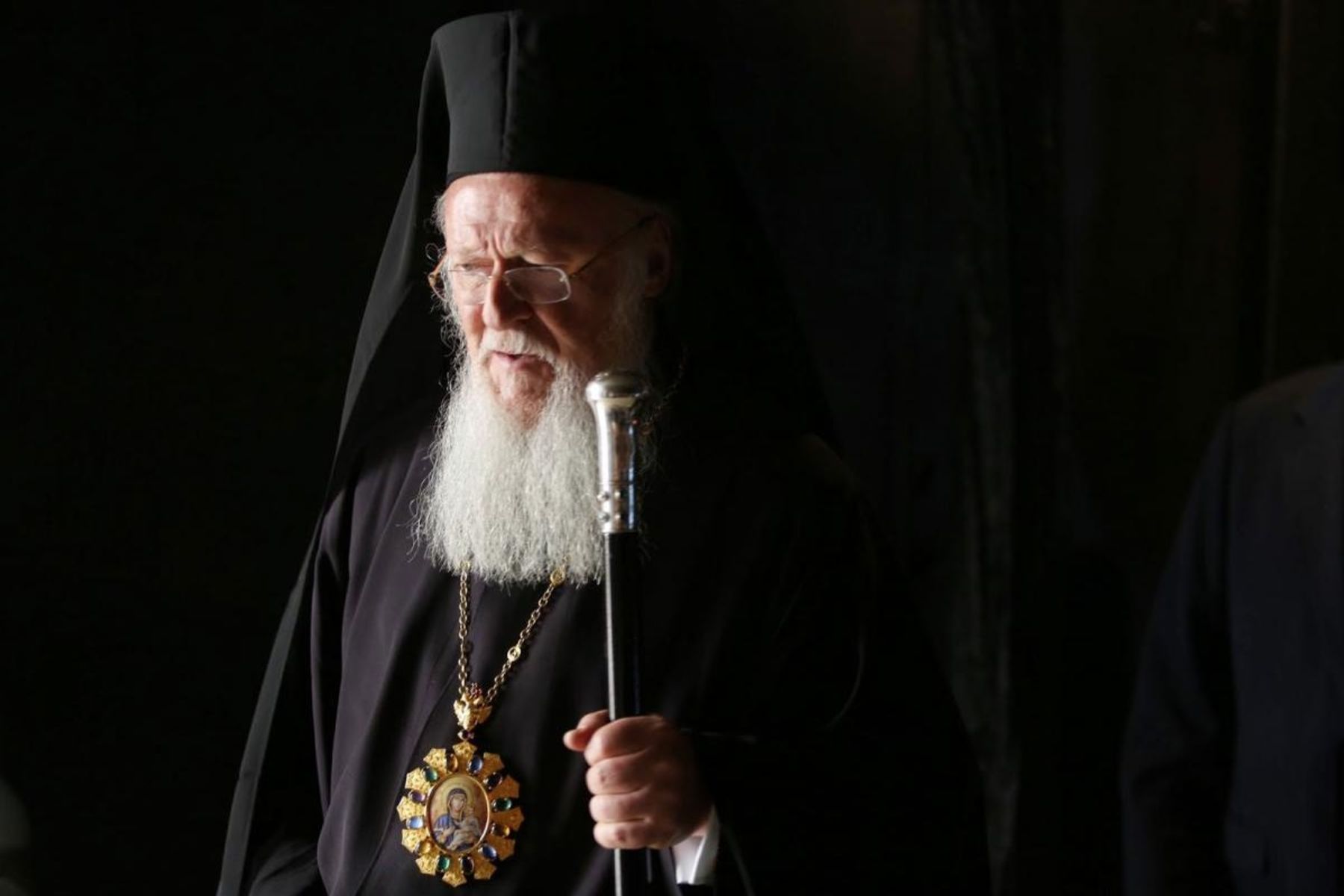
In The Little Prince, Saint-Exupéry wrote, “We are responsible for those we have tamed.” These deceptively simple words come to mind whenever there is talk of whether Ecumenical Patriarch Bartholomew should do more—beyond the January 2019 act—to resolve the Ukrainian Orthodox crisis. Many argue he’s already done what was necessary, and that what follows is up to the conscience or stubbornness of those who’ve disregarded the Patriarchal Tomos.
Paradoxically, the Patriarch himself became a major cause of that very stubbornness among much of the UOC clergy and laity. Messages from him and canonically aligned hierarchs in the “Greek world” openly endorsing the UOC and labeling the UOC–KP and UAPC as “without grace” were circulated widely within the UOC and absorbed deeply by its faithful. I hope Patriarch Bartholomew understands this and will continue efforts to reconcile both branches of Ukrainian Orthodoxy. It’s complex labor, largely thankless, and only future Ukrainian generations will fully appreciate it.
The Patriarch surely knows that every specific step he takes to resolve the Ukrainian Orthodox crisis will have as many critics as supporters. For instance, the OCU is grateful for his canonical legalization and the Tomos, yet recent proposals for temporarily shepherding OUC faithful not yet ready to join the OCU do not align with OCU’s interests. With the UOC, the situation is even more complex: some clergy blame Bartholomew for all ills, while others pin their last hopes on him.
In all these internecine Orthodox conflicts (horrifying that such things are even possible!), nobody seems to care about the common person: the smallest, for whose sake Christ came into this world and suffered on the Cross. What matters appears to be numbers, building walls, or ambitions… More and more, the tears of ordinary people become irrelevant to either side. Perhaps Patriarch Bartholomew can rise as the true spiritual leader for all, dedicating the rest of his life to placing the hand of a UOC believer into the hand of an OCU believer—so they may finally hear together the blessed words: “Christ is among us.”
As for concrete steps, various proposals have been floated in recent years: convening a Pan‑Orthodox Council, forming a temporary exarchate, and more. Implementation of any scenario requires significant compromises from both sides. All in the name of ending the wounds to Christ caused by Ukrainian Orthodox Ukrainian Orthodox—ceasing temple divisions into “ours” and “not ours,” “correct” and “incorrect.” Isn’t that reason enough to become that “little one,” as Christ said?
Getting us to stop devouring one another—that is what the Ecumenical Patriarch can and must do to resolve the crisis in Ukrainian Orthodoxy. Today, he has much to say to the OCU, the UOC, and the Ukrainian government. Today, he has arms to embrace and comfort the suffering Ukraine. Everything else can come later.