Fr. Serhii Barshai, Sophia Brotherhood
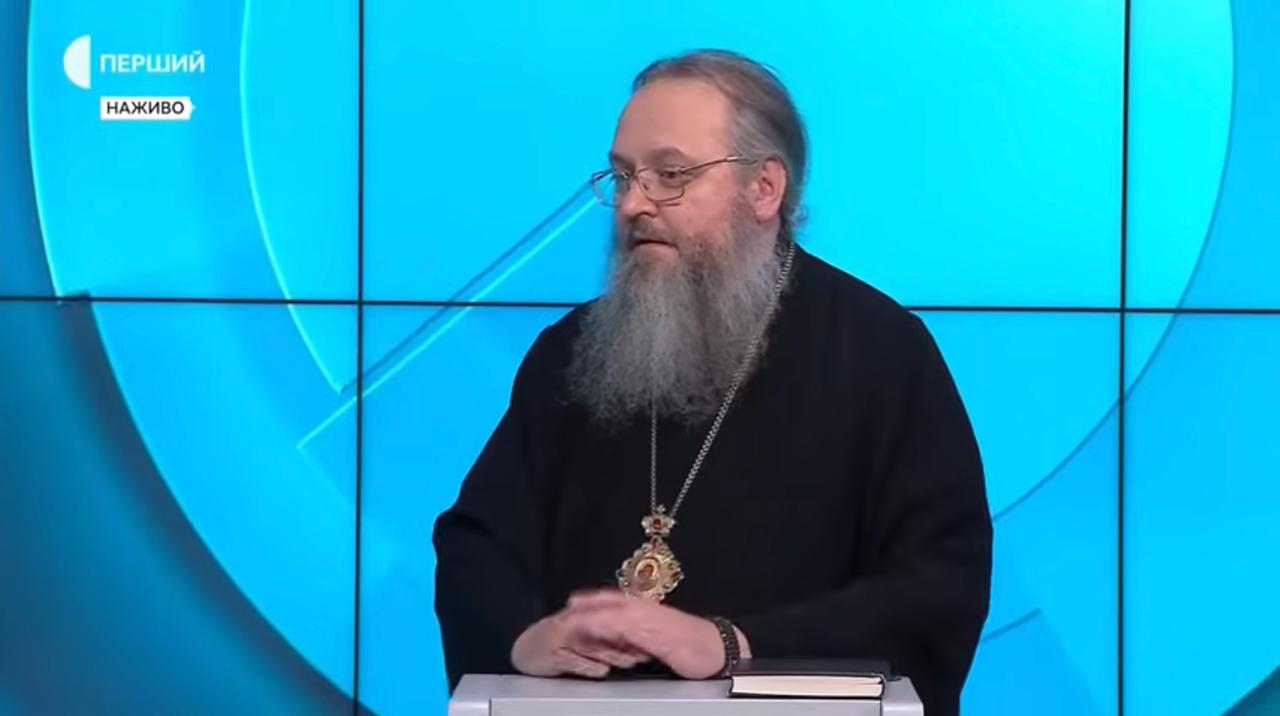
Recently on the talk show “Novyi Vidlik” (New Countdown), broadcast by Suspilne, the discussion centered around possible consequences for the Ukrainian Orthodox Church (UOC) following the enactment of the law banning religious organizations in Ukraine that are affiliated with Russia. The UOC’s representative — Metropolitan Klyment (Vecheria), head of the Church’s Information and Education Department — once again insisted that “there is no influence from any country, from any other religious organization registered abroad, on the Ukrainian Orthodox Church. For several decades now, the UOC has been self-governing in its administration. And following the changes made at the 2022 UOC Council, any basis for manipulation on this topic has entirely disappeared. …It was officially stated that Metropolitan Onufrii is not a member of the ROC Synod. Whatever happens in ROC documents does not concern me, and I am not authorized to comment on them. This is clearly outlined in the UOC’s founding documents.”
At the same time, the metropolitan questioned why the State Service for Ethnic Policy and Freedom of Conscience (SSEPFC) does not initiate similar investigations into Ukrainian Muslims, Protestants, or Jews with ties to the Russian Federation — and especially into the Orthodox Church of Ukraine (OCU). He emphasized the need to scrutinize the latter, pointing out that the OCU maintains an entire diocese on Russian territory, two OCU bishops recently admitted holding Russian passports, and two more (former UOC clerics) are still listed as hierarchs of the ROC on the Moscow Patriarchate’s official website.
In contrast, Metropolitan Klyment believes that the decisions of the 2022 Council and the updated UOC Statute adopted there are sufficient proof of the Church’s full independence. Therefore, he sees no need for further letters from UOC leadership, including Metropolitan Onufrii, confirming withdrawal from ROC structures. When asked why the UOC Statute is not published on the Church’s official website, he claimed the site is… blocked (!!! – S.B.).
One might like to pleasantly surprise the Head of the Information Department, but the UOC’s official website is fully accessible through major browsers. The claim that it is “blocked” remains unclear — especially since fresh news is posted regularly. Could it be that the site becomes “blocked” only when there’s an attempt to upload the UOC Statute? Or is it simply that the metropolitan did not want to admit on air that the Statute cannot be posted without a blessing “from above”?
Most likely, the UOC’s chief spokesperson himself does not fully understand why the Church leadership refuses to fulfill a rather simple, albeit logical, government request: to issue letters officially confirming the Church’s complete separation from all ROC structures — which would spare the Church many problems. Lacking this understanding, he has to maneuver around such questions in broadcasts, comparing the UOC’s situation to that of other religious communities.
It is also worth hoping that Metropolitan Klyment fully realizes that such a request (for the UOC’s Primate to write to the ROC leadership confirming withdrawal from its episcopate and Synod, and to Local Orthodox Churches confirming full UOC independence) is no longer coming solely from the government. Most importantly, it is the faithful of the UOC themselves — bishops, clergy, monastics, and laity — who desire and expect this. The metropolitan rightly noted that UOC believers were not “imported” into Ukraine — they were born here. To that, one might add: as with Ukrainian citizens in general, only a small minority of UOC members studied or worked in Russia (which in itself is not inherently wrong), and none of them wish to move there permanently (and those who did have long since done so).
The overwhelming majority of UOC faithful — with only rare, unfortunate exceptions — are fully integrated Ukrainian citizens. They do not harbor any irrational affection for a murderous neighboring state or any practical interest in it (again, aside from unfortunate outliers). It is the Church’s own leadership that tarred them with Russian pitch — and continues to do so. Before 2022, they spoke of the war as a “civil conflict,” refused to name Russia as the aggressor, and visited Moscow frequently and for various reasons.
Metropolitan Klyment pretends not to understand why the UOC is being singled out for scrutiny regarding ties to Russia, even though other religious structures have such ties as well. At this point, it seems unnecessary even to bring up documented cases of espionage or collaboration by UOC clerics in favor of the aggressor state, or the sudden appearance of UOC bishops on Russian soil. Is this not sufficient cause for investigation — especially considering that such actions rarely receive an appropriate response from Church leadership?
Let us also recall that, to this day, there are UOC parishes and monasteries — not just in Kharkiv region, but even in Kyiv — where Moscow Patriarch Kirill is commemorated during services. The shocking part is not that such practices exist, but that the Church’s leadership — especially in Kyiv — does nothing to address them. As for the infamous metropolitans who, for the sake of commemorating Putin’s patriarch, are willing to destroy the very dioceses once entrusted to them — the less said, the better.
All of this — and particularly the “incomplete disassociation” of the UOC from the ROC — continues to trouble the faithful of the UOC most of all. They consider themselves Ukrainian citizens and want to belong to a truly UKRAINIAN Church — in the fullest sense of the word. They seek no connection with the Church of the aggressor state and are particularly disillusioned with the current leadership of the UOC for its half-measures — or complete inaction — in resolving the Church’s current status.