Part of the “Thoughts Aloud” mini-series created jointly by the “Sofia Brotherhood” and the German foundation Renovabis, within the project “Contemporary Ukrainian Orthodoxy: Breaking Myths for Reconciliation and Societal Consolidation.” Statements do not necessarily represent the official view of the Sofia Brotherhood.
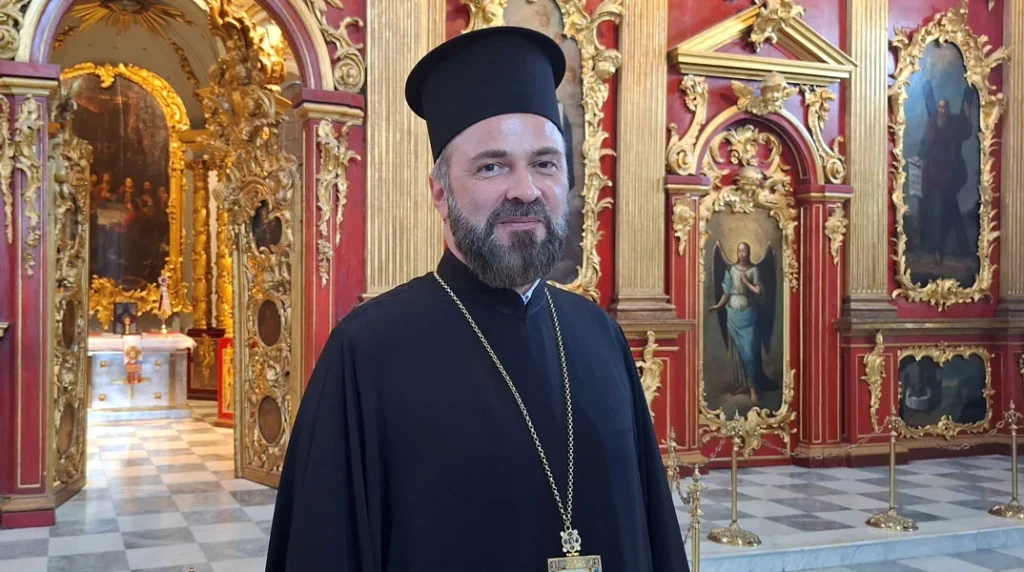
Igumen Nestor Nazarov, UOC-KP
Right now, everyone is wondering how Ukrainian Orthodoxy can emerge from the crisis it has found itself in. Many ideas are being voiced, yet the problem remains unresolved. Since all of us – Orthodox Christians – share responsibility for this situation, the only way out is through joint effort and mutual concessions.
In my view, there are currently two realistic scenarios for uniting the majority of Orthodox believers in Ukraine.
Scenario One – the “Patriarch Filaret Plan”
This plan can be outlined as follows: all Orthodox Churches with valid apostolic succession and adherence to Orthodox doctrine (such as the Ecumenical Councils, the Creed, etc.) must recognize one another. Once this mutual recognition happens, the primary basis for division disappears. Priests from all these churches would be able to concelebrate, and parishioners could confidently enter any Orthodox church, knowing it is both canonical and filled with grace, and be welcomed there as one of their own.
On feast days, all Orthodox faithful – not just members of one jurisdiction – could gather together. For example, imagine a town with three Orthodox communities: UOC, OCU, and UOC-KP. When a bishop from one of those churches visits, all Orthodox townspeople come to greet him. That kind of unity would compel the state to stop pretending that there is only one “official” church and ignoring all others. Social tensions would ease, and Orthodoxy’s authority – which has been rapidly eroding – would rise significantly.
That said, full unification would need to be postponed for 20 or 30 years – until all current actors involved in church conflicts pass away, and society forgets the arguments and scuffles. Over time, people would grow used to a state of coexistence where all are seen as canonical and grace-filled, and no one throws accusations or demands at each other.
There is, however, one essential condition: the UOC must fully and truly sever its ties with the Moscow Patriarchate. Without this, it would simply legalize a religious structure headquartered in the capital of an aggressor state. Neither the Ukrainian government nor society would ever accept that.
Scenario Two – the Ecumenical Patriarchate’s Initiative
This scenario depends on the Ecumenical Patriarch and involves establishing something akin to an exarchate in Ukraine, which would be open to all who wished to join. This initiative might not absorb all Ukrainian churches, but it would likely weaken them significantly. Hundreds – or even thousands – of parishes tired of constant conflict might choose to join such a structure. Right now, the social demand for this is enormous.
For instance, many believers no longer wish to stay in the UOC but, watching recent events, aren’t in a hurry to join the OCU either. These are people who have left point A but haven’t yet reached point B – and something must be done immediately. The exarchate project might be exactly what these people need – and they number in the hundreds of thousands, if not millions.
We are now facing a dangerous situation: people who watch the churches quarrel lose faith not only in the institutions, but in the Church itself. If we don’t take decisive steps toward peaceful unification, we may end up in a place where there’s nothing left to divide – when churches stand empty and are leased out for entertainment events. And in such a case, as they say, there will be no winners.