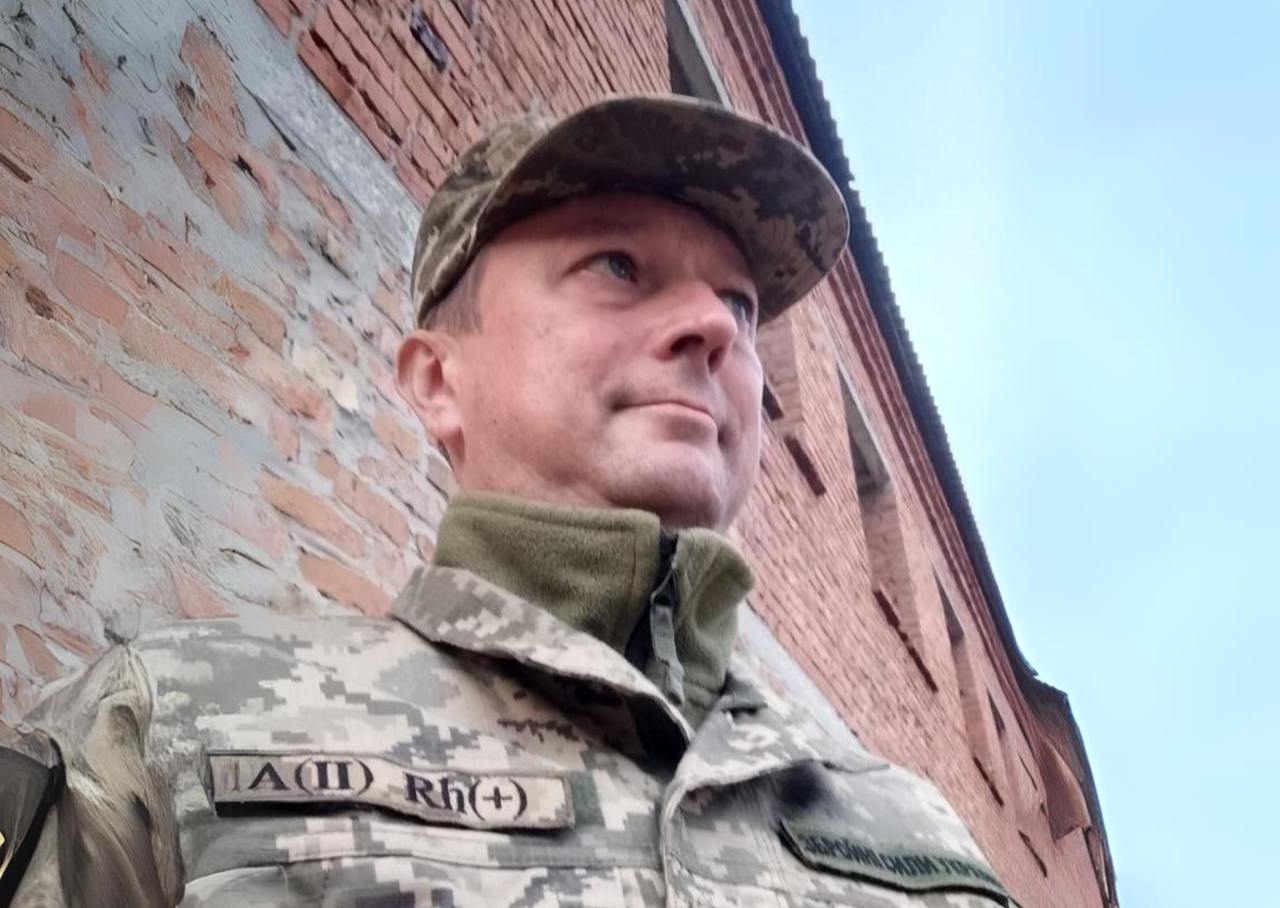
I met Dmytro during our studies at the Institute of Journalism at Taras Shevchenko National University of Kyiv. Although Dmytro was two years behind me, unlike many of us, he already had some professional experience. In his hometown of Konotop, he had worked for a newspaper, radio, and even television while still a high school student — an incredible experience for that time! By the time he graduated, Dmytro was already working for the newspaper Fakty. Since then, he had worked on many other interesting projects until the war interrupted it all. Today, Dmytro Babich has paused his creative career: he is now a senior lieutenant in the Armed Forces of Ukraine, defending his homeland on one of the eastern fronts.
— Dmytro, you graduated from the Institute of Journalism, worked as a journalist not only for various publications but even in different countries. But now, you’re doing something you certainly never prepared for. It’s hard to believe that you’re on the front line with a weapon in hand. How did it feel to trade your keyboard for a rifle?
— I never saw myself as a soldier. I knew about the army only from my journalist colleagues’ reports and our military training at the Institute of Journalism. More than that, if someone had told me until recently that I would join the Armed Forces of Ukraine, I would have been genuinely surprised, maybe even laughed — as a thoroughly civilian person, the idea of tying my fate to the military had never crossed my mind. But after the aggressor nation launched its attack, I couldn’t stand by, so I went to the front.
After completing training at the Hetman Petro Sahaidachny National Army Academy in Lviv, I joined a combat brigade currently holding the line in the Kharkiv region. Honestly, at first, such a drastic life change scared me, but with time I realized that my presence at the front, however small, contributes to defending Ukraine and my family. I hope I am of some use in this new role.
— Maybe it’s not a very correct question, but it’s one everyone who hasn’t been to war is curious about: What’s it like there?
— I’m afraid I won’t be able to answer in just a few words, but I’ll try to speak for myself. Real war — at least the one I’ve seen — is radically different from the clichés that cinema has imposed on the average Ukrainian for decades. Here, there are no superheroes who can destroy an enemy battalion or even a brigade in ten minutes. There’s no superweapon that can instantly repel any aggression. And, finally, there’s no glorification of war, which is often the case on the home front: in the combat zone, you see blood, destruction, pain, and tears. You feel fear.
About fear — never trust a veteran who says he wasn’t scared at war. As my comrades say, only a fool feels no fear; on the brink of life and death, fear acts like a red warning light, signaling danger. But despite everything, there’s room for true friendship forged in harsh conditions. There’s even room for love — many of my friends have found their “better halves” here. Life continues even at the front.
— Even before the war, you were a believer, though you weren’t from a religious family. How did you find your path to God?
— My friend, who once studied at a theological seminary and now serves as a priest, influenced my religious outlook. He, so to speak, sparked in me first an interest, and then a love for the Church. Thanks to God, I found compassionate, kind people in the church community who help me solve many personal issues.
— How has your relationship with God changed since you were sent to the front?
— On the front line, my faith in God has strengthened many times over. Here, you feel the fleetingness of life. And faith not only brings peace but also gives hope. I know some atheists who mocked believers and questioned the power of prayer. They didn’t end their service well — most ended up in psychiatric hospitals. Without faith, there’s no kind of immunity, and so the nervous system suffers; people without faith are not protected from breakdowns.
— What does your faith in God give you at war, how does it help you serve?
— For me, faith brings confidence in tomorrow. This isn’t just a catchphrase. At the front, there were many moments when I was overwhelmed with despair and depression. You may not believe it, but after a heartfelt prayer, those feelings disappeared without a trace. Faith needs a community: I try to find a church even in frontline areas to attend services and connect with fellow believers.
For example, we’re currently in a small village in the Kharkiv region. I thought there was no church here since the area was heavily bombarded. But one day, I heard bells and followed the sound. It turned out that there was a new church dedicated to the Nativity of the Blessed Virgin Mary. The local priest was happy to see me and said the church had shown me the way. Since then, I’ve attended this church regularly and participate actively in its community life.
— Can you share any unique moments from your days at the front?
— Once, we came under heavy artillery fire. In the vehicle with us was a 56-year-old soldier named Mykola, who panicked during the shelling. I advised him to pray, hoping to calm him down. I didn’t think he would actually listen. But, after a while, the shelling suddenly stopped, and we reached safety. A relieved Mykola told us he’d asked God to “get us out of hell” and promised to be baptized if he survived. Now, he’s one of our most devoted church members.
Another story I remember happened when we were evacuating a family from Vovchansk. A seven-year-old girl, Olya, refused to leave because her pet toy terrier, Sunny, was missing. Our squad leader, a fan of small dogs, took two comrades and went to look for the pet in a dangerous area. He found it, and during the search, our guys neutralized an enemy sabotage group. Olya was thrilled, and it seemed the squad leader was even more so.
— What do you plan to do after the war?
— Sooner or later, all armed conflicts end. I’ve decided to return to civilian life. I want to continue working as a journalist, re-establish contacts with Western partners, and finally set up my own news agency: just before the war, I had received such an offer and even became editor-in-chief of a project in Brussels. I’d also like to write a book — one where the word “war” doesn’t appear on any page.
Interview conducted by priest Serhiy Barshay