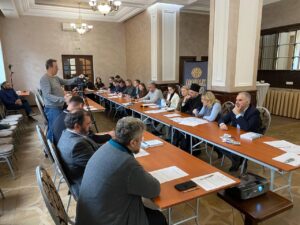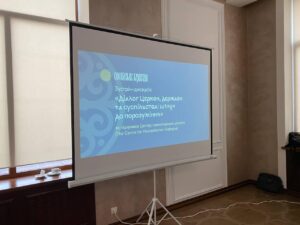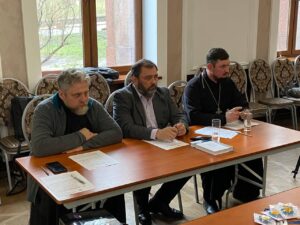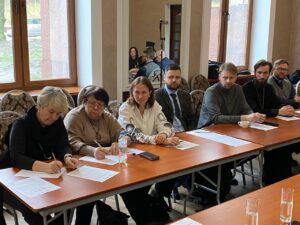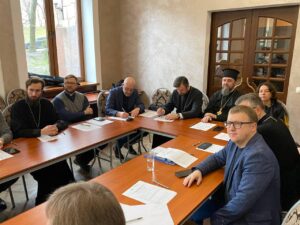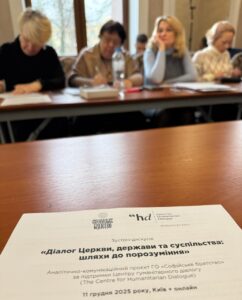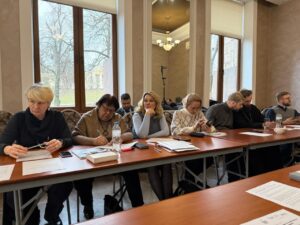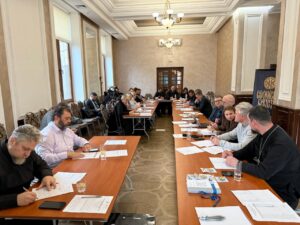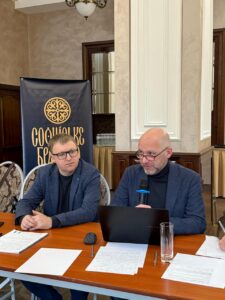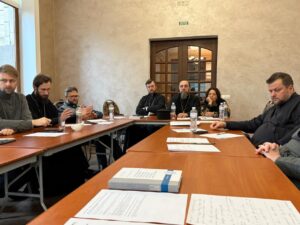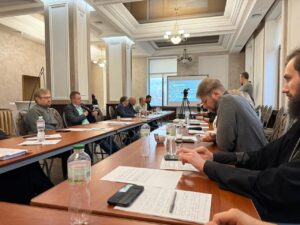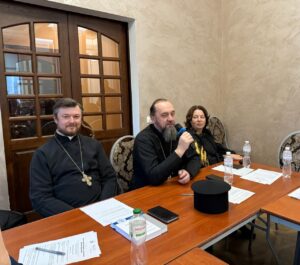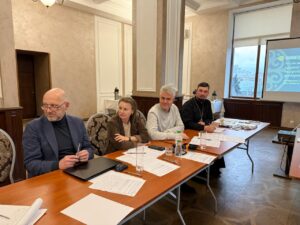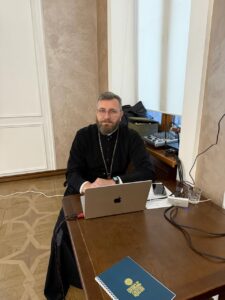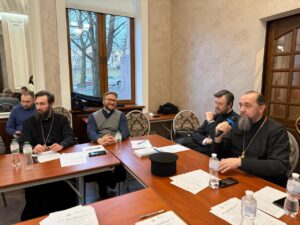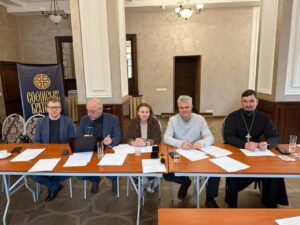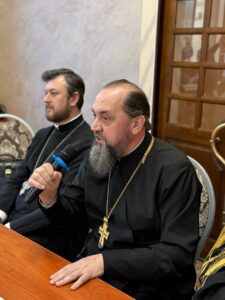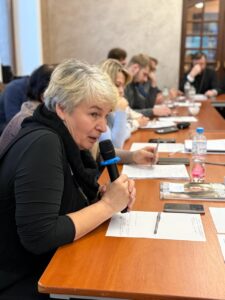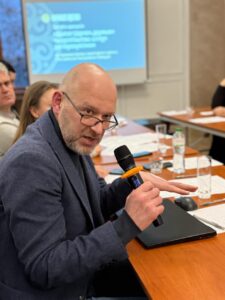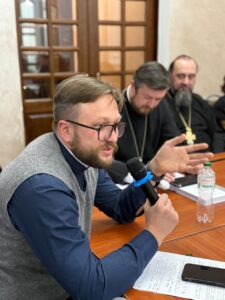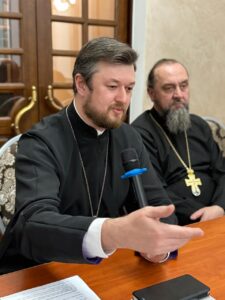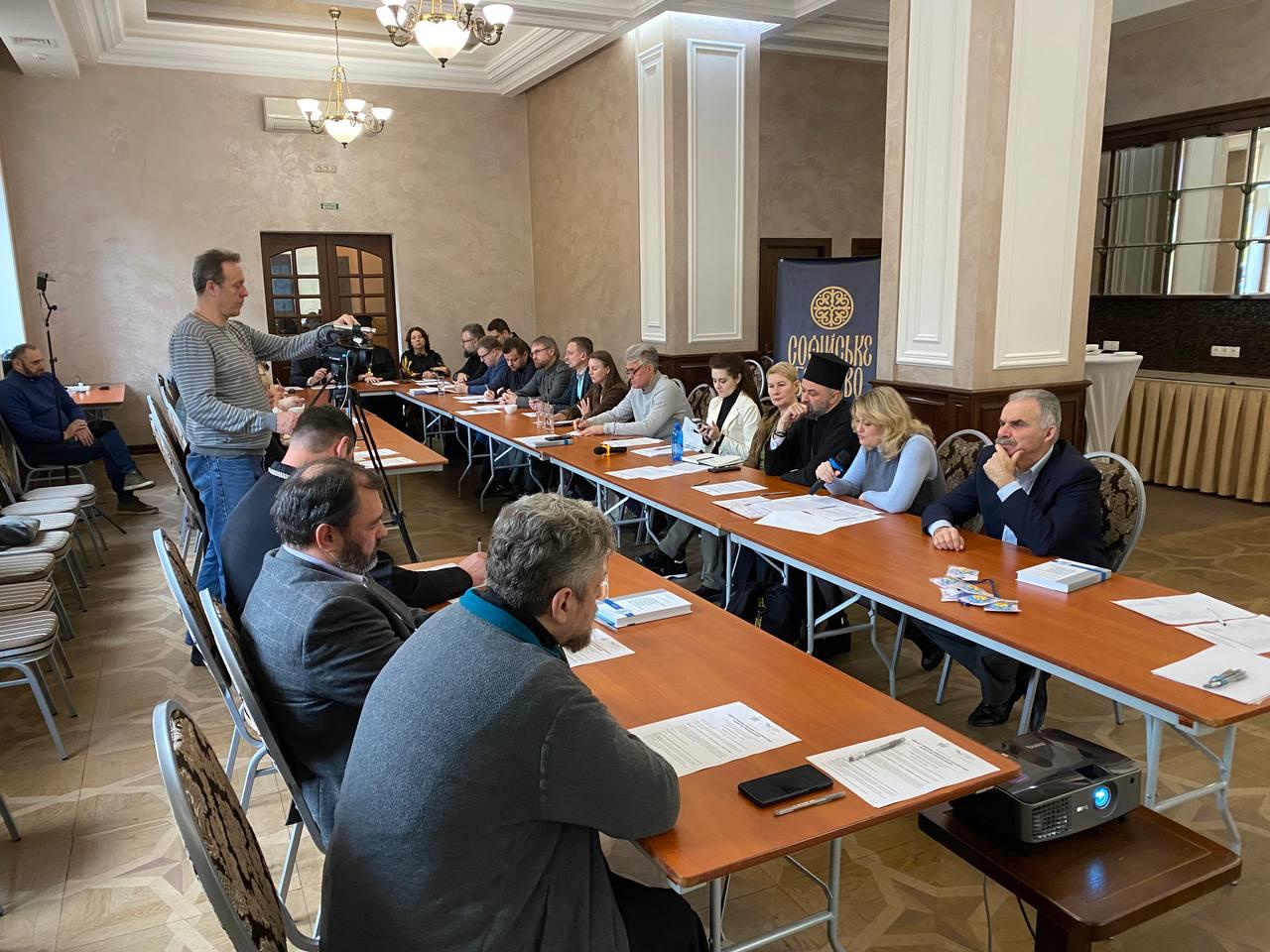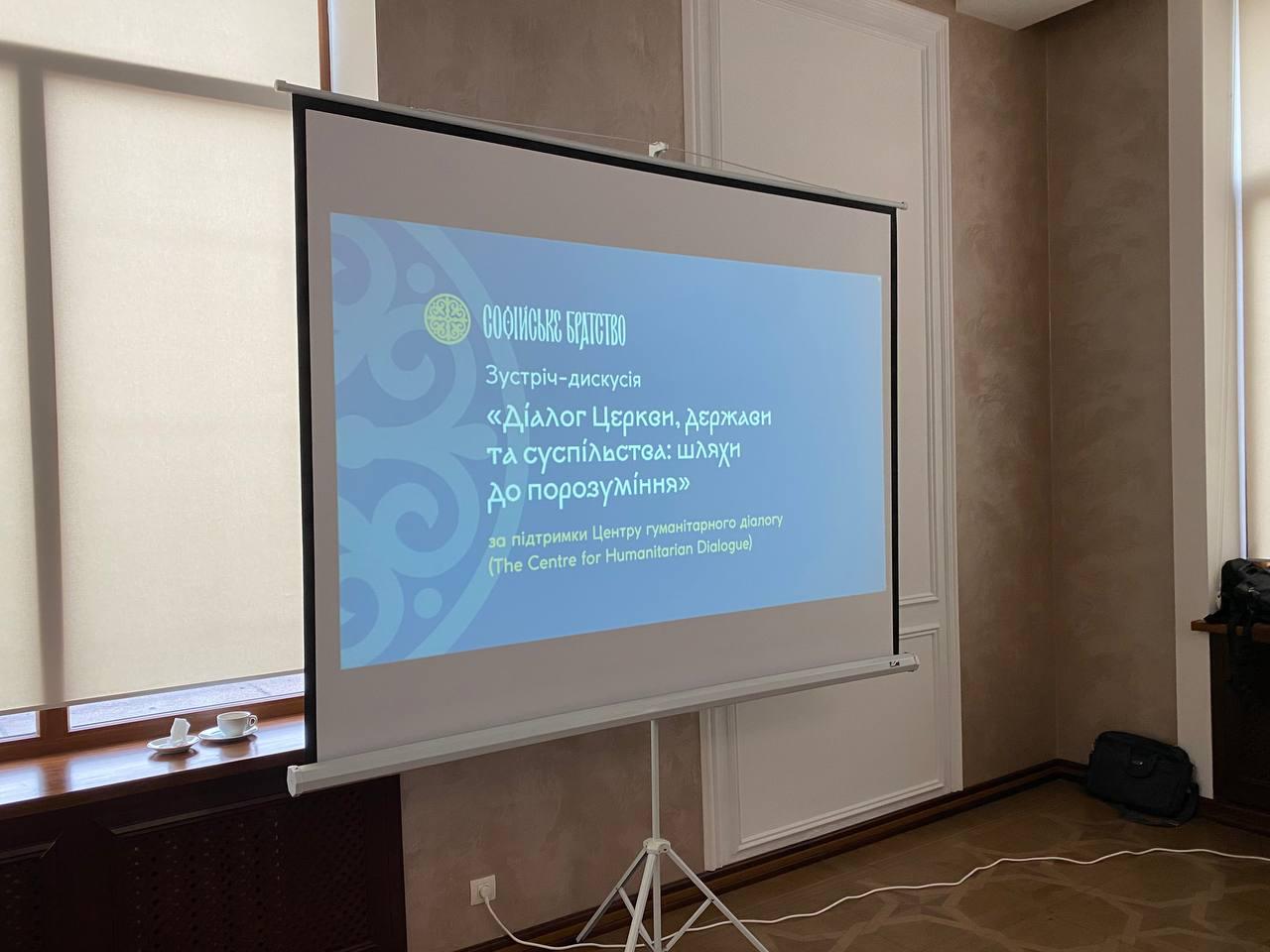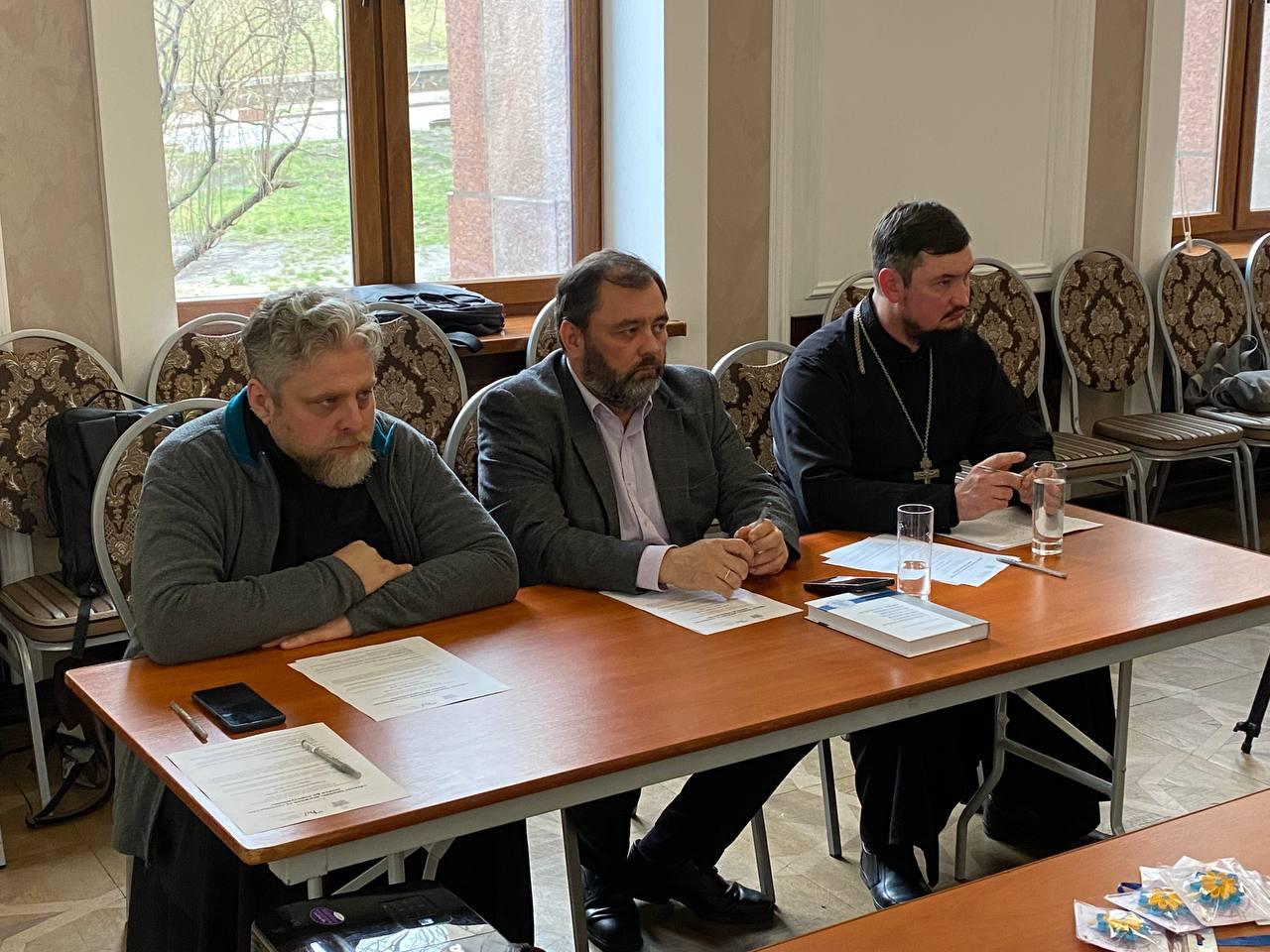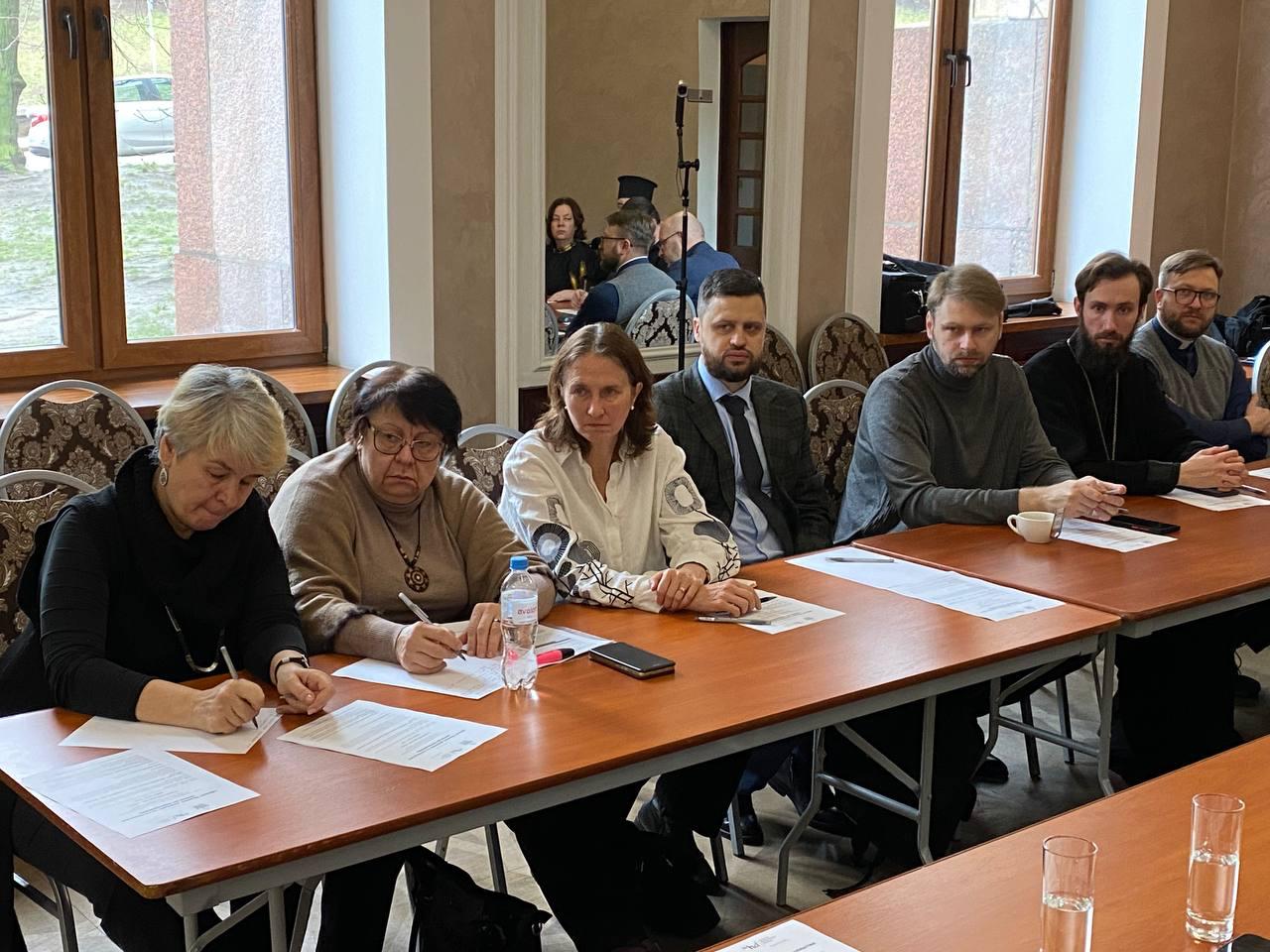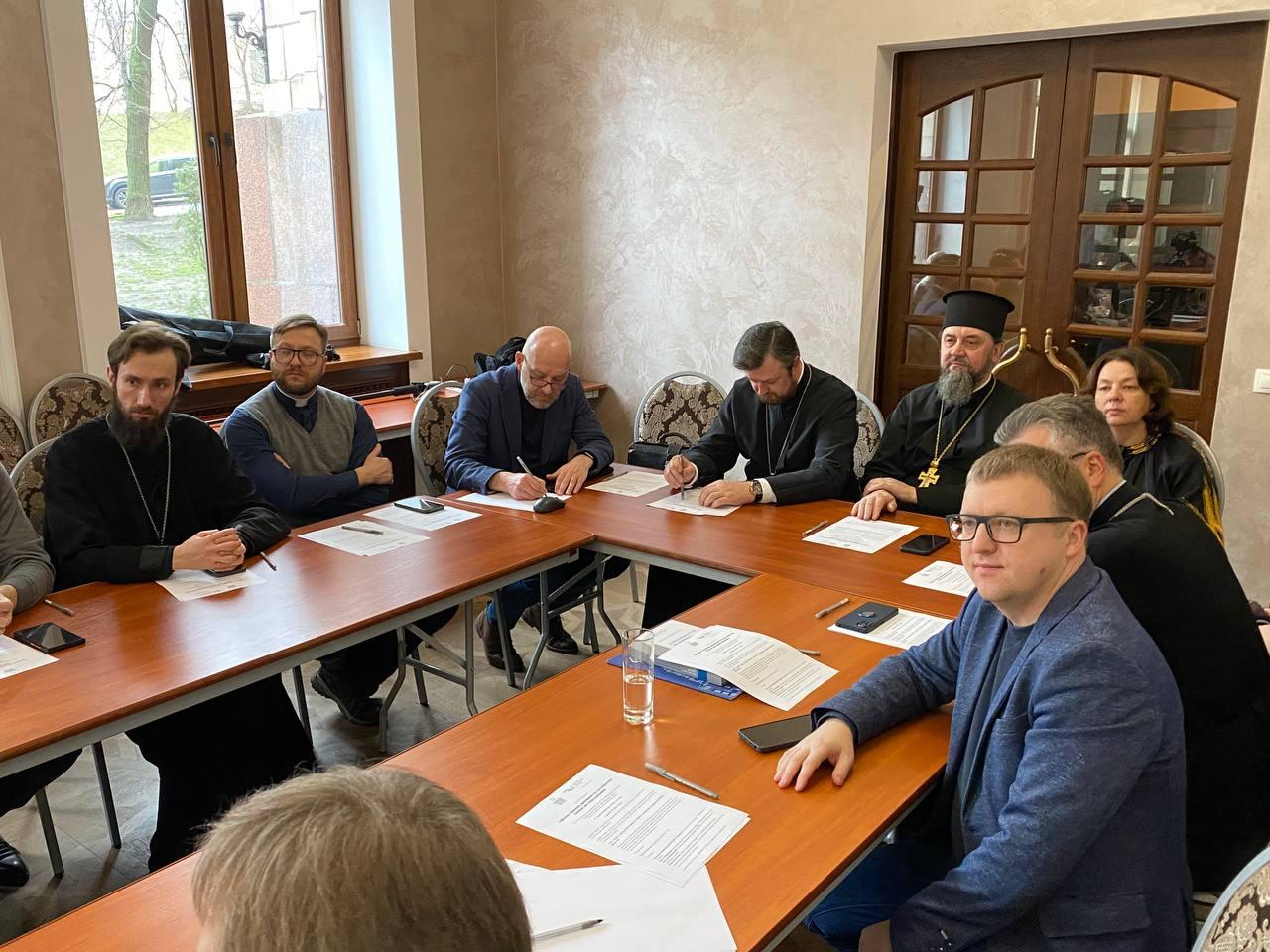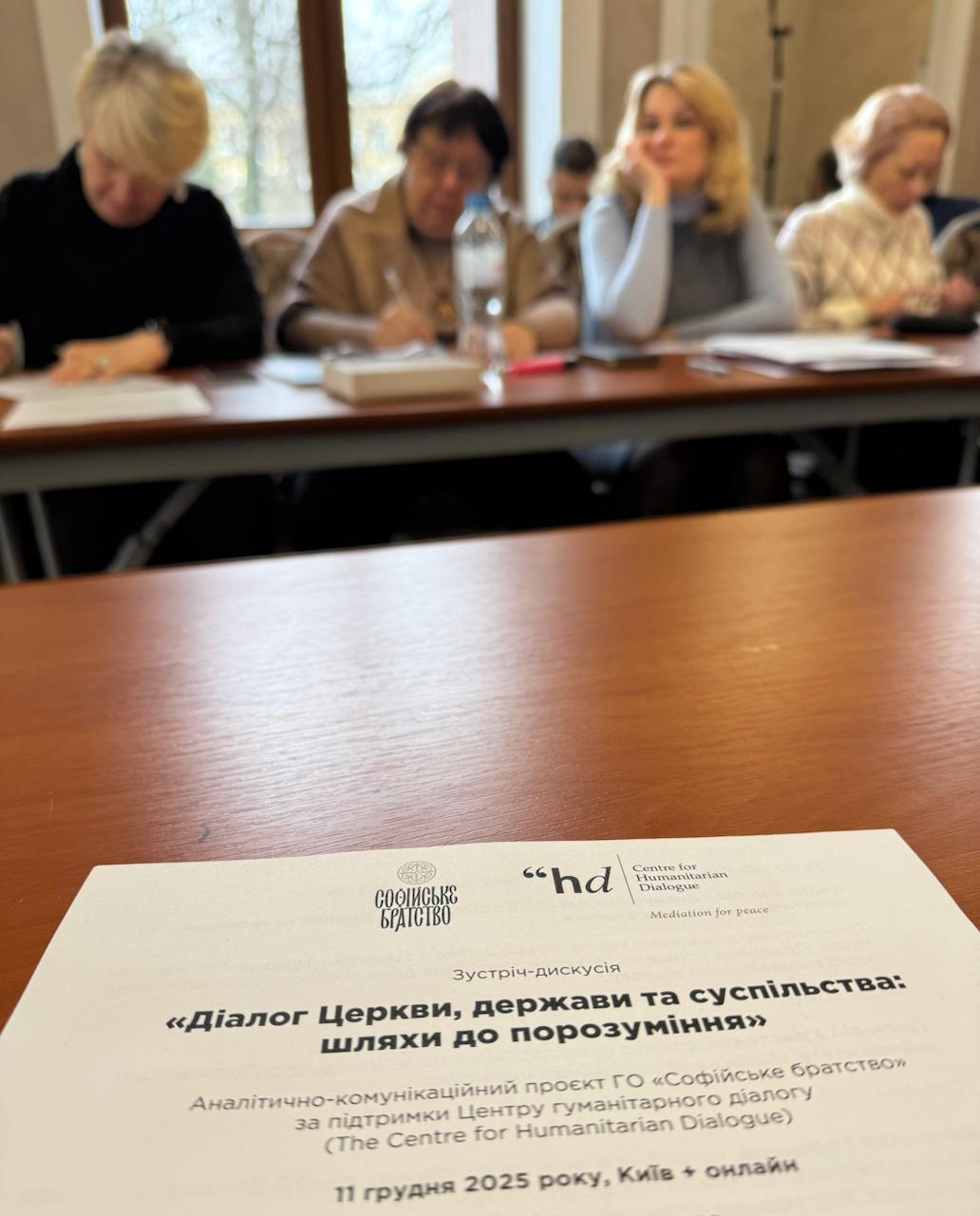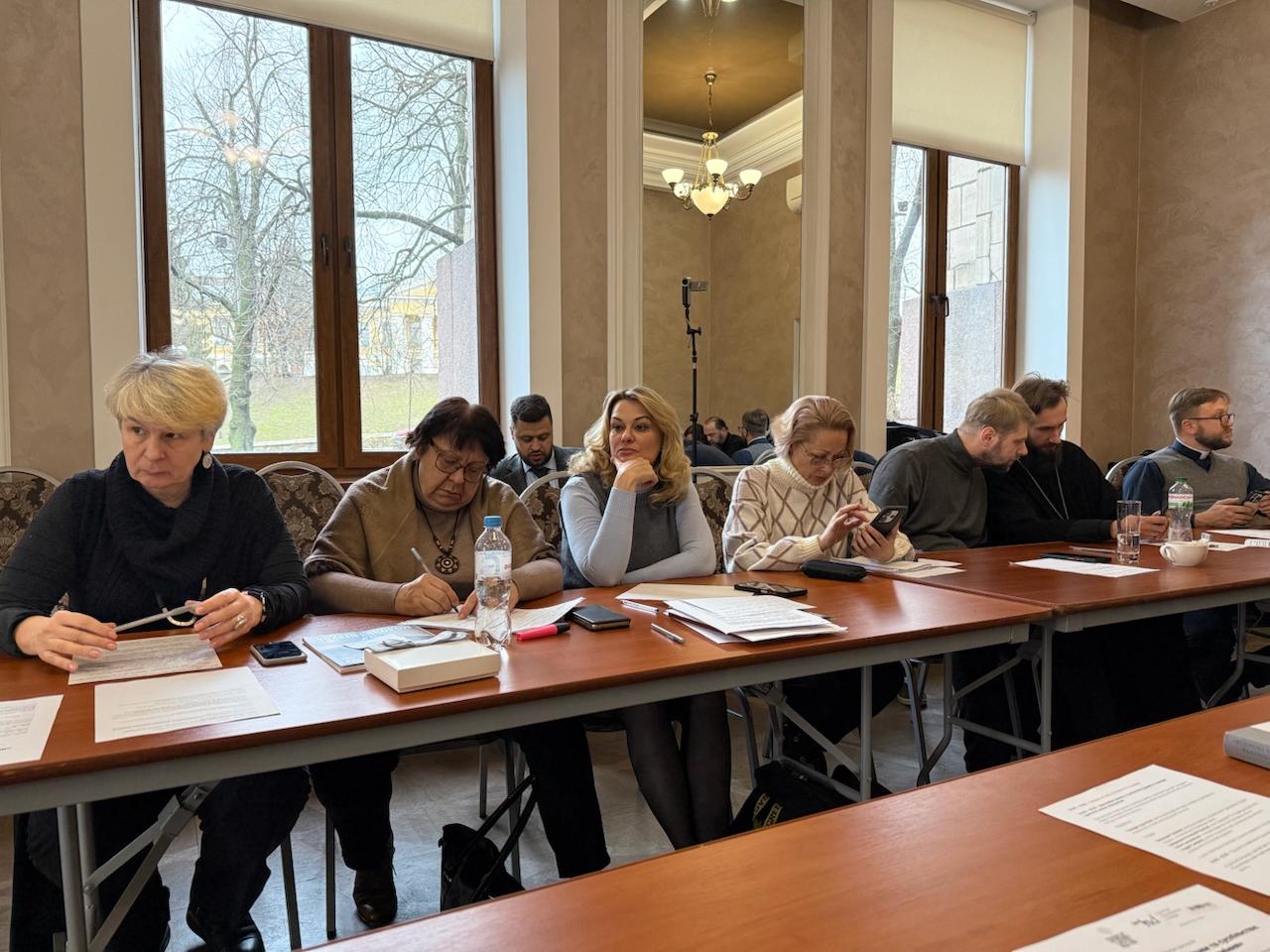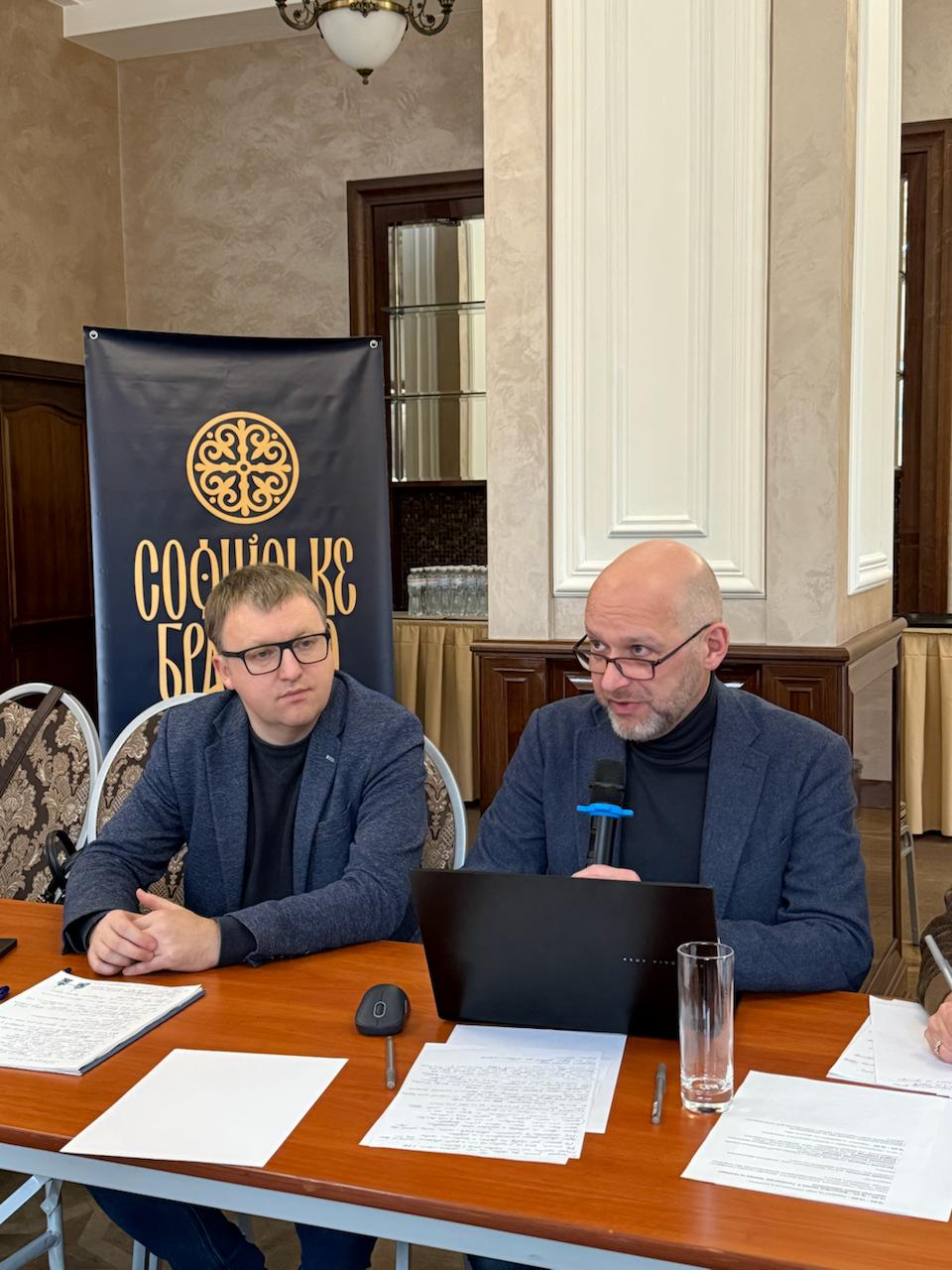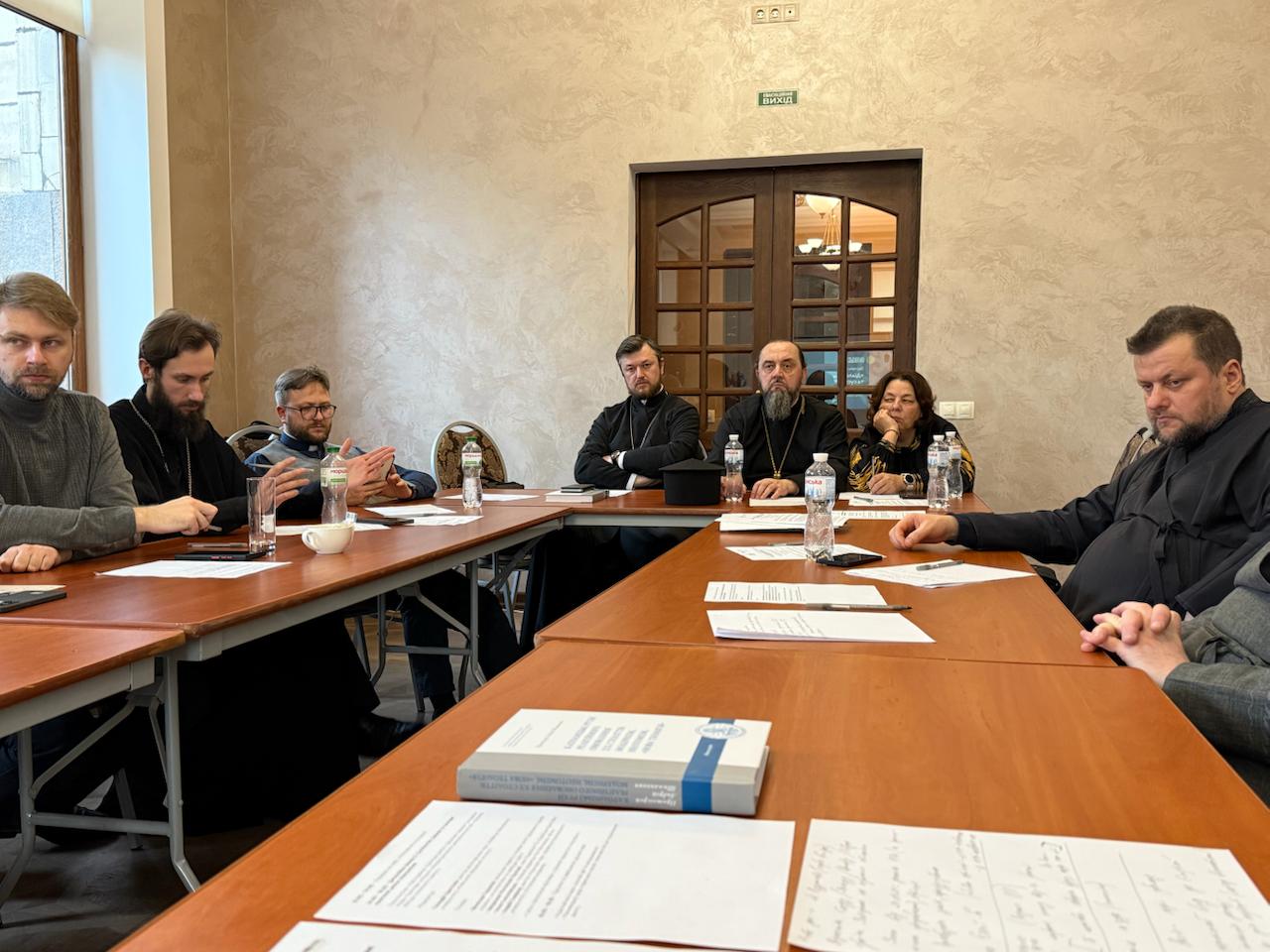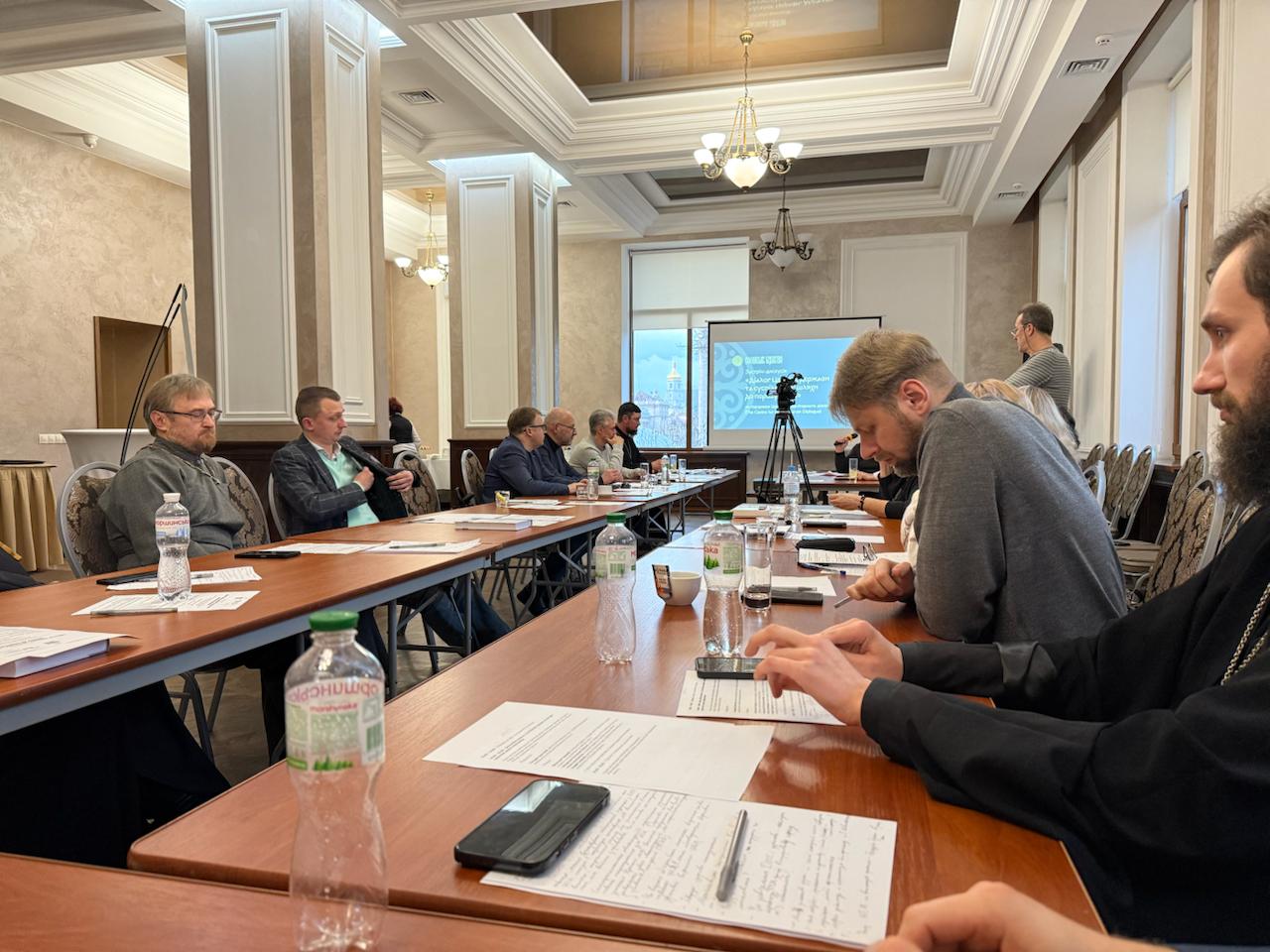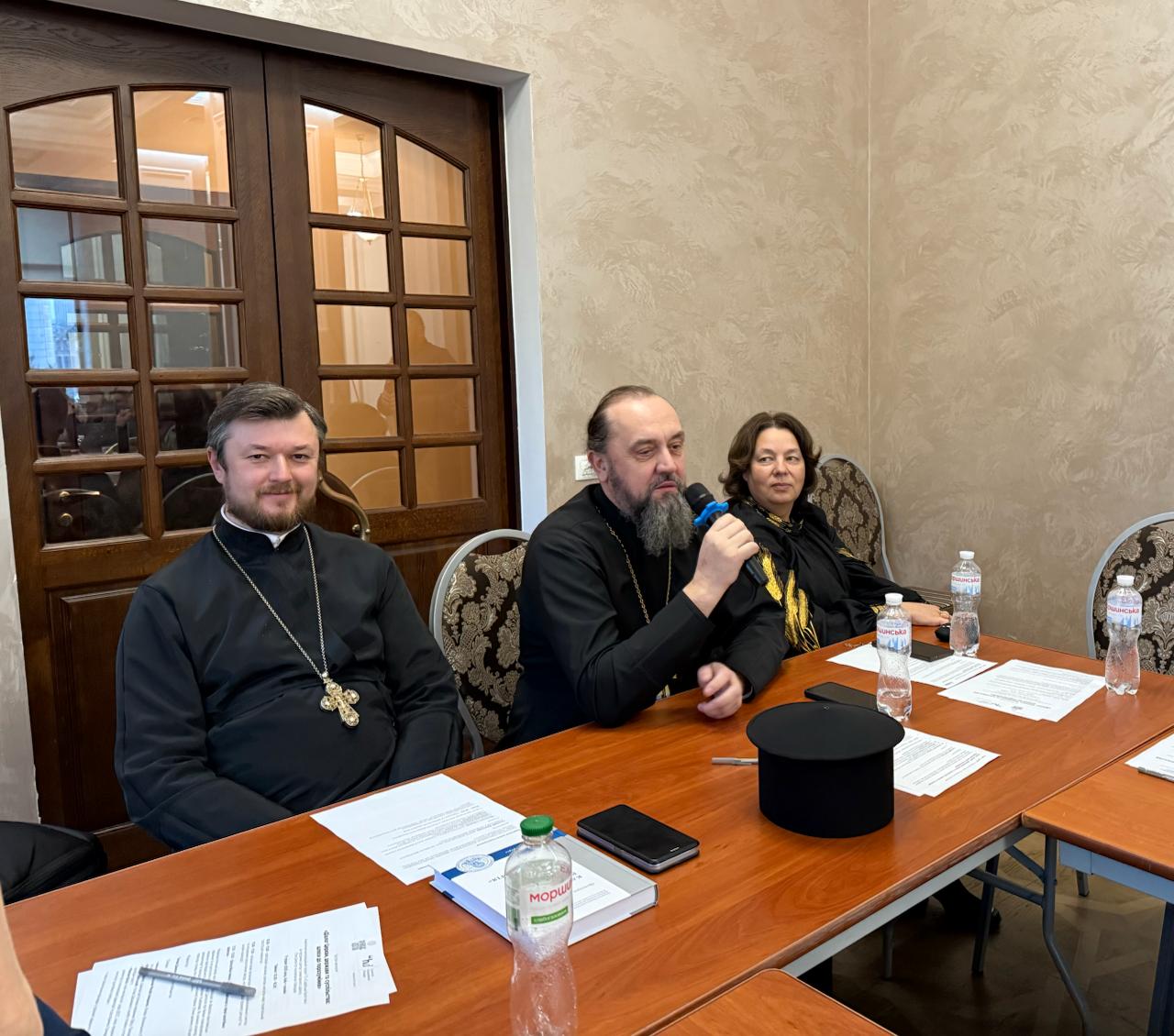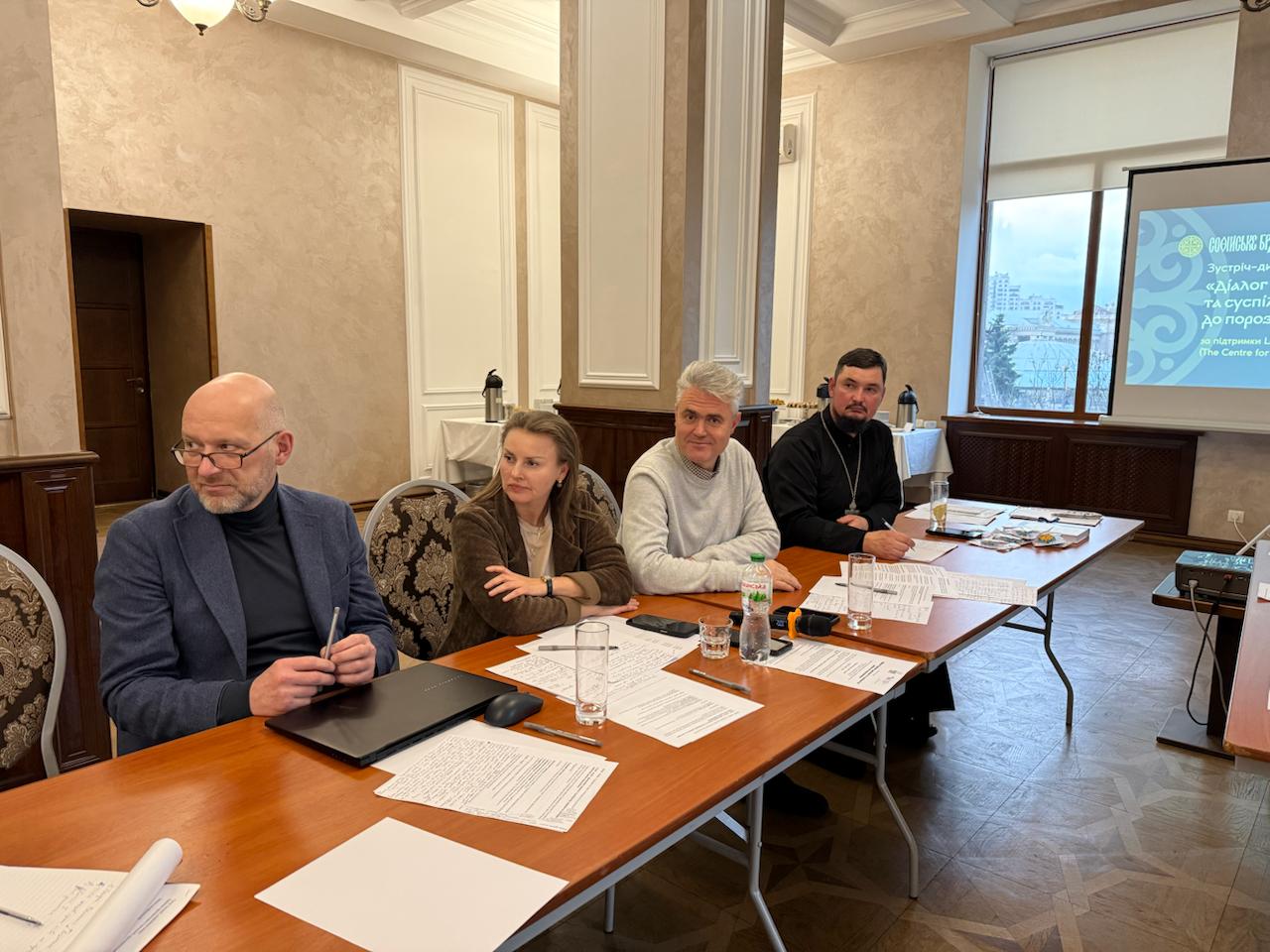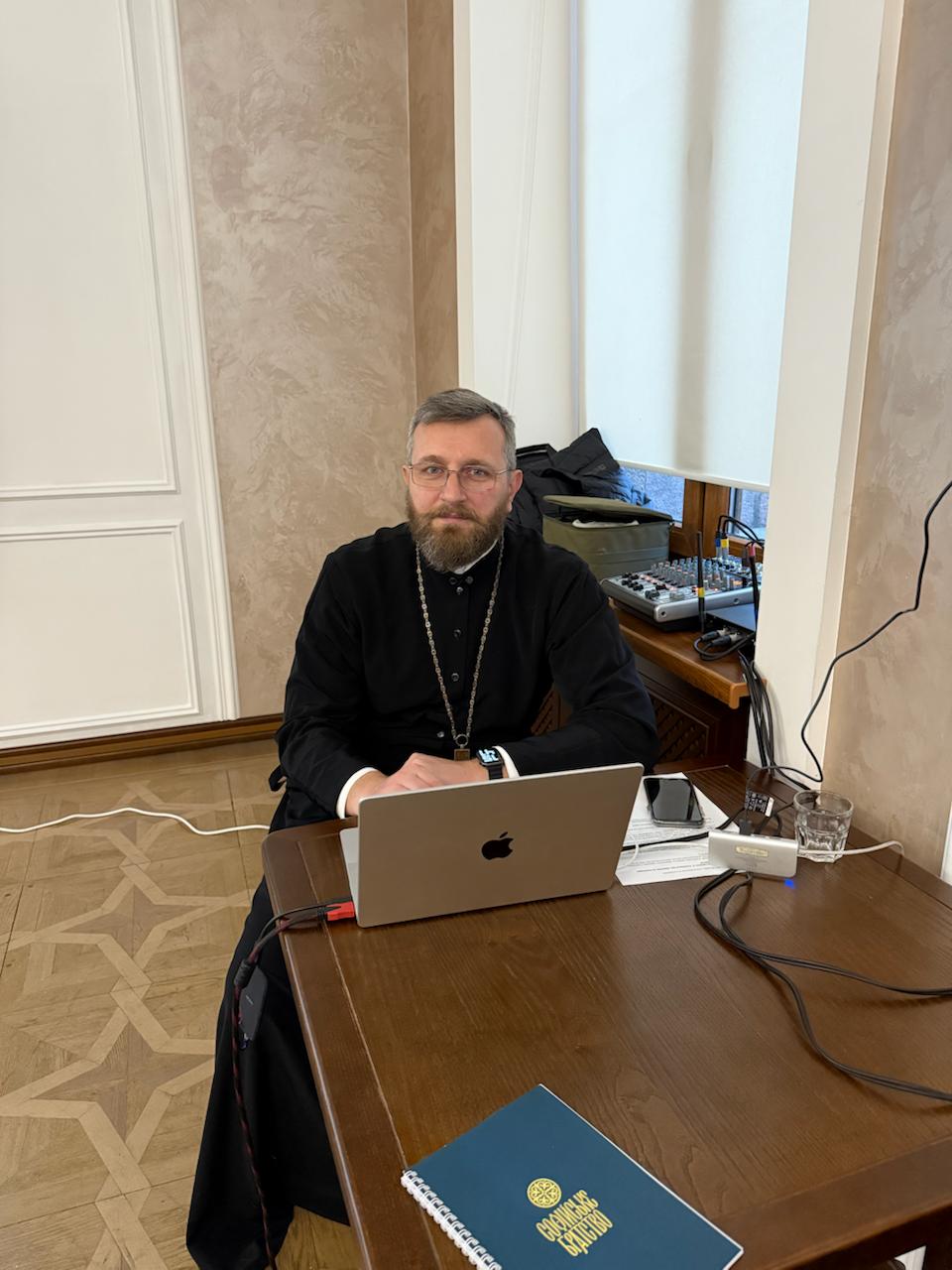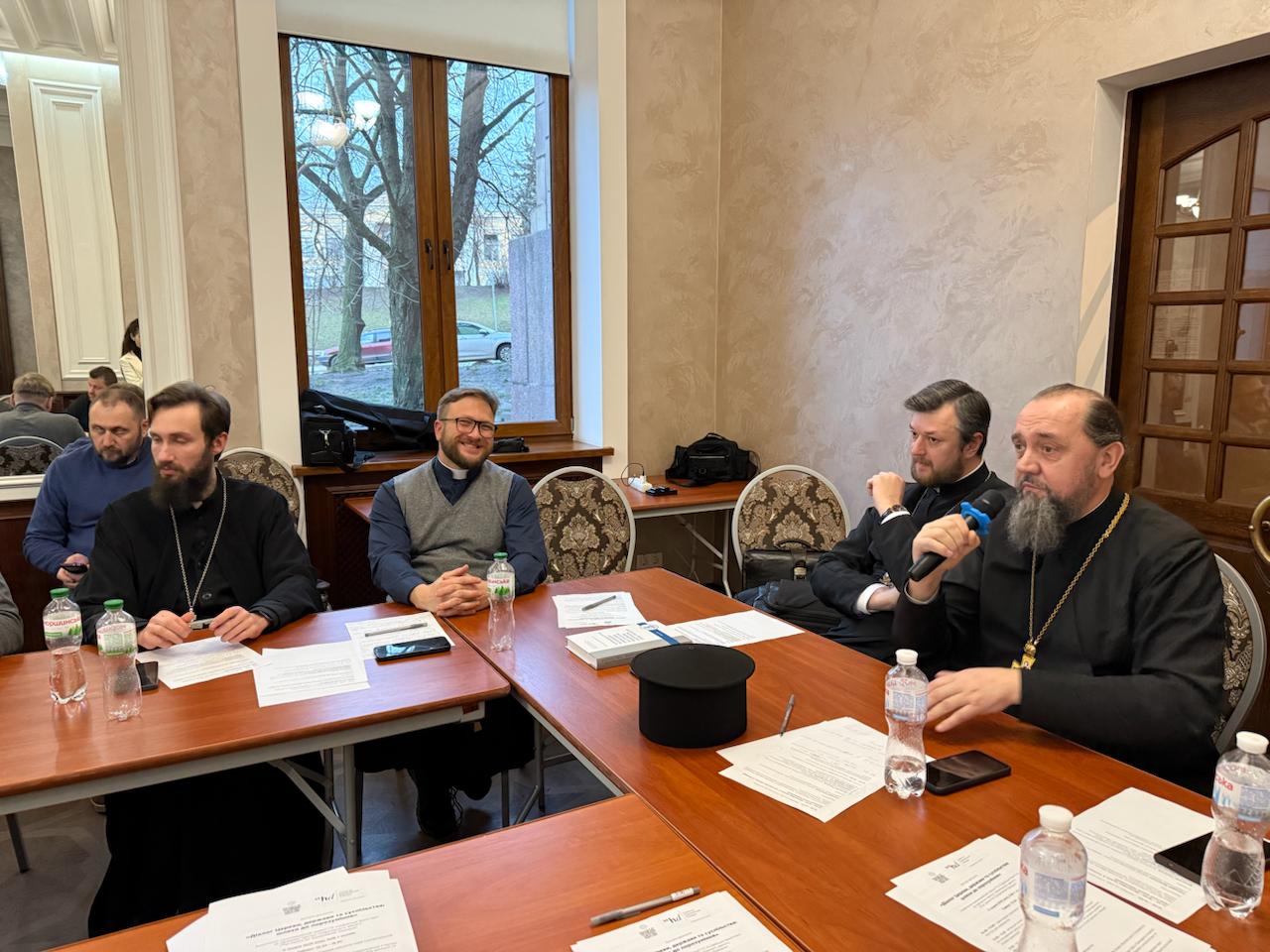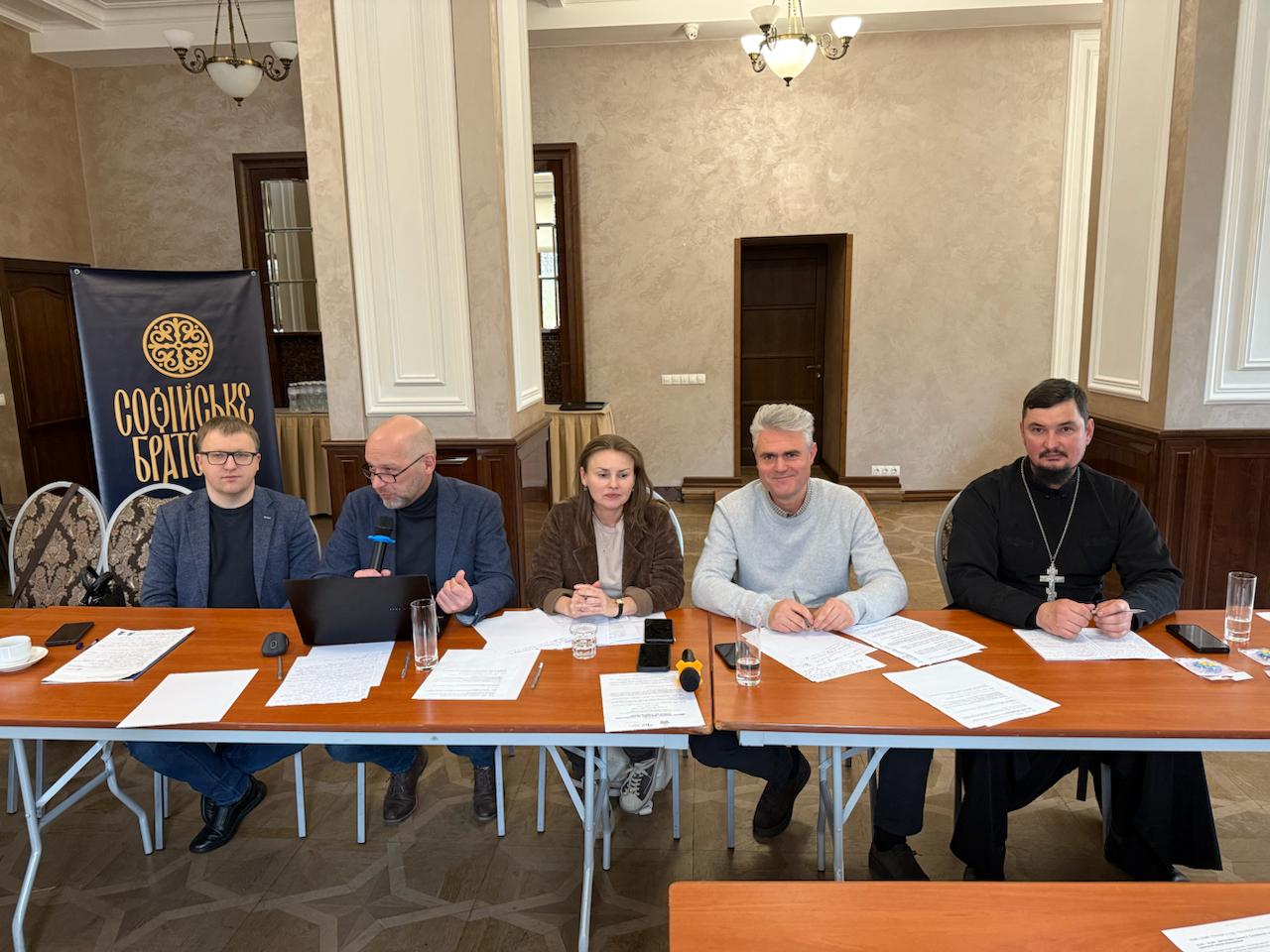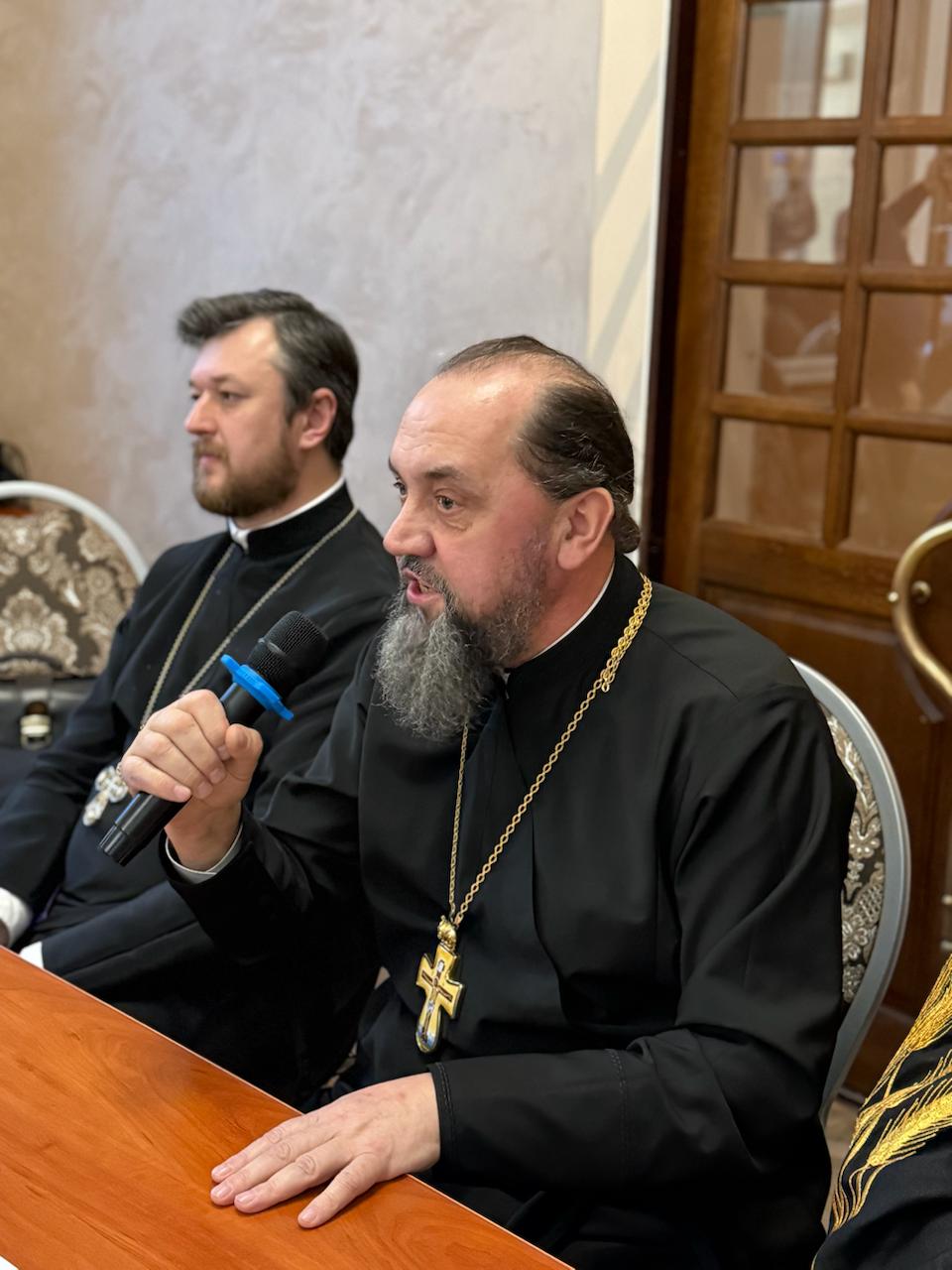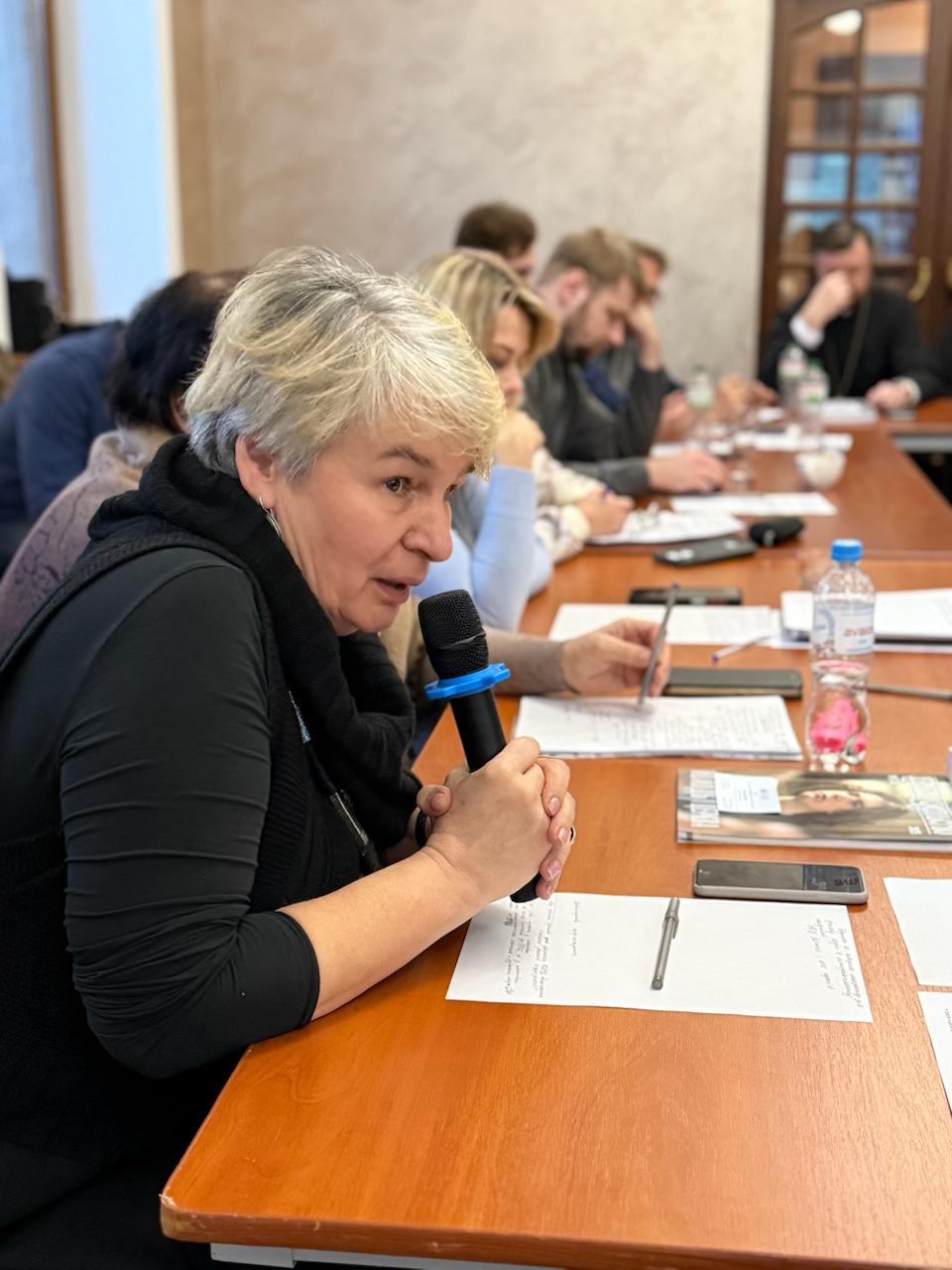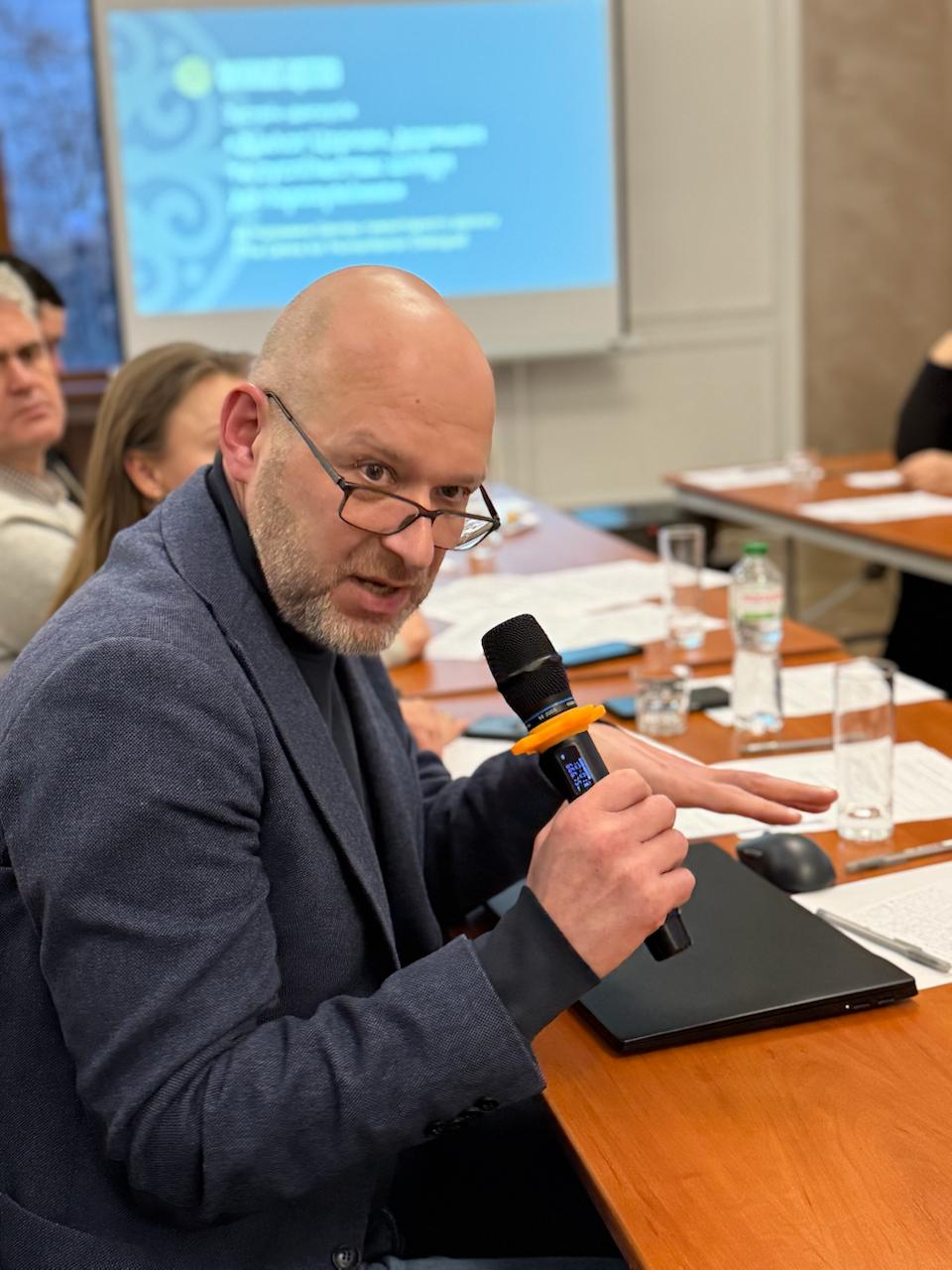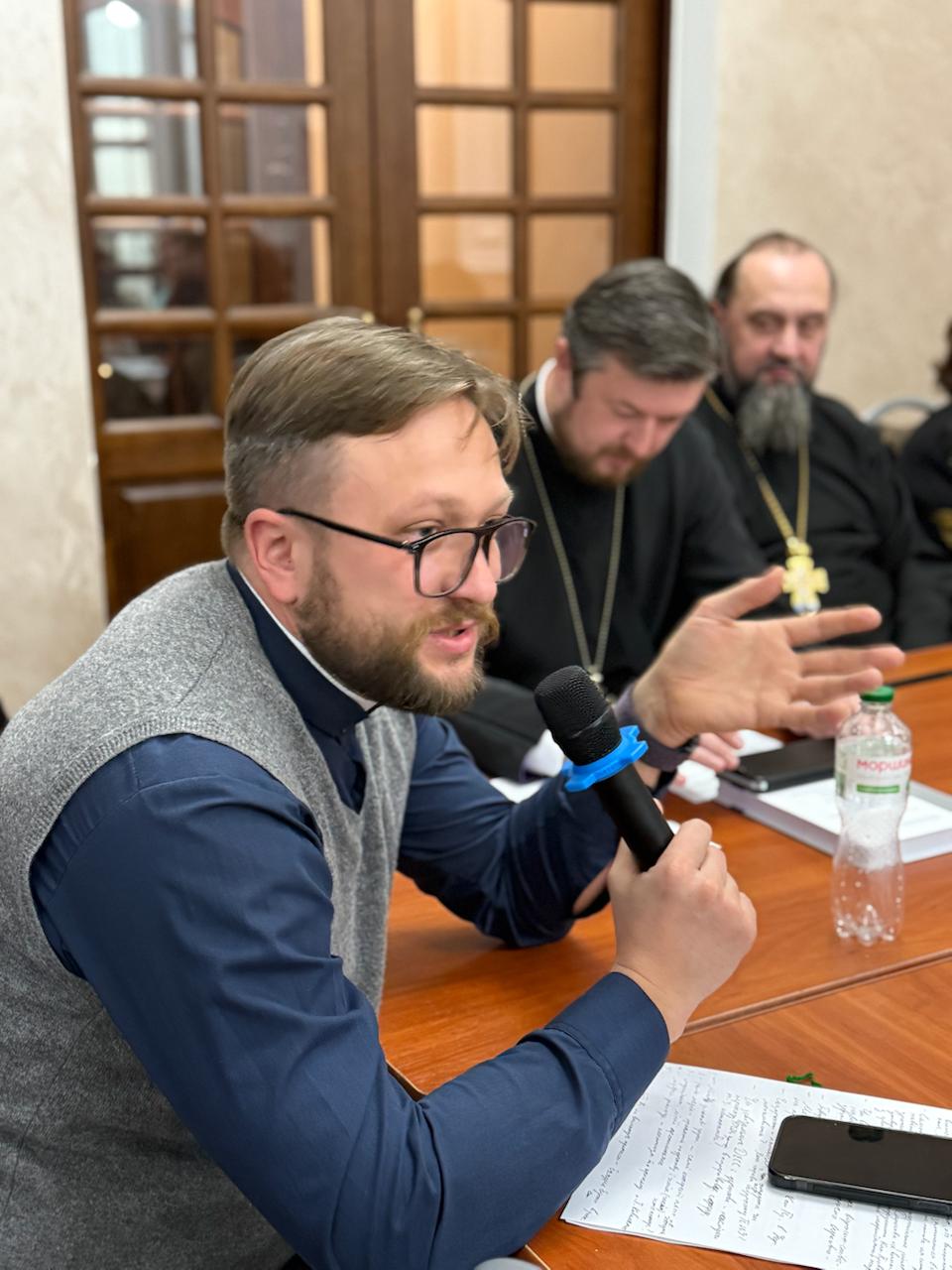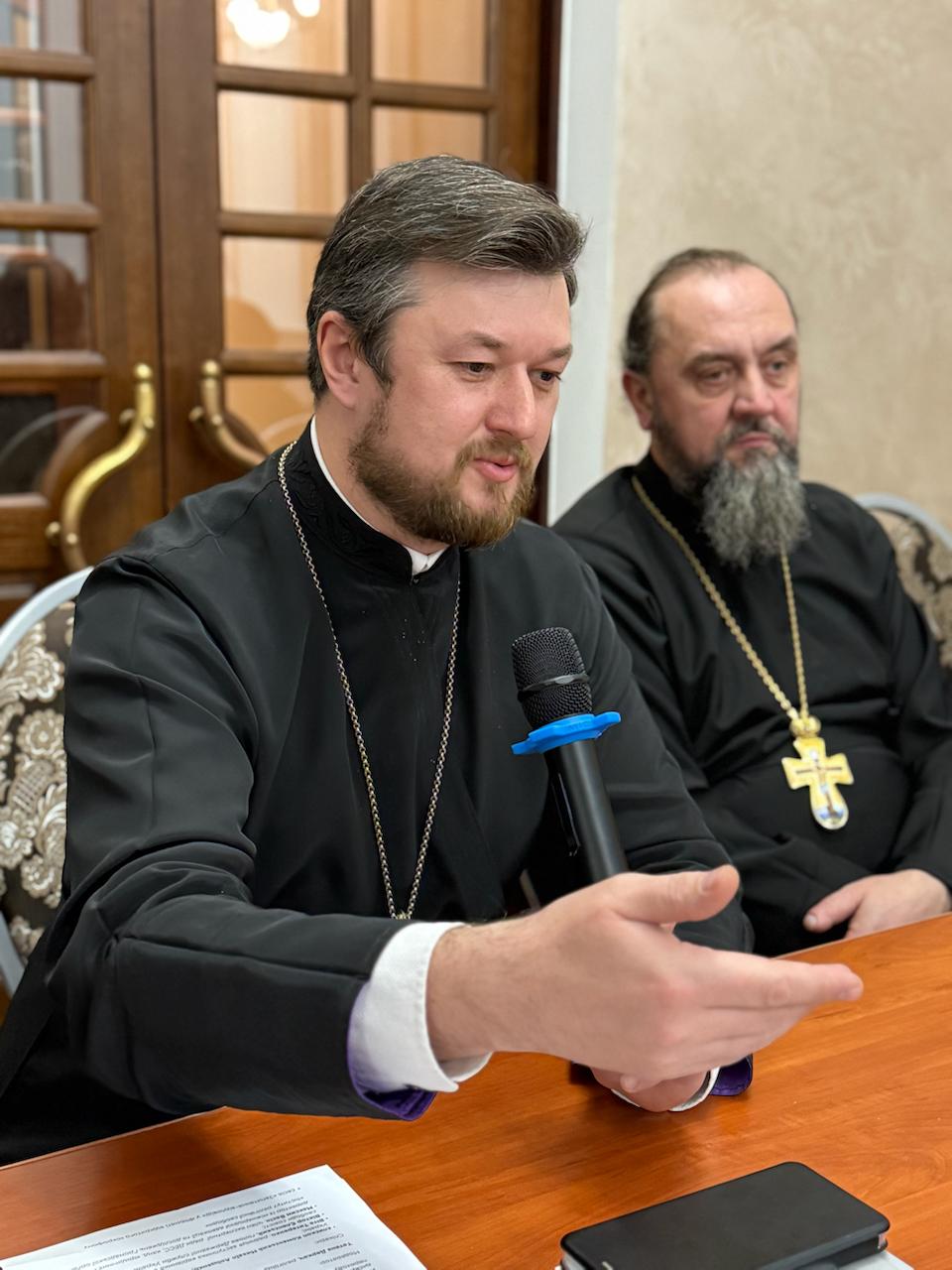
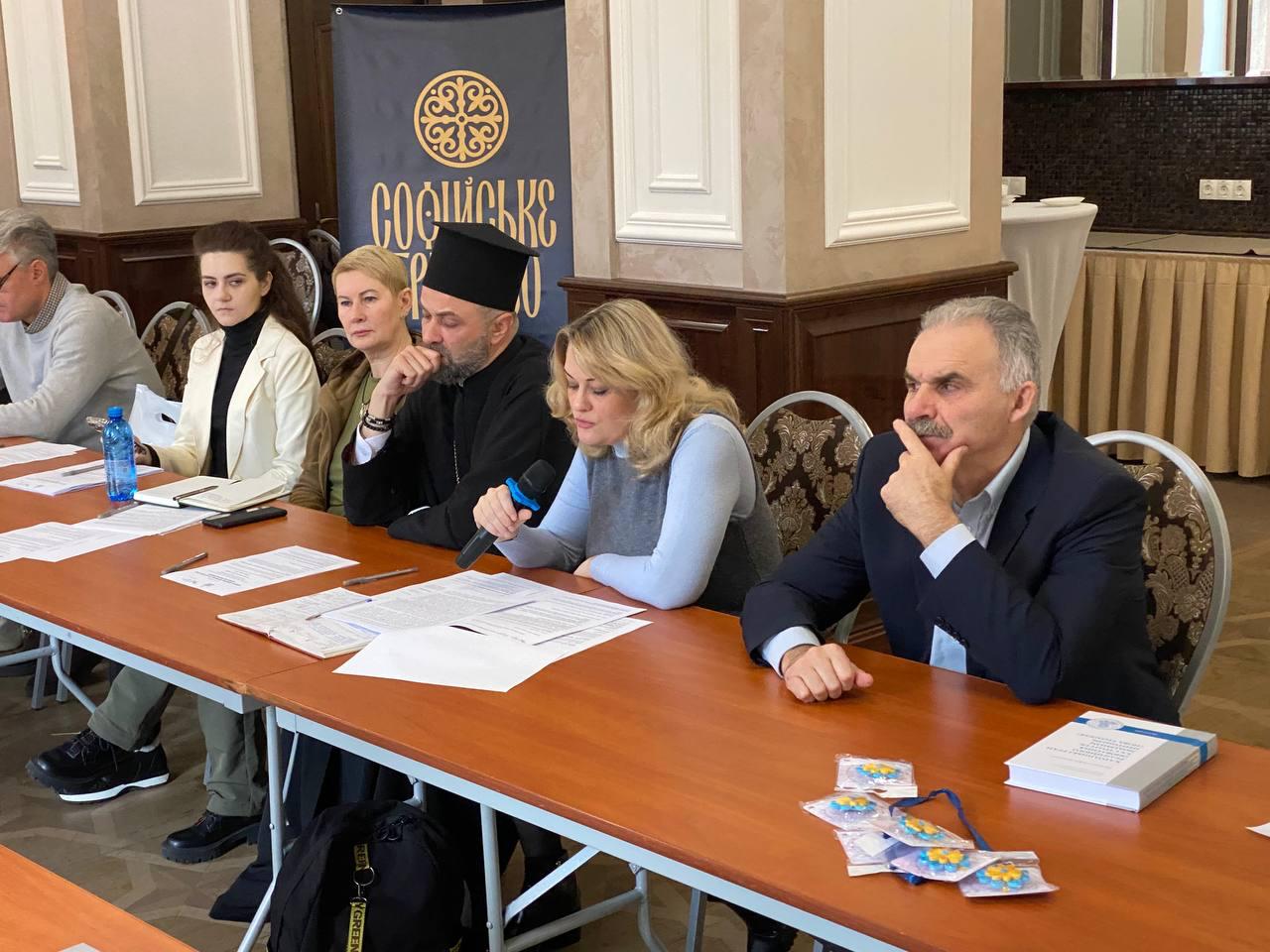
On December 10, 2025, a round table titled “Dialogue between the Church, the State, and Society: Paths to Mutual Understanding” was held in Kyiv. The event was organized by the Sophia Brotherhood with the support of the Centre for Humanitarian Dialogue. It brought together representatives of Churches from different jurisdictions, state institutions, the expert community, media, and civil society. Participants from various regions of Ukraine also joined the discussion online.
The purpose of the meeting was to create a platform for an open and professional discussion of complex issues in church–state relations in the context of the war, as well as to search for practical ways to foster mutual understanding within Ukrainian communities.
Participants were welcomed by the moderator of the meeting, Marina Burdeina, a member of the Brotherhood’s Board, who emphasized the importance of this gathering as a space for dialogue. The Chairman of the Board of the Brotherhood, Fr. Oleksandr Sorokin, stressed that today there is a particular need for formats that allow not only speaking out, but also truly hearing one another.
Panel 1. Law and the State in the Sphere of Religious Relations
The first panel was moderated by religious publicist Tetiana Derkach, who outlined the multi-layered nature of current church–state relations. She noted that the full-scale war has sharply intensified issues of religious freedom, public trust, and mutual responsibility, and warned against the loss of the value-based orientation of Ukrainian society.
Bishop Mykhail, Exarch of the Ecumenical Patriarch in Ukraine, emphasized the need for a clear delineation of competences between the Church and the state. Excessive interference by one institution in the sphere of another has historically led to conflicts, and today can only deepen divisions and increase the vulnerability of society. The Bishop underlined that the Church should not respond to war through radicalization, but must preserve moral maturity and care for people.
Vita Tytarenko, Adviser to the Deputy Head of the Office of the President of Ukraine, drew attention to the moral and ethical dimension of state decisions in the sphere of religion. In the context of war, she stressed, it is crucial to avoid “collective responsibility” and not to turn security measures into instruments of pressure on believers. Individuals who have become carriers of hostile narratives need time for enlightenment; otherwise, they risk retreating into “catacombs” and losing any dialogue with the state.
Viktor Yelenskyi, Head of the State Service of Ukraine for Ethnopolitics and Freedom of Conscience, emphasized that the state must simultaneously protect national security and guarantee freedom of conscience. The law on affiliation is not directed against believers, but against institutional dependence on a center located in the aggressor state. While the state should not interfere in theological matters, it has the right to demand transparency and compliance with the legal framework.
Maksym Vasin, member of the Expert Council of the State Service for Ethnopolitics and Freedom of Conscience and Director for International Advocacy at the Institute for Religious Freedom, focused on international standards and legal risks. He emphasized the importance of avoiding radical decisions that could lead to isolation or underground existence of some communities, as this would only deepen the crisis and create space for external manipulation.
Panel 2. Society, the Church, and Communities: Practical Paths to Mutual Understanding
The second panel was moderated by Prof. Hennadiy Khrystokin, Doctor of Philosophical Sciences, who noted that the discussion was dedicated to developing practical mechanisms for dialogue and peaceful coexistence within communities.
Viacheslav Horshkov, Head of the Department for Religious Affairs at the State Service for Ethnopolitics and Freedom of Conscience, stressed that the state must ensure equal conditions for all religious organizations and act strategically rather than punitively. He warned that outright bans only push groups underground, where the possibility of dialogue disappears.
Prof. Andrii Smyrnov, Doctor of Historical Sciences at the National University of Ostroh Academy, pointed to the absence of an official inter-jurisdictional dialogue and proposed, for discussion, an alternative to the Exarchate of the Ecumenical Patriarchate in Ukraine—namely, an Orthodox metropolis under dual subordination to Ecumenical Patriarch Bartholomew and Metropolitan Epiphaniy of Kyiv. He also focused on the question of who can act as an arbiter in complex inter-Orthodox processes in Ukraine. A. Smyrnov emphasized that the state is neither capable nor obliged to “solve all problems” between Churches, as this is a paternalistic approach that does not work.
Fr. Rostyslav Khrupchyk, a member of the Board of the Sophia Brotherhood, spoke about the responsibility of the clergy. In his view, peaceful coexistence cannot be imposed from above—it is born in parishes through the everyday conduct of clergy. When communities become alienated or retreat into the shadows, the space for trust and mutual influence disappears.
Ilona Sokolovska, Editor-in-Chief of the YouTube channel Viche, emphasized the role of media in reducing tensions. Media can either support a culture of dialogue or fuel conflicts, especially when local incidents are presented as nationwide. It is important to develop explanatory formats and avoid sensationalism.
Conclusions
As a result of the meeting, participants reached several key conclusions:
- Dialogue is the key to preserving social unity in times of war.
- The state must act prudently, maintaining a balance between security and religious freedom.
- The Church bears a special responsibility to prevent radicalization and to bear witness to Christian values.
- Local initiatives are the most effective mechanism for building peace between communities.
- Media must remain a platform for honest conversation, not an instrument of escalation.
The Sophia Brotherhood expresses its gratitude to all participants for the constructive discussion and support.
The dialogue continues.