Liudmyla Fylypovych, Doctor of Philosophical Sciences, Professor, Leading Research Fellow, Department of Religious Studies, H.S. Skovoroda Institute of Philosophy, National Academy of Sciences of Ukraine
The religious situation in Ukraine has always been within the sphere of scholarly and practical interest of researchers of religion, as well as religious, political, and state actors. In identifying the regularities of its development, experts mainly focus on quantitative and qualitative indicators of the religiosity of society, on the areas and scale of the spread of particular religions, on changes in the beliefs of individuals and their communities, and so on. The year 2022 may be considered a certain watershed—the beginning of Russia’s open aggression against Ukraine.
The main trends in the development of religious life in Ukraine in the period from 1991 to 2022 appeared as follows:
– growth of the significance of the religious factor in the public life of the country;
– increase in the number of religious communities and denominations;
– uneven distribution of religious organizations and confessional trends across the territory of Ukraine;
– deepening of intra-Orthodox confrontation;
– revival and strengthening of churches of national minorities;
– spread of new and non-traditional religions;
– formation of partnership-based state–church relations and friendly interconfessional relations by individual religious organizations, and so forth.
The Russo-Ukrainian war has introduced significant adjustments to the characteristics of the religious situation. Religious organizations have become genuinely present in the war—through their parishioners, especially chaplains and volunteers. Churches have become initiators and implementers of many new social programs aimed at supporting a wide range of institutions and organizations (the Armed Forces of Ukraine, the National Guard, the “Azov” unit, educational, medical, penitentiary institutions, etc.) and various segments of the population. Churches have demonstrated activity in cultural projects and in diplomacy as advocates of a just peace. Owing to religious leaders who exert influence on political and state figures, it has become possible to resolve not only religious/spiritual issues but also economic, financial, and humanitarian ones (in particular, reference is made to the mission of Protestant churches to the U.S. Senate, which contributed to the allocation of military aid to Ukraine).
Pluralism as the Basis of Ukraine’s Religious Landscape
To understand the main changes in the socio-religious reality, it makes sense to turn to certain quantitative and qualitative indicators which, although they do not fully describe the entire picture, nevertheless help orient us in the general trends.
Each year, the State Service of Ukraine for Ethnic Policy and Freedom of Conscience publishes a report on existing religious communities and denominations, recording the institutional network of churches in Ukraine by number of organizations. Despite the conditional and incomplete nature of state statistics, which rely on data from regional military administrations, as of 1 January 2025, Ukraine’s religious network is officially represented by 34,663 institutions. The Orthodox Church of Ukraine (OCU) comprises 8,291 parishes and 91 monasteries. The growth of the OCU has occurred in almost all regions except those that are temporarily occupied and Crimea, where the predecessors of the OCU—the UOC-KP and the UAOC—were banned by the occupation regimes. The OCU’s expansion through new communities is uneven: thus, the number of parishes in Khmelnytskyi Region increased by 42%, in Kyiv Region by 33%, and in Cherkasy Region by 19% (calculated by the authors based on the statistical report).
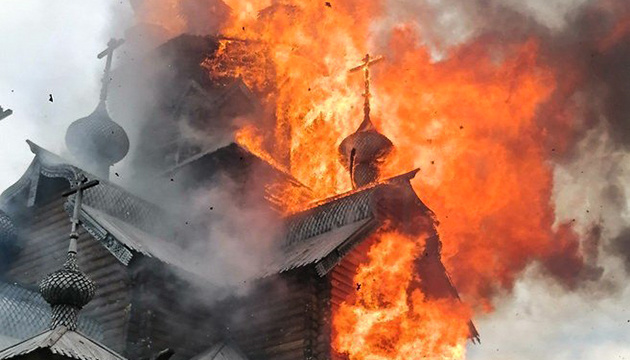
According to statistics, the Ukrainian Orthodox Church (in unity with the Moscow Patriarchate) numbers 9,792 parishes and 210 monasteries. There is not a single region where the number of this Church’s communities has remained unchanged during the war period. Everywhere a negative dynamic is observed. It is difficult to compare data for Donetsk Region, Luhansk Region, and Crimea, as there are no data for them at all. In Zaporizhzhia and Kherson Regions, on temporarily occupied territories, the UOC has reduced its presence, since its parishes are being transferred to the Russian Orthodox Church without the consent of the Church leadership or entire dioceses are being outright annexed (there are already nine such cases). Moreover, as a result of Russia’s military actions, the UOC has found itself among those denominations that have lost the greatest number of religious buildings. According to the “Religion on Fire” project, out of 643 destroyed religious structures, nearly half—338—belong to the UOC.
Compared to 2023, the UOC (MP) lost 794 parishes, while the OCU gained 216 communities. This raises the question of the difference of nearly 600 parishes that left the UOC but did not join the OCU. Where did these communities go? Presumably, some of them were subordinated to the ROC in the occupied territories, while others are in a process of self-determination.
The Ukrainian Greek Catholic Church has 3,494 parishes and 109 monasteries. The largest number of Greek Catholic organizations is found in Lviv Region (1,665), Ternopil Region (846), and Ivano-Frankivsk Region (716). The network of the UGCC is growing slowly in regions not traditionally associated with it: Vinnytsia, Zaporizhzhia, Odesa, Kharkiv, Kherson, and Chernivtsi Regions. In addition, 473 organizations have been recorded in the Mukachevo Eparchy (MGE).
The number of Roman Catholic parishes has remained almost unchanged. In some regions, the increase amounted to 1–2 communities. The largest number of communities is registered in Lviv Region—5.
Protestant churches are represented by various denominations—from classical (Lutherans) to modern (Charismatics). Germany-origin and Ukrainian Lutherans (82 communities), Reformed churches (118), Baptists (2,872), Pentecostals (2,916), Adventists (1,000), and Charismatics (1,380) are traditionally present in Ukraine. There are also Jehovah’s Witnesses (390) and Mormons (25). Islamic organizations of various orientations number 180 in total, and Jewish organizations number 315. Ukraine also has Buddhists (55), Baha’is (12), Krishna devotees (42), and other traditions of Eastern origin, as well as Rodnover (native faith) groups (150). Without listing all registered religious trends in Ukraine, we can conclude that there is significant religious diversity in contemporary Ukrainian religious life, the causes and representation of which have been repeatedly studied.
Wartime Migration
Among the problems faced by minority religions during the war, one must mention the catastrophic reduction in the number of members of these organizations as a result of wartime migration. This is especially true of those that have their administrative centers of historical origin (the so-called mother churches) outside Ukraine. Using their confessional affiliation, believers of minority religions, at the invitation of co-religionists, massively left Ukraine for Israel, Sweden, Germany, Turkey, Italy, Poland, Asian countries, and so on.
Such geographical movements of religious organizations from occupied territories and from the frontline zone, or the complete closure of communities, undoubtedly affect Ukraine’s religious network, changing the traditional areas of distribution of certain denominations and churches. Some displaced persons settled in Western Ukraine. Many Muslims from Crimea or Donbas settled in Lviv, Chernivtsi, and Kyiv Regions. Protestants from Eastern and Southern Ukraine, fleeing occupation, reached Ivano-Frankivsk, Ternopil, Zakarpattia, and Bukovyna. There they joined local co-religious structures which turned out to differ somewhat from their customary traditions. This leads to adjustments in their religious worldview and in the forms of perception of confessional truths.
Even greater trials awaited Ukrainian religious migrants outside Ukraine who wished to have their own Ukrainian churches with Ukrainian-language worship and preaching. Instead, abroad offered Ukrainian believers foreign-language communities of co-religionists. Even Russian-speaking Orthodox communities in Germany or France often evoke rejection. Upon encountering the alien culture of their own denominations or even a different religion altogether, Ukrainian Christians and non-Christians abroad experience additional trauma: the church, which should become a refuge and spiritual home, turns into a hotel or a dormitory.
Under such conditions, a displaced person feels alien, temporarily accommodated, loses prospects and confidence. As a result of overcoming such uncertainty, a new religiosity is formed among displaced persons, contradictory in character. Migrants, in particular, feel this strongly: their religiosity is no longer Ukrainian and not yet Polish or Swedish. A believing migrant either seeks to adapt to new religious conditions—which requires learning the language and accepting foreign rules of conduct—or radically refuses the offered reality, decisively rejecting it.
Level of Religiosity and Identity
The current state of religiosity of Ukrainian society is reflected in sociological surveys conducted by various research institutions. The most well-known and authoritative among them is the Razumkov Centre, which annually surveys Ukrainians on the state of state–church and socio-religious relations in Ukraine. About 70% of Ukrainians consistently declare themselves religious. In 2024 (the most recent surveys), 68% of Ukraine’s citizens considered themselves believers. Traditionally, the western region is more religious, where 85% called themselves believers. After the beginning of the full-scale aggression, 22% became more religious, 4% indicated that they became less religious, and 69% felt no change.
Nevertheless, under conditions of war, religious identity proved to be less important to Ukrainians compared to civic or regional identity: while 70% of citizens identify themselves with Ukraine as a state, 14% with the locality they come from, and 6% with nationality, only 2% identify themselves with people of the same faith and 0.7% with people of the same church.
Research by the Razumkov Centre revealed a decrease in the number of Orthodox believers from 70% in 2014 to 55% in 2024 (the reasons for this phenomenon have not yet been fully clarified). At the same time, the number of Greek Catholics has increased from 8% to 12%. The survey identified 2.5% Protestants, 2% Roman Catholics, 0.1% Muslims, 0.3% Jews, and 0.1% Buddhists. 9.8% stated that they are simply Christians, and 18% do not belong to any religion.
The survey made it possible to trace the dynamics of changes in the number of supporters of the OCU and the UOC. If in 2020, 20% of Ukrainians identified themselves with the OCU, in 2022 this figure was already 36%, in 2023 – 42%, and in 2024 – 35%. Meanwhile, the UOC lost supporters from 13% in 2020 to 5.5% in 2024. These complex processes of identification require separate analysis, as many factors influence such religious self-determination of Ukrainians. However, it can be stated unequivocally that Ukrainians do not want to associate themselves with churches which they consider non-Ukrainian in essence.
Overall Societal Assessment of the Role of Religion in Ukraine
Many facts testify to the state of the religious situation, including the general societal assessment of the role of religion in Ukraine, citizens’ attitudes toward individual denominations, the nature of relations among believers of different churches, public opinion on state–confessional relations, and so on. Gradually, Ukrainians are becoming aware of the positive role of religion and the Church in society. In 2022, due to the war, the number of those who changed their attitude toward religion increased significantly. If in 2021, 49.5% had a favorable attitude toward religion, the following year this figure rose to 59%. Trust in the Church traditionally remains within 65%. Orthodoxy traditionally enjoys a high level of trust and positive evaluation. 75% of respondents have a positive attitude toward the Orthodox Church. Only 1% perceive it negatively, and 18% are indifferent to Orthodox issues.
The survey recorded that since 2022, attitudes toward the UOC have deteriorated. Comparing 2024 with 2021, we see a decrease in positive attitudes from 34% to 13%, alongside a parallel increase in negative attitudes—from 24% to 54%. The overall Ukrainian attitude toward Greek Catholics is gradually changing. Currently, 37% of respondents express a positive attitude, and only 3% a negative one. A similar distribution of sympathies applies to Roman Catholics. There is also a dynamic in Ukrainians’ attitudes toward Protestants. Whereas in recent years the shares of those with positive and negative attitudes were approximately equal—14% and 15%—in 2024, 19% expressed a positive attitude and 10% a negative one.
Level of Conflict
The majority (54%) of respondents note that relations between believers of different denominations are calm, and even friendly (10%). Thus, the assessment of the level of conflict at the grassroots (parish and individual) level is decreasing, although tension in relations between Orthodox churches, especially among hierarchs, continues to worry Ukrainians. Our compatriots understand well what divides the churches: the sources of conflicts are named as political and property issues, as well as the ambitions of certain hierarchs.
Due to the war, religious issues have become extremely politically polarized. This has been reflected in Ukrainians’ views on the permissibility of state bans on the activities of certain churches and religious organizations. 74% of respondents supported the Law of Ukraine “On the Protection of the Constitutional Order in the Sphere of Activities of Religious Organizations,” adopted in August 2024. Ukrainians believe that a religious organization whose governing body is located in an aggressor state should not operate in Ukraine. 80% of respondents spoke out against the propaganda of the “Russian World,” which is carried out by religious organizations.
Sociologists asked: “Should the Church, religion be nationally oriented?” Under wartime conditions, society’s demand for a patriotic position of the Church has significantly increased. Since 2021, the share of those who support the national orientation of the Church has increased from 39% to 52%. At the same time, there are those who see such orientation as “national narrowness” of the Church. At present, this view is held by 27% of respondents.
Editor’s note: On 20–25 May 2025, at the request of Suspilne Broadcasting, the company Info Sapience conducted a sociological survey according to which 31% of Ukrainians would support a complete ban on the activities of the UOC. At the same time, if this would contribute to the signing of a peace agreement with Russia, 45% of respondents would agree (fully acceptable/mostly acceptable) to repeal Law No. 3894.
State–Church Relations
An important, and at times decisive, component of the religious situation is the sphere of state–church relations. Ukrainian society (65%) agrees that such relations should be partnership-based. At the same time, several directions of such interaction are identified: churches should be involved in shaping the national idea, the model of post-war reconstruction of the country, and should participate in the development of state policy strategies. The state, in turn, should cooperate more actively with religious organizations, unlocking their potential. Clergy should be involved in educating youth, in providing spiritual care for internally displaced persons, and for all segments of the population who need not only spiritual but also social assistance.
Despite all the problems that have emerged in Ukraine with regard to religious freedom during the war—particularly restrictions on the activities of religious organizations connected with the aggressor state or the lack of the right to alternative service for pacifists, and so on—63% of citizens are convinced that in the territories controlled by it, the state generally ensures freedom of conscience. However, Ukrainians are concerned about the gap between the declared right to freedom of religion and the actual ability to exercise this right. “Equality before the law of all religious organizations is declared, but not implemented,” half of the respondents believe. In this case, sociology does not explain what this attitude is based on. Nevertheless, in general we can speak of a narrowing of the field of religious freedoms in Ukraine not only due to the situation in the temporarily occupied territories, where no freedoms remain at all, but also due to the territories controlled by Ukraine, where wartime conditions necessarily prioritize national security over religious freedom, placing communal, national freedom above individual freedom (including the issue of mobilization of clergy).
Ukrainians have proven consistent in their rejection of the idea of introducing the institution of a state church. At present, 41.5% oppose it, although there remains a portion of those who would like to have a state church (31%), which is explained precisely by the war, when people think about factors of social consolidation and place their hopes also in the Church. Ukrainians positively perceive the religious pluralism that has historically developed in Ukrainian lands. Therefore, 46% support Ukraine’s multi-confessional character.
By the very nature of the Church, people see in it the institution that is called to be close to the people, to their needs and concerns, especially in the difficult conditions of war. Ukrainians support the involvement of the Church in state or public events and in civil rituals, in particular farewells to fallen servicemen or other citizens killed by the war, oath-taking ceremonies, the blessing of symbolic items important for Ukrainians, such as state flags, as well as state institutions and buildings, and so on. About half of the respondents express a positive attitude to this, and the number of such people is growing (42% in 2021, 54% in 2024).
State–church relations, which undoubtedly constitute an important component of the religious situation in Ukraine, have many directions. Some of them have already been positively developed (charitable activity, chaplaincy), others are at the stage of resolution (the sphere of education, spiritual care for Ukrainians abroad), but there are also problematic areas for mutual understanding (mobilization of clergy, alternative service, national security). In general, since the beginning of the Russo-Ukrainian war, both religious and state structures have shown a growing understanding of religious and social reality; state–church relations are becoming more constructive, and that partnership is being formed which defines the country’s future.
If we generalize the above-mentioned changes occurring in the religious life of Ukraine during the war, then in general (with some exceptions) we can speak of:
– strengthening of the role of religion in the life of society and of the individual citizen, and its justified claims to an integrating force in society;
– formation of a consolidated position of the majority of religious organizations regarding most social processes in the world and in Ukraine;
– relative stabilization of interconfessional and state–church relations, which critically depends on many external and internal factors;
– societal awareness of the participation of religious organizations in the Russo-Ukrainian war in both its positive (contribution to victory over the aggressor) and negative (collaboration with the occupation regime) dimensions;
– suspension of the growth of the religious network and reduction in the number of religious communities and denominations due to temporarily occupied territories and the annexed Crimea;
– reduction in the number of believers due to tragic losses among both servicemen and the civilian population, as well as mass wartime migration within Ukraine and beyond its borders;
– changes in the pre-war character of religiosity and a rethinking of the concept of pacifism;
– stagnation of the intra-Orthodox conflict with no visible prospects for its “thaw”;
– noticeable reformatting of Ukraine’s confessional map;
– threats of disappearance of minority religions and churches of national minorities;
– situational and systemic challenges to freedom of conscience and religious belief.
The religious situation shaped by the Russo-Ukrainian war today requires constant monitoring and analysis in order to timely identify dangers both for religions and for society, to eliminate or even prevent them. In the socio-religious sphere after the war, new challenges will arise, the contours of which are already becoming visible, and to which the Church, society, and the state must be prepared to respond.