This presentation was delivered on April 29, 2025, during the Round Table “Contemporary Ukrainian Orthodoxy: Debunking Myths for the Sake of Reconciliation and Social Consolidation in Ukraine,” organized by the “Sofiyske Brotherhood” with the support of the Renovabis Foundation. The Sofiyske Brotherhood may not necessarily share the views of the speakers; likewise, individual opinions expressed within the project may not reflect the consolidated position of the Brotherhood.
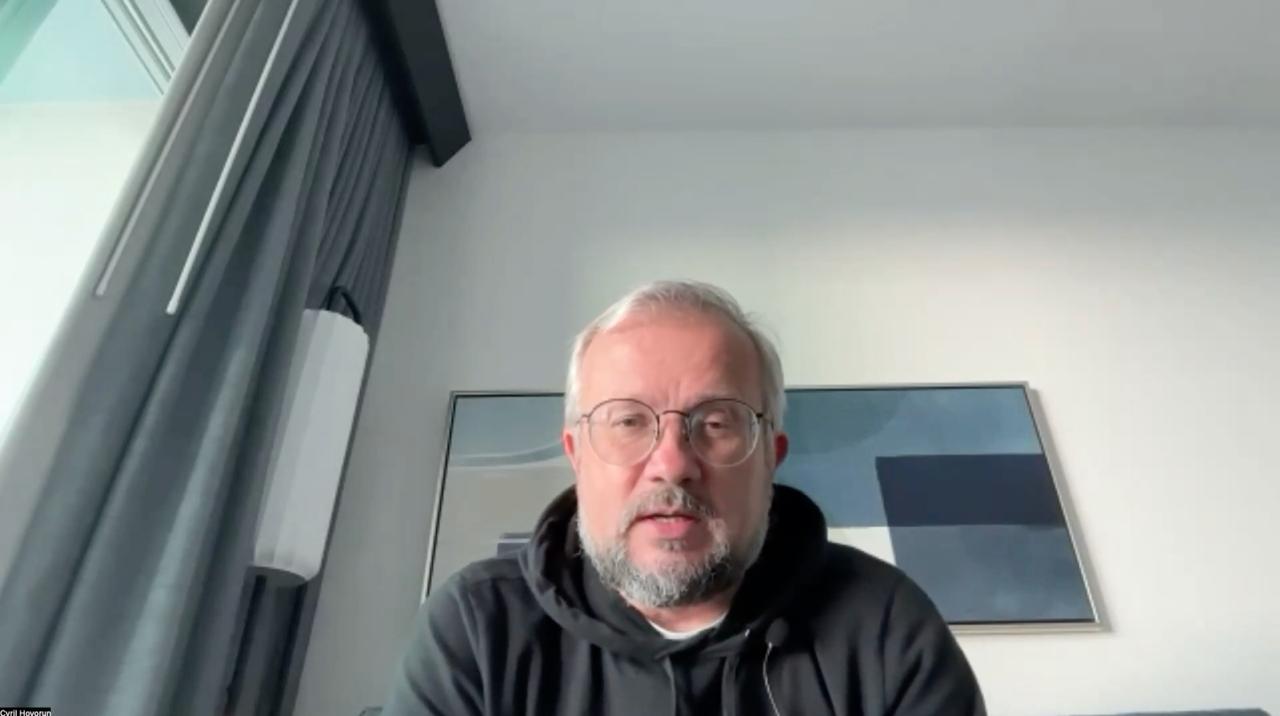
Archimandrite Kyrylo Hovorun, Doctor of Philosophy, Candidate of Theology, Professor at Loyola Marymount University and the Stockholm School of Theology, Ecumenical Patriarchate
Media play an extremely important role in the process of consolidating Ukrainian Orthodoxy. This process has been under discussion for quite some time, even since my years in Kyiv—or earlier. Without the involvement of media, such consolidation is fundamentally impossible. On the one hand, media can accelerate the process; on the other, they can also hinder it.
It all depends on the position they take. In Ukraine, we are witnessing a high level of confessionalization of the media space—or, to use a neologism, the jurisdictionalization of media. This phenomenon means that Orthodox jurisdictions, being in conflict with one another, simultaneously implement and project that conflict through their own media platforms.
It’s important to emphasize that this is not the result of religious diversity in Ukraine. On the contrary, religious pluralism in Ukrainian society does not by itself lead to serious conflicts. In fact, it can even be viewed as exemplary for both the European and global context. On the global level, religious conflicts most often occur between different religions—for instance, between Muslim and Jewish communities, particularly in relation to events in the Middle East.
Fortunately, Ukraine has seen a positive dynamic in the relationships between Muslim and Jewish communities, which today demonstrate an almost exemplary model of peaceful coexistence. This model can serve as an example not only for the global community but also for Orthodox communities in Ukraine.
Orthodox Christians in Ukraine should learn from the example of Muslims and Jews in overcoming differences—especially considering that the distance between those two monotheistic religions is significantly greater than between Orthodox jurisdictions. At the same time, relatively peaceful relations have returned between representatives of different Christian traditions in Ukraine. For example, the tensions that existed in the 1990s between Greek Catholics and Orthodox have largely disappeared. This demonstrates a significant improvement in interconfessional dialogue.
In this regard, the role of media must be acknowledged—particularly the work of the Religious Information Service of Ukraine (RISU) and its director Taras Antoshevskyi. Although RISU has an obvious affiliation with the Ukrainian Greek Catholic Church, it has effectively become an interconfessional platform. Protestant communities, especially Ukrainian evangelical churches, also play a significant role in supporting interconfessional peace. These churches actively advocate for Ukraine internationally, particularly in the United States. Their constructive approach to interconfessional dialogue facilitates their integration into society and contributes to the development of stable interfaith relations.
However, the main problem remains the jurisdictional relationships within Orthodoxy. It is precisely the Orthodox jurisdictions in Ukraine that serve as a negative example of how not to build interreligious relations. The conflict between them can cause a ripple effect across the entire fabric of public life—similar to a tsunami triggered by an undersea earthquake. The initial tremor may be minor, but its consequences on the surface are catastrophic.
This metaphor accurately reflects the Ukrainian situation. The conflict between the two Orthodox jurisdictions—despite their relatively small number of actual believers and their limited cultural or intellectual contributions to nationwide processes—has profound consequences for the country’s political climate and its international image. The inter-jurisdictional confrontation not only exacerbates domestic political tensions but also fuels distrust of Ukraine among international partners. And once again, the role of the media is key.
Each jurisdiction seeks to control its own media resources, and also to influence ostensibly independent journalism by shaping a loyal information environment. As a result, even highly professional Ukrainian journalism—deserving of great respect—comes under pressure from ecclesiastical jurisdictions that attempt to recruit journalists to their side.
In this context, religious media outlets not affiliated with any particular jurisdiction hold special value. Although their market share is small, they can provide the foundation for the future consolidation of Ukrainian Orthodoxy. It is only from this independent media space that unifying messages can emerge—messages necessary to overcome internal Orthodox divisions. In contrast, jurisdictional media often only deepen existing differences.