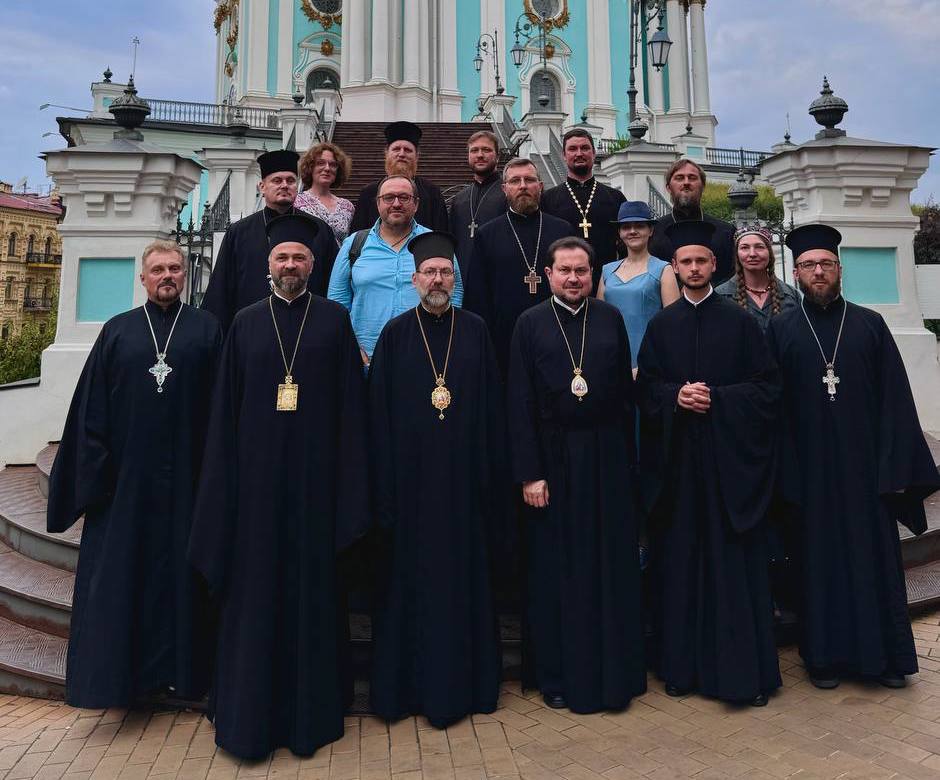
Yesterday, on August 28, a long-awaited and significant event took place for the Sophia Brotherhood. Responding to our initiative, members of the Ecumenical Patriarchate’s delegation, consisting of Archbishop Ilarion of Winnipeg, Metropolitan of the Ukrainian Orthodox Church of Canada, Metropolitan Job of Pisidia, and Patriarchal Deacon Epifanii Kamianovych, met with representatives of our non-governmental organization at St. Andrew’s Church.
The event was also attended by the head of the Mission of the Stauropegion of the Ecumenical Patriarchate in Ukraine, the Exarch of the Ecumenical Patriarch in Ukraine, Bishop Michael of Comana.
Clerics and laity from various jurisdictions, including the Orthodox Church of Ukraine, the Ukrainian Orthodox Church, and the Ecumenical Patriarchate from the diaspora, had the opportunity to share their painful experiences and discuss the problems, hopes, and achievements of Ukrainian believers. The Sophia Brotherhood, which has been engaged in cross-jurisdictional dialogue since 2022, is deeply concerned about the ongoing conflict among the Orthodox in Ukraine. At the same time, the current liturgical life and the constant search for unity during this period have suggested potential solutions to the current crisis at both the personal and institutional levels, which were the focus of discussion during this friendly conversation.
Representatives of the Ecumenical Patriarchate reacted vividly to the Brotherhood’s speeches, commenting on almost every remark. Metropolitan Ilarion particularly emphasized the important role of community-based movements of believers in reconciling jurisdictions. He called on the Brotherhood to continue its efforts, promising to convey the constructive ideas expressed during the conversation to His All-Holiness Patriarch Bartholomew. Metropolitan Job, in turn, highlighted the need for balanced decisions and the inadmissibility of radical actions in interfaith relations.
It is worth noting that both diocesan bishops are actively involved in the spiritual life of Ukraine and contribute to the development of its theology, including the promotion of leading theological publications. In general, despite the high level of representation, the conversation was surprisingly easygoing, welcoming, and casual. This atmosphere was likely due to the shared concern of all participants: finding the best ways to overcome cross-jurisdictional discord among Orthodox Ukrainians.