
Ilona Sokolovska – Editor-in-Chief of the YouTube channel «Viche»
There are words that are easy to pronounce from a stage — under cameras and applause. And there are words that are difficult to whisper in a Russian penal colony — because you are punished for them. “Faithfulness.” “Conscience.” “Ukraine.”
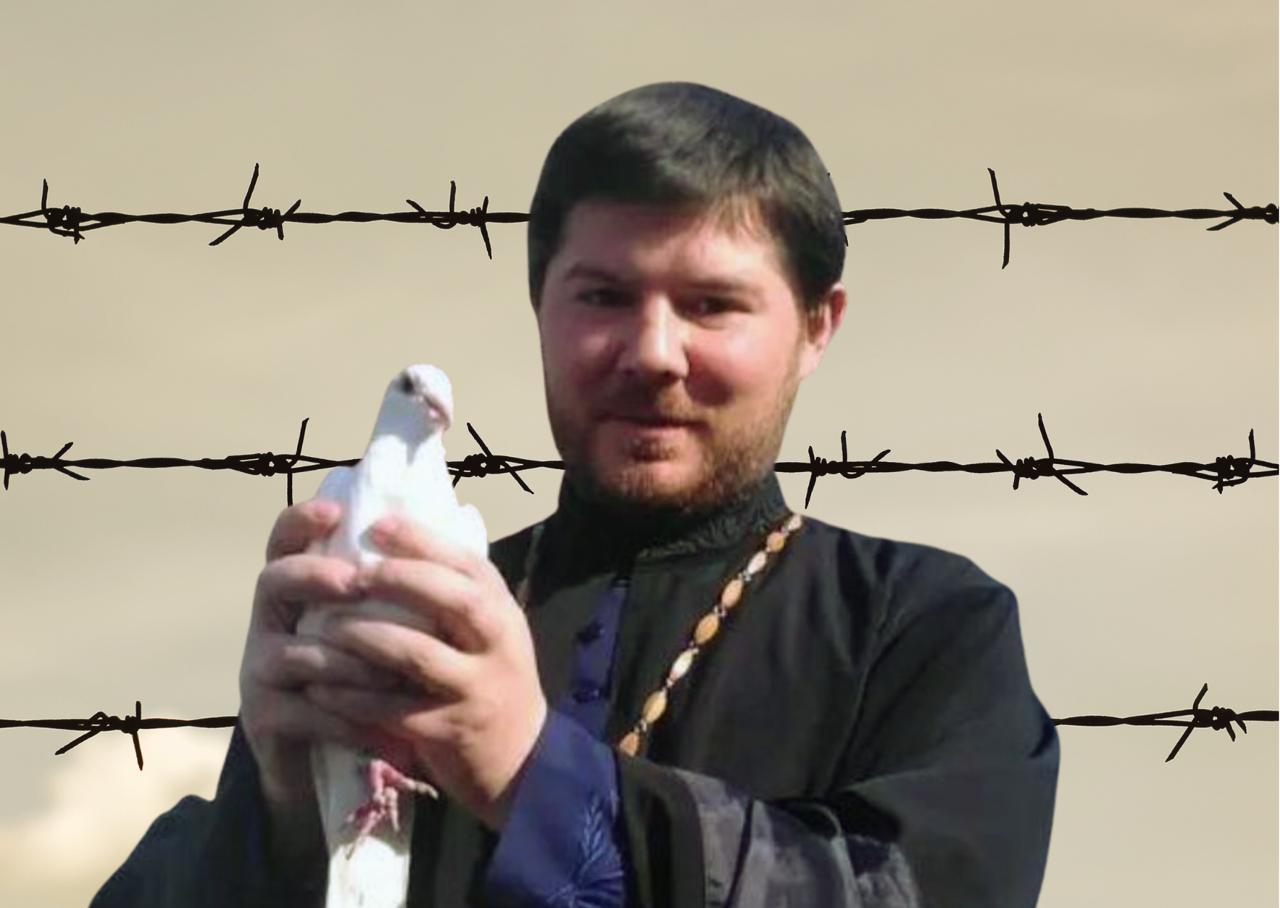
Archpriest Kostiantyn Maksymov, a priest of the Ukrainian Orthodox Church from Tokmak in the Zaporizhzhia region, has been imprisoned in Russia for almost four years. In 2024, the so-called “Zaporizhzhia Regional Court” of the occupation authorities sentenced him to 14 years in a high-security penal colony on charges of “espionage for Ukraine.” His relatives and those following the case consider it politically motivated and fabricated.
Yet in this story, what matters is not even the wording of the verdict, but what explains it. According to those close to him, Father Kostiantyn was punished for refusing to cooperate with the occupation authorities; for refusing to transfer to the Russian Orthodox Church; for not commemorating Patriarch Kirill; for declining to obtain a Russian passport; and for publicly praying for Ukraine and its people. This is not a “political gesture” — rather, it is a line a person draws for himself and refuses to cross.
Colony
Today Father Kostiantyn is held in Penal Colony No. 10 in Saratov. According to his family, his health has sharply deteriorated: gout, severe joint pain, untreated bronchitis, and the loss of teeth. His mother — a pensioner — struggles on her own, with a meager pension, to maintain correspondence and send parcels.
In such details lies the everyday dimension of war. Not only the front line, but also places where a person is deliberately made to “disappear from the radar”: through isolation, lack of medical care, uncertainty, and the exhaustion of the family. That is why letters from captivity weigh more than any loud statements: they restore names and faces to those whom the system wants to turn into mere “numbers.”
A Letter Where the Essential Is Heard
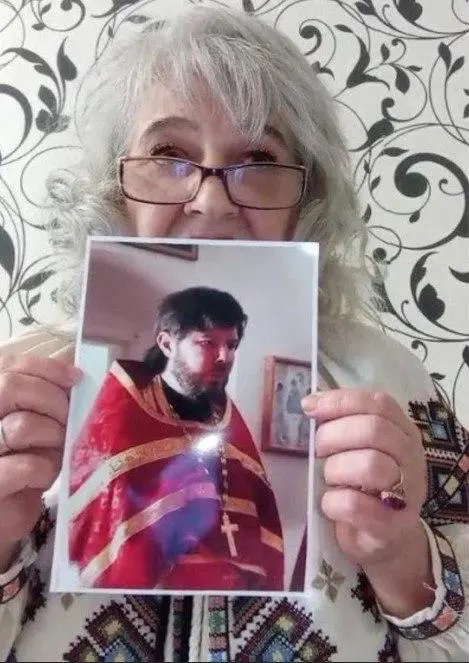
Back in November 2024, according to relatives, Father Kostiantyn wrote to his Primate, Metropolitan Onufriy, asking him to petition for his exchange as a civilian hostage and political prisoner. In September 2025, his mother recorded a public video appeal to the leadership of the UOC; it was reported by the YouTube channel «Viche».
The family says that throughout all this time not a single representative of the church leadership has contacted them — neither with words of support, nor explanations, nor real help (at least none that the family could feel).
In January 2026, Father Kostiantyn wrote another letter. He does not demand the impossible. He asks the simplest thing — whether “his own” know about him and whether there is at least some sign of presence:
“Hearing how Muslims and Protestants here receive letters of support from all over the world, I hoped to receive at least some message from my Primate… Sometimes thoughts arise that we truly are not needed by anyone and have been forgotten…
In this regard, I have a question for my Primate: Your Beatitude, do you know that I am in prison? All this time I hoped to hear words of support and consolation from you. But in response — silence…
I ask for your prayers.”
(Penal Colony No. 10, Saratov, 19 January 2026)
These lines hurt precisely because they are restrained. This is not a political manifesto or an information attack — rather, a human question from behind bars: “Have I disappeared for my own people?”
Where Is Persecution Real, and Where Is It Convenient?
This story casts an uncomfortable light on a disproportion that is often ignored in church circles. We regularly hear hierarchs of the Ukrainian Orthodox Church speak about “persecution” on international platforms — often loudly, appealing to religious freedom. Yet even after the banning of the Russian Orthodox Church in Ukraine, no one has been imprisoned for commemorating the Moscow patriarch.
There is a difference between public debates about legal conflicts (where questions may be directed at the state, church structures, and procedures) and real persecution by occupation authorities — when a person is imprisoned for refusing to accept the occupation and the church rules imposed by it. In Father Kostiantyn’s case, according to his relatives, it is precisely the latter.
This creates not only a moral but also a reputational risk: when the loudest statements concern “persecution” in situations involving legal or property disputes — while the story of a priest imprisoned precisely for his loyalty to Ukraine and his Church does not receive the same consistent public advocacy.
Questions That (In My Opinion) Can No Longer Be Avoided
I do not know everything that may be happening behind the scenes. Perhaps some steps are taken quietly. But if the family says they do not even have basic contact, then the author has the right to ask several direct questions — without ultimatums, but also without self-deception.
Why is the topic of “persecution” raised selectively?
Why is it most often discussed when it concerns conflicts with Ukrainian law or public reaction — and much less often when there is a colony, a sentence, isolation, and real persecution by occupiers?
Why has Father Kostiantyn’s story not become an international human rights case?
If there are channels of communication with international religious and human rights communities, why is this story not consistently heard there? Where is the public demand for his release?
Why do representatives and sympathizers of the UOC in the United States not speak about him openly?
How does the thesis “we are outside politics” align with the absence of visible support for one’s own priest?
And finally: what exactly has been done — and why can’t at least something be said publicly?
Even if much cannot be disclosed, elementary things are possible: contact with his mother, words of support, a clear signal that the person has not been abandoned.
These questions are not meant to “attack.” They are meant to bring reality back into focus. Because silence in such stories quickly turns into a vacuum — and a vacuum is always filled by someone else’s interpretation.
A Minimum of Responsibility — and a Minimum of Humanity
This situation is not about public relations or political campaigns. It is about the minimum of pastoral and human responsibility:
a public sign of support — even a short one — that the priest has not been forgotten;
systematic contact with the family;
clear communication about steps taken with human rights institutions and state mechanisms concerning civilian captives;
and simply saying “we are with you,” in time.
Because a letter from a colony is not an “information occasion.” It is a reminder of the line beyond which words lose their meaning. And that the true price of faithfulness is measured not in press releases, but in whether the community leaves a person alone when it is darkest.
And the question from the letter is very simple and very heavy:
“Your Beatitude, do you know that I am in prison?”
Financial support for Father Kostiantyn and his mother can be sent to the card:
Svitlana Pavlivna Maksymova
4731 2196 1856 1710
Source: df.news