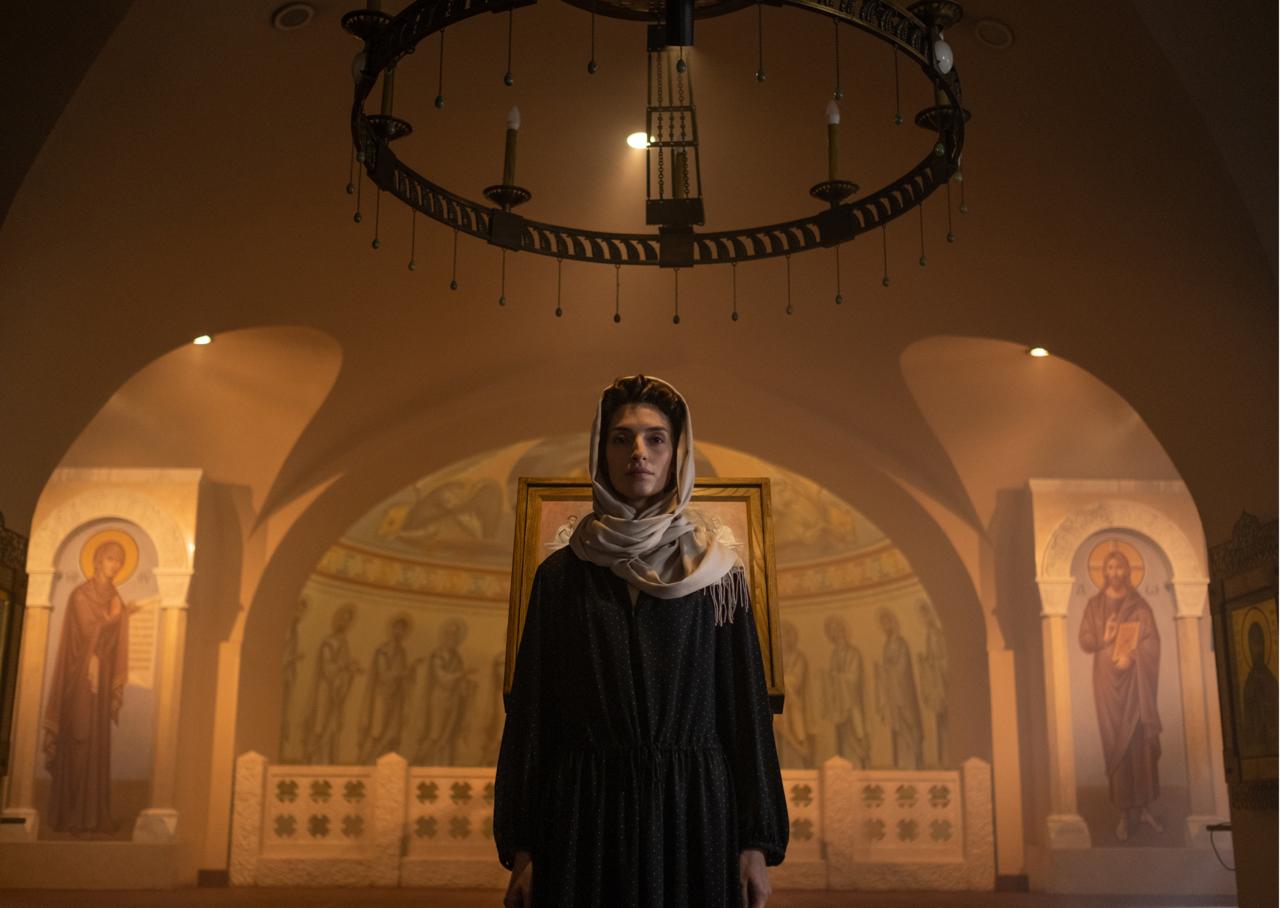
Part of the “Thoughts Aloud” mini-series created jointly by the “Sofia Brotherhood” and the German foundation Renovabis, within the project “Contemporary Ukrainian Orthodoxy: Breaking Myths for Reconciliation and Societal Consolidation.” Statements do not necessarily represent the official view of the Sofia Brotherhood.
Fr. Heorhii Khodun, OCU (Sumy region)
Amidst ecclesiastical confrontations, loud proclamations, and political maneuvering, one voice seems to get lost the most easily – the voice of the ordinary parishioner. A believer who goes to church not for political dividends or social status, but for spiritual meaning, for communion with God, for comfort and truth. And who is pained to see how in this struggle over jurisdictions, churches, and influence, their voice – the voice of thousands or even millions like them – becomes completely irrelevant. They are not heard – neither in the Ukrainian Orthodox Church (UOC), nor in the Orthodox Church of Ukraine (OCU).
In the UOC, the believer is assigned a rather simple role: faithfully attend services, observe traditions, donate to the needs of the parish, and above all – don’t ask too many questions. Especially not about ties with Moscow, which is waging a bloody war against our country. Any attempt to express doubt, concern, or simply to seek clarity is viewed as a temptation from the devil, bordering on heresy. At best, you’re politely ignored; at worst, you’re labeled a “schismatic,” a “provocateur,” or someone “not truly of the Church.”
There are virtually no mechanisms for feedback. Decisions are made from above – by the Synod, bishops, or senior clergy. Pastors often see their flock as objects of pastoral care or sources of financial support, not as subjects of church life with their own thoughts, experiences, and – most importantly – the right to be heard. Loyalty to the hierarchy is valued above honest questions or constructive criticism. As a result, a believer’s faith must be blind, and their place only under the dome, not at the table of discussion.
Unfortunately, a similar situation exists in the Orthodox Church of Ukraine. After receiving the Tomos, which brought so much hope, it seemed that now a true dialogue would begin – that the voice of the faithful would matter, since the OCU positions itself as an open Church. But reality turned out somewhat differently.
Yes, the problem of “Moscow ties” has disappeared, and that is a major plus. But have real mechanisms emerged through which the faithful can influence parish, diocesan, or overall Church life? No. Attempts to express initiative or dissent often meet with a wall of misunderstanding or passive resistance. At best, a believer won’t be forbidden from speaking – but their words will ultimately change nothing.
Where is the conciliarity so often discussed by theologians? Where is the voice of the Church people – an integral part of the Body of Christ? In both structures, the believer is often treated as a consumer of religious services, not as a co-creator of Church life. This lack of feedback, this deafness to the voice of the faithful, is not just an unfortunate circumstance. It is a systemic problem that hinders the Church’s development in Ukraine. Contemporary society – especially youth – will not accept authoritarian models that disregard their views. People are seeking not only spiritual guidance, but also a community where they are heard and can participate actively, not remain passive observers.
If the Church truly wishes to be living, dynamic, and responsive to the challenges of the time – thus fulfilling its mission – its hierarchy must learn to listen to the faithful. This means not just holding formal meetings, but creating real platforms for dialogue, mechanisms for voicing opinions, and genuine inclusion of grassroots initiatives. It means trusting the people of God and involving them in making important decisions – not just burdening them with obligations.
Believers want to be heard in their Church. They want their contribution to be valued and to have the opportunity to build together a community of Christ’s disciples. Until that happens, they will remain caught between two fires – feeling like unwelcome guests in their own house of faith.