Part of the “Thoughts Aloud” mini-series created jointly by the “Sofia Brotherhood” and the German foundation Renovabis, within the project “Contemporary Ukrainian Orthodoxy: Breaking Myths for Reconciliation and Societal Consolidation.” Statements do not necessarily represent the official view of the Sofia Brotherhood.
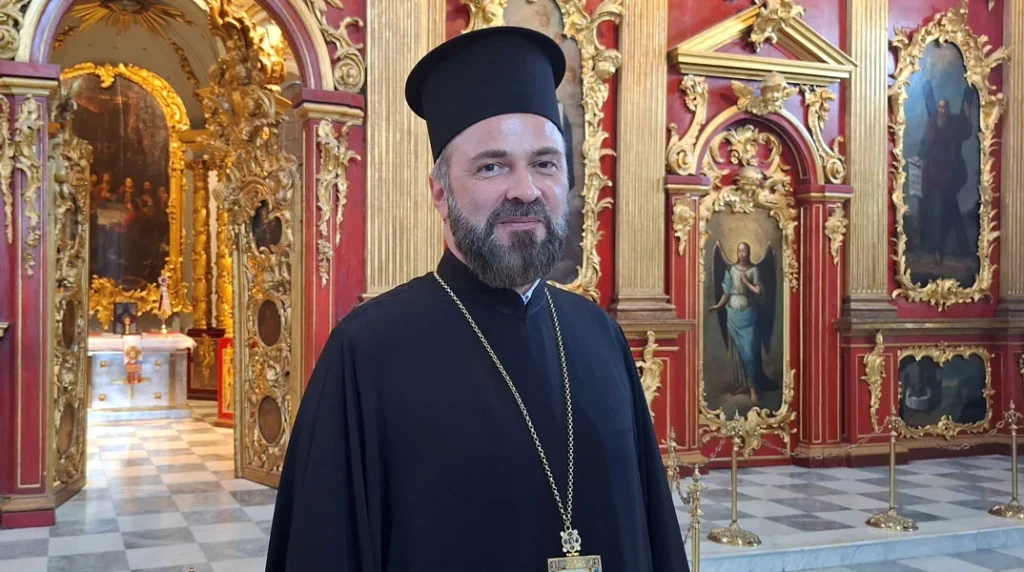
Fr. Heorhii Khodun, Orthodox Church of Ukraine (Sumy region)
In the turbulent sea of contemporary Ukrainian Orthodoxy, where religious currents collide with geopolitical storms, the question “What is faith?” arises with particular urgency. This tension is vividly reflected in the relationship between the Ukrainian Orthodox Church (UOC) and the Orthodox Church of Ukraine (OCU). For many UOC believers, joining the OCU is perceived as an act of betrayal—a departure from the “true faith.” Remaining within one’s jurisdiction, on the other hand, is framed as “faithfulness to the truth.” But is that truly the case? Might these declarations hide a simple substitution of concepts, where centuries-old tradition and personal habit are mistaken for genuine discipleship?
“Hold fast to the faith”—a phrase echoed from pulpits, repeated in sermons, and etched into the consciousness of millions. “Yes, we are sinners, but we remain in the true faith”—these words carry deep emotional weight, promising spiritual assurance and a sense of belonging to the eternal amid an ever-changing world. Yet what exactly is meant by this “faith”? Is it a set of dogmas defined by the Ecumenical Councils? A particular liturgical style inherited from past generations? Or is it, perhaps, allegiance to a specific church structure?
In the current confrontation—where the UOC finds itself under societal pressure due to historical ties with the Moscow Patriarchate—we often see “true faith” equated with belonging to a certain jurisdiction, while members of another are denied even the right to be considered baptized. To be in the UOC is to “hold the faith,” to “remain in the truth.” To be in the OCU is to “betray the faith,” to “fall away from salvation.” This narrative is a potent instrument of influence, playing directly on the fear of losing one’s salvation.
However, if we take an unbiased look, behind these loud proclamations lies something much simpler—and at the same time more complex: human tradition and habit. For the past few centuries, the majority of Ukrainian Orthodox Christians have been under the jurisdiction of the Moscow Patriarchate. This shaped not only customs and rituals but even a certain mentality. For many, this became part of their identity, woven so seamlessly into their being that any change feels like an assault on their very foundations. But when habitual forms are equated with the essence of faith, and one jurisdiction is mistaken for the fullness of the Universal Church, we are not only objectively mistaken—we risk losing what is most essential. For in this approach, following Christ is replaced with a tradition that becomes self-sufficient.
And here arises the key question: What does it mean to follow Christ? Does Christ demand loyalty to a particular jurisdiction (especially in opposition to another)? Is His call to love, mercy, forgiveness, truth, and service to our neighbor bound by human-drawn ecclesiastical borders?
If we turn to the Gospel, we see that following Christ means living according to His commandments, striving for unity with Him through Scripture, prayer, the sacraments, and spiritual growth. Can this be done within the UOC? Absolutely. Can it be done within the OCU? Equally absolutely. Both jurisdictions profess the Nicene-Constantinopolitan Creed, perform the same sacraments, share a common liturgical tradition, and—albeit indirectly—participate in Eucharistic communion. Therefore, the dogmatic foundation for following Christ exists in both.
The difference lies not in dogma, but in canonical status, historical affiliations, and—most importantly—in how the role of the Church is interpreted in modern Ukrainian society. For many, transitioning to the OCU is not a betrayal of the faith, but a conscious choice to build a Church that is not only part of global Orthodoxy but also responsive to the contemporary needs of the Ukrainian people. Thus, when we hear appeals to “hold fast to the faith,” we should ask: What exactly are we being urged to hold on to?
True faith is not passive preservation of the past, but responsible living in the present, with eyes fixed on Christ. Following Him is not a static position where the past is valued more than the present or future—it is a dynamic journey that demands discernment and courage. And that journey is open to anyone seeking Christ, regardless of the name on the sign above their church door.