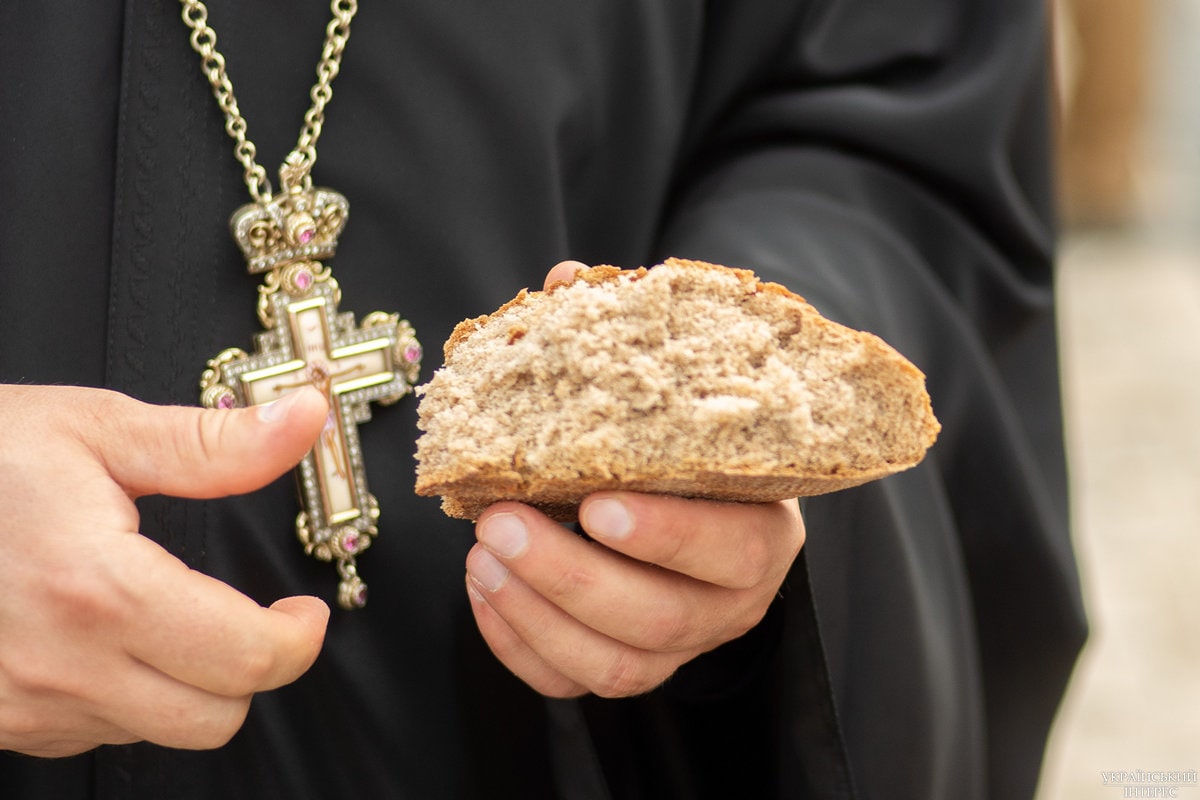
Part of the “Thoughts Aloud” mini-series created jointly by the “Sofia Brotherhood” and the German foundation Renovabis, within the project “Contemporary Ukrainian Orthodoxy: Breaking Myths for Reconciliation and Societal Consolidation.” Statements do not necessarily represent the official view of the Sofia Brotherhood.
Heorhii Khodun, Priest of the Orthodox Church of Ukraine (Sumy Region)
In a world that changes by the minute, where information flows endlessly and challenges press harder than ever, society expects the Church to offer more than spiritual care—it demands a clear prophetic stance. I want a Church that does not shut itself within its four walls but reads not only the Gospels but the news as well.
That might sound strange. Isn’t the Church supposed to be “not of this world”? Isn’t its mission the salvation of souls and the proclamation of eternal truths? Absolutely—it is its highest calling. But does that mean the Church must remain silent in the face of disaster? When innocents perish, injustice triumphs, society stands at a crossroads, and values are eroded?
Unfortunately, we often hear excuses from some church leaders that mask indecision or even incompetence, invoking a great chasm between the “secular” and the “spiritual.” They argue that politics, social issues, and wars are “of this world”—irrelevant to the salvation of the soul. They insist the Church must remain “outside politics,” and its ministers should not meddle in worldly affairs.
At first glance, this position may appear devout. It paints the Church as an oasis of peace and purity amid a sinful world. But in reality, it dangerously distorts Christian teaching. Christ did not come to separate Himself from the world, but to save it. He engaged with sinners, spoke against injustice, and His teaching carried deep social implications. He taught us to love our neighbor—so how can we claim to love while ignoring their needs and, worse, their suffering?
Christianity is not merely a set of dogmas or rituals, nor is it solely a search for personal salvation. It is active participation in the lives of others. If my neighbor suffers from war, injustice, or poverty, the Church cannot turn away and call it “non-salvific” or “secular.” That’s deception. Is complacency in suffering salvific? Is silence in the face of tragedy not complicity? A Church that follows Christ cannot turn deaf ears to the cries of its people. It must not hide its inaction behind the banner of “spirituality.” It must be a voice of conscience—exposing evil, defending the weak, advocating for justice and peace.
Of course, this doesn’t mean the Church should become a political party or a civic organization. Its tools are different—prayer, moral authority, bearing witness to truth. Yet for effective ministry and witness, the Church must know what is happening in the world, understand the root causes of pain and suffering. It must read the news—not to drown in worldly busyness—but to interpret events through the Gospel’s lens, offer a Christian assessment, and find appropriate ways to fulfill its mission.
I need a Church that does not fear calling war “war,” evil “evil,” the aggressor “the aggressor,” and injustice “injustice.” A Church that does not seek excuses to remain silent, but seeks opportunities to act. A Church that understands the path to salvation is not through isolation from the world, but through active participation in its healing. Such a Church will be for me not just a place of prayer, but a light in darkness, a beacon of hope, and a true guide through life.