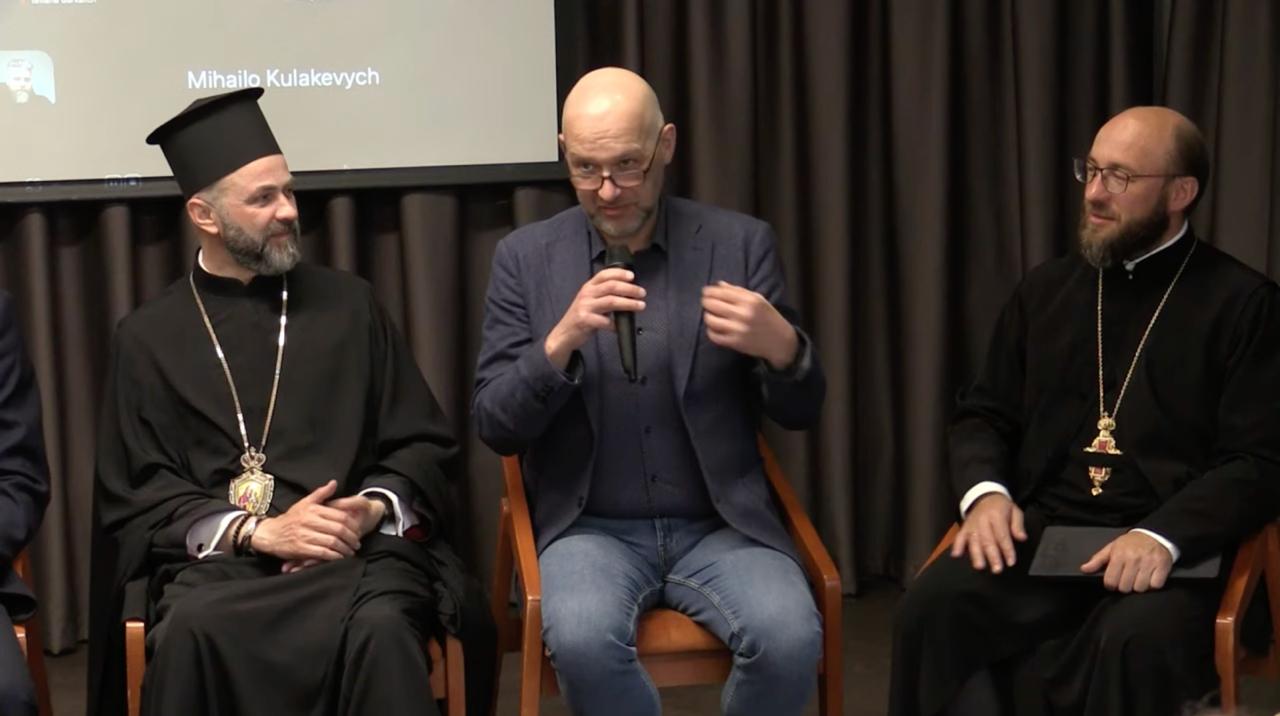
Response given during the panel discussion at the Round Table “Contemporary Ukrainian Orthodoxy: Debunking Myths for the Reconciliation of Orthodox Christians in Ukraine,” held on April 29, 2025, in Kyiv as part of the enlightening-analytical project “Contemporary Ukrainian Orthodoxy: Debunking Myths for the Reconciliation of Orthodox Christians in Ukraine and the Consolidation of Ukrainian Society,” organized by the Sophia Brotherhood with support from the Renovabis Foundation.
Viacheslav Horshkov: I want to remind us that the real division isn’t between communities of the so-called Ohienko and Brianchaninov traditions – it runs deeper. We should simply ask the average Orthodox believer: who among them has gone through catechesis? Who actually knows the Scriptures, or is even familiar with the New Testament texts? This is where the problem lies.
Another issue is this: the central act of worship in the Orthodox Church is called the “liturgy” – which literally means “common work.” But is it truly that? I’m not so sure. I once taught a course called “The Bible and the Liturgy”, and what becomes clear is that liturgical texts help us understand how it was meant to be from the beginning. Liturgy should be the culmination of one’s life with God throughout the week – a time when people gather and actually have something to share: their lived experience of walking with God. But honestly, we hardly see anything like that today.
And I know from experience that – regardless of which Orthodox jurisdiction someone belongs to, or even which religious tradition (we can go beyond Orthodoxy, even beyond Christianity) – where people truly live with God and seek Him, and where there is dialogue and exchange of spiritual experience, those people will have far more in common with one another than with members of their own jurisdiction who do not live in relationship with God.