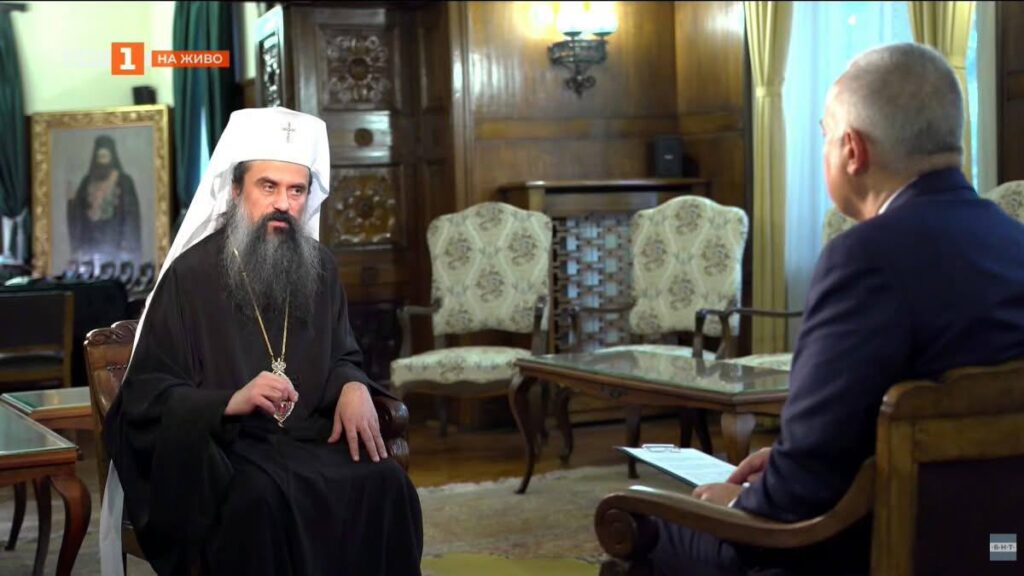

Dr. Lidiya Lozova, member of the Sophia Brotherhood
The sermon was prepared for Orthodox Christian Studies Centre of Fordham University as part of the 2025 Lenten Orthodox Scholars Preach series.
In the name of the Father, the Son, and the Holy Spirit!
Dear friends, today’s Gospel reading about Jesus’ calling of the apostles Philip and Nathanael (John 1:43-51) tells us a lot about our ability to see, and to see things in the right way. In this story, Jesus first calls the future apostle Philip to follow him, after which Philip approaches his friend Nathanael, inviting him to join. Addressing Nathanael, Philip calls Jesus “the one Moses wrote about in the Law, and about whom the prophets also wrote—Jesus of Nazareth, the son of Joseph.” Nathanael, unsure of the truth of this statement, questions Philip: “Can anything good come out of Nazareth?” To which Philip replies simply, “Come and see.” This is the first reference to seeing in the story. A moment later, as the approaching Jesus calls Nathanael “truly an Israelite in whom there is no deceit,” Nathanael wonders how Jesus knows him. And Jesus responds, “Before Philip called you, when you were under the fig tree, I saw you.” It is the second reference to seeing here – this time the seeing of God and not our vision. After that, seeing is evoked three more times. When astonished Nathanael instantly declares Jesus “the Son of God” and “the king of Israel,” Jesus says, “Because I said to you, I saw you under the fig tree, do you believe? You shall see greater things than these.” Finally, he adds, “Truly, truly, I say to you, you will see heaven opened, and the angels of God ascending and descending upon the Son of man.”
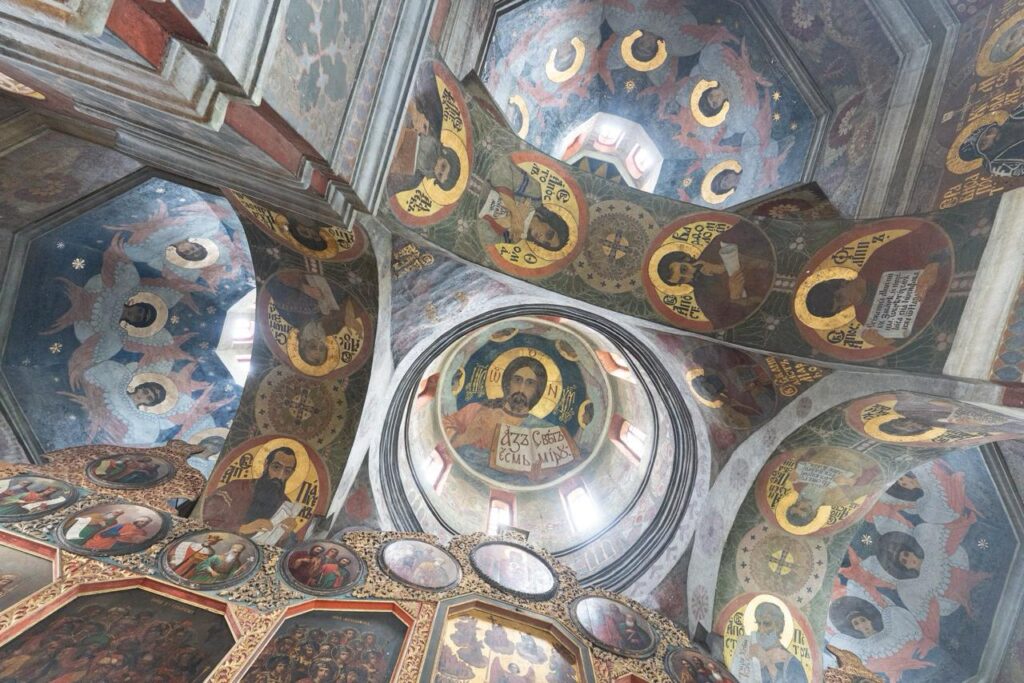
This Gospel, which speaks so much about seeing, powerfully resonates with the feast that we celebrate today – the Triumph of Orthodoxy. Historically, this feast commemorates the final defeat of the iconoclasm – a war against images of Christ, the Mother of God and the saints, which was started by the Byzantine emperor and supported by many bishops, clergy, and the faithful in the 8th and the 9th centuries. The final victory belonged to the iconophiles, who considered icons and icon veneration not only possible, but dogmatic for the Church.
Why does the reading resonate with the feast? It is because icons, too, are about our ability to see, to see in the right away, and on different levels. On one level, icons became theologically possible because God became incarnate, human, which also meant visible. Apostle Philip and Nathanael saw the living Christ and not just heard or imagined him. To defend icons, in the 8th century St John of Damascus argued that while we do not have any basis for imaging the Father, who remains invisible and unknowable, the Incarnation of the Son changes everything, and the image of Christ becomes a witness of God’s Incarnation. As a witness, the image is not only possible, but theologically necessary, including its veneration. This is about the importance of the embodiment, the physicality of the Incarnation, as well as of our own senses, our body, and aesthetics overall.
On a different level, icons have means to apophatically point to or symbolise Christ’s invisible divinity, indescribability, his radical divine otherness – as well as our ability to be divinised, to become holy. They usually do it through their rather abstracted, non-naturalistic language, non-linear perspectives, the abundance of gold, the symbolism of colours, specific inscriptions, and so on. Icons help us see God with our spiritual senses and participate in the divine life.
Most importantly, however, icons help us see God in ourselves, in other people, and in the world, and the better the icon, the more meaningful and beautiful it is, the easier it is to recognise this reality. In the Genesis, we read that God created us “in Our image” and “after Our likeness,” “our” referring to God (Gen. 1:27). In fact, every one of us is an icon of God Himself.
What does this mean for our lives? Among other things – and quite importantly – this means that we are transparent to God, just as it became obvious in the story of Nathanael. God sees us fully and thoroughly. He knows our most intimate desires, intentions, questions, and doubts. He sees us lovingly, and he sees us clearer than we are able to see ourselves. He sees the best in us. It also means that our task as Christians is to learn to see God, or, rather, to meet His gaze when He looks at us – and through His loving and caring gaze to truly see others. It also means that we have to learn to be with God so closely and so intimately, to become aware of our own image and likeness of Him so much, that if need be, we could invite others to “come and see” Christ in our midst and experience “heaven opened.”
But when and how does this really happen? When are we or when do we become such places, such communities? Can we, as Orthodox Christians worldwide, say that we are such a community today? Do we experience any Triumph of Orthodoxy? Are beautiful churches decorated with traditional icons, people kissing them and praying in front of them enough to really see Christ amid the Church today, become like Him and invite strangers to see Him there?
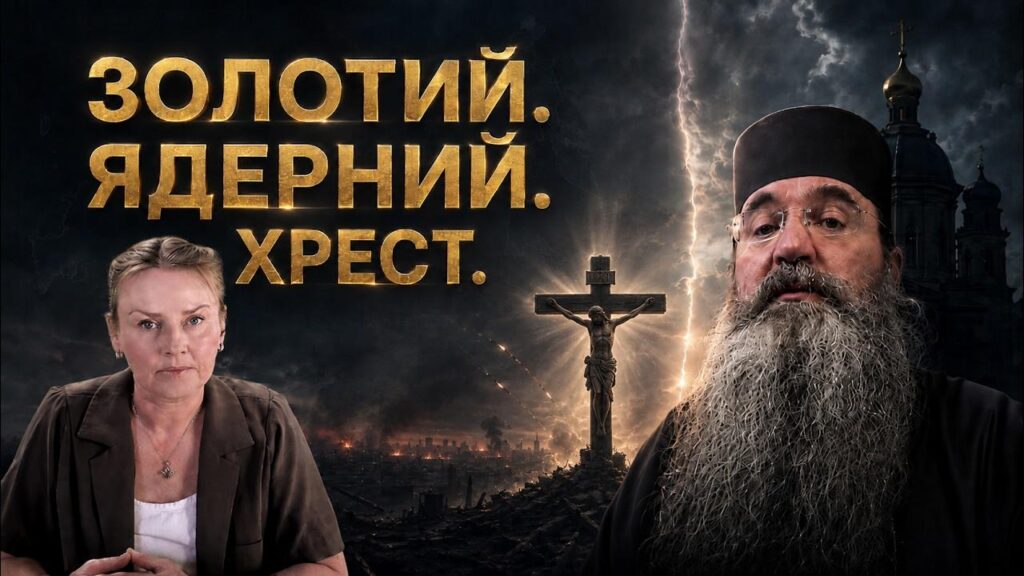
I come from Ukraine, most of whose citizens traditionally identify as Orthodox Christians. For three years, my country has been experiencing a brutal full-scale invasion by Russia, another predominantly Orthodox country, which so often boasts of being most genuinely and traditionally Orthodox on the highest church and state levels. Today, while Ukrainian air alerts sound much more frequently than people’s morning alarms, while people are found dead and wounded in their homes after Russian ballistic or drone attacks on a daily basis, while they do not want to fight but have to fight, get killed, severely wounded, imprisoned, missing, defending their loved ones and their right to simply be, the patriarch of Russia blesses the war against Ukraine with an icon of the Mother of God, calling the war holy, and most of his faithful pray for the Russian victory, kissing icons in their parishes. Meanwhile, in Ukraine, churches and icons are being destroyed, and new icons are being created on untreated boards from ammunition boxes brought from areas of heavy fighting, with the idea of witnessing Christ’s presence amidst the greatest suffering and transforming death into life. What is the Triumph of our global Orthodoxy in this situation?
In the Orthodox tradition, we often give special value to the icon of Christ’s Transfiguration as it points to the heavenly glory of our Lord, giving a glimpse of his divine light on Mount Thabor. As Orthodox Christians, we love the eschatological reality of the “world to come,” which the icons present to us; we love their “heavenly” perspective on things, seemingly detached from our too human reality, “tainted” with injustice, too much politics, and too many conflicts. Often, we simply try to escape into “another,” “otherworldly” reality – and its icons – to feel safe from the threats, confusions, temptations, and dangers of this cruel world. However, when Philip said to Nathanael, “come and see,” what was there to see for both of them was something more than a beautiful picture. As we know, having followed Him, the apostles also saw His harsh arguments with the Pharisees over the understanding of God and the Tradition; they also saw his unprecedented public support of the most vulnerable and socially marginalised – the sick, the wronged, the “unclean,” women, children and so on. In fact, the Incarnation turned out to also be about His most daring social attitudes and actions, for which the apostles finally saw Him judged, condemned, tortured, and dying on the Cross. Indeed, it was the Cross that was the most difficult thing to see and be associated with – as this seeing would have consequences! This is why most of the apostles were not near Him in the hour of His greatest suffering, preferring not to see it at all, like Peter, or to see it from afar. (Later, however, a lot of them and their future followers became martyrs for Christ, and a martyr, as we remember, means a “witness” – someone who saw something and said the truth about what had happened – in the Christian tradition, with their own blood).
In Ukraine, our present dark times do feel like the Passion of Christ, and this Passion feels much more naturalistic, realistic, and brutal than in the traditional icons. This Passion is extremely physical, but it is also psychical and even moral as the peace currently offered to Ukraine may turn into an unjust occupation, which will certainly bring even more pain, suffering, and death. Can Orthodox Christians worldwide recognize Christ being tortured in Ukraine at this very moment – as well as in other locations with euphemistic “armed conflicts”? Can they get involved, act with compassion, with the understanding that the victim does not have to be perfect – and speak the truth about what is happening to the world? Or would they prefer observing the evets from the comfortable distance of the churches decorated with beautiful icons, while sometimes acting with complicity?
Because as Christians we know the reality of the Resurrection, because we have a glimpse of eschatology in the present, we do have hope and faith, and we do trust the eschatological witness of the icons. At home, I met people who say that at some point of this war they started living the reality of the Holy Saturday: Christ has already resurrected, he is not in the Tomb anymore, and although we do not see Him, we know where He is, they say; in the traditional iconography, the icon of both the Holy Saturday and Paschal Sunday shows Christ Descending into Hell to bring Adam, Eve and the righteous out of the kingdom of death to His own kingdom of eternal life. On the Holy Saturday, He is there, in Hell, and the reality in Ukraine is hell, too, but people with faith know the reality of His Resurrection, and they live their lives from that perspective; it gives them power to pray, hope, help each other, and if need be, sacrifice their lives for their loved ones.
May this truly iconic perspective and reality illuminates each of us and inspires us to see both the Passion and the Resurrection in today’s world, to see it in the right way, without fear, to follow Christ, bear witness to the world, act out of love and compassion, for the just peace for all – and indeed experience the Triumph of “the heaven opened, and the angels of God ascending and descending upon the Son of man.”
Amen.