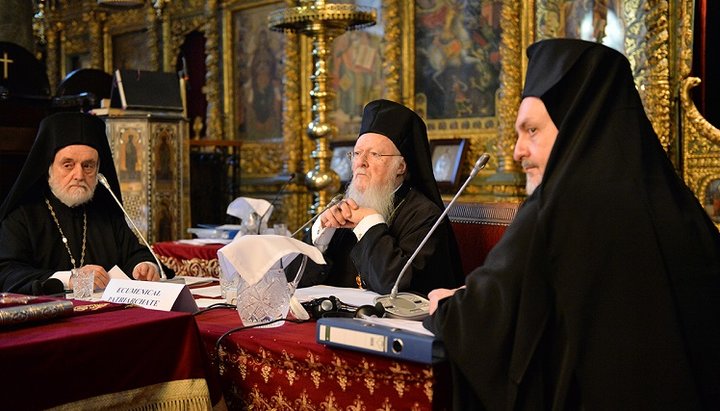
Today (October 23) has every chance to become a landmark date in the history of global Orthodoxy. This is because today, the Synods of two Churches, which have many unresolved issues between them—the Ecumenical Patriarchate and the Ukrainian Church (UOC)—are both in session. From the brief morning announcement on the official website of the Ecumenical Patriarchate, we know only that the Synod has convened in a new composition and that the Synod members had a meeting with Ukraine’s newly appointed Foreign Minister, Andrii Sybiha. There is great hope that the hierarchs of Constantinople will extend a helping hand to their brothers in the UOC, who are, in a very real sense, struggling due to the indecision and half-measures of their leadership.
There is also hope that the Synod of the Ecumenical Patriarchate will finally respond to the letters that Patriarch Bartholomew has been receiving from the faithful of the Ukrainian Orthodox Church since 2022, asking for their own stavropegion (independent from the OCU’s jurisdiction).
On the UOC’s official website, it is only mentioned that the “Primate and hierarchs of the UOC will review issues of church life.”
However, today’s Synod meeting of the UOC cannot be limited, as usual, to the official glorification of new wonder-working icons or the appointment of new vicar bishops and metropolitans. Recently, every day brings new grave surprises for the UOC (just last week, two cathedrals were seized), and since the last Synod meeting in April of this year, many problems have accumulated (and there were already plenty before then).
The key question that the Synod members are obliged to address—and, more importantly, to find a real solution to (rather than merely expressing “concern” or issuing a “strong protest”)—is: how should the Church continue to live, and what should its faithful do besides the “ascent to Golgotha” that some hierarchs suggest?
We also hope that today’s Synod decisions will be influenced, to some extent, by the recent collective appeals from clergy, calling for a complete break with the Russian Church, adding to the dozens of similar appeals from UOC clergy over the past two-plus years.
It seems that moral support for hierarchs with an outdated worldview, in favor of fully severing ties between the UOC and the aggressor nation and its church, is also being prepared today by the Kyiv Theological Academy. At last week’s scientific-practical conference “Spiritual and Secular Education: History of Relations — Present — Future,” held at the Academy, there were discussions on how the components of the “Russian World” doctrine are used by both the Russian state and the Moscow Patriarchate to ideologically justify military aggression against Ukraine. According to witnesses, Metropolitan Onuphrius, who was present at the conference, reacted positively to these ideas.
So, we await good news this evening from both the Bosphorus and the Dnipro.