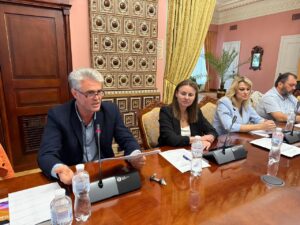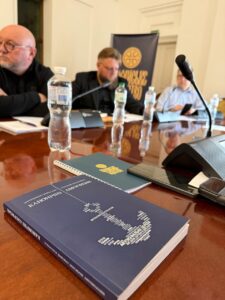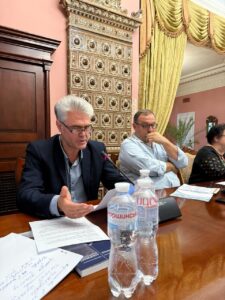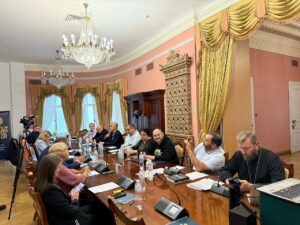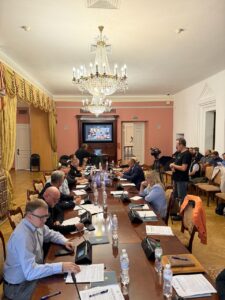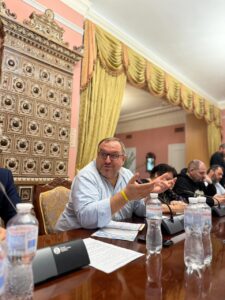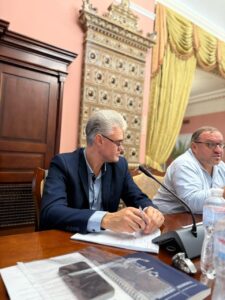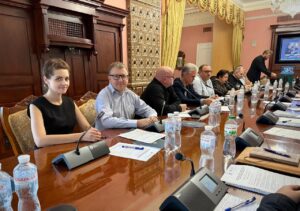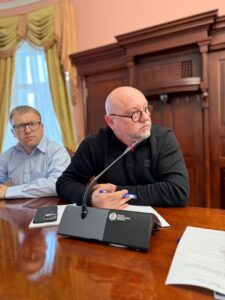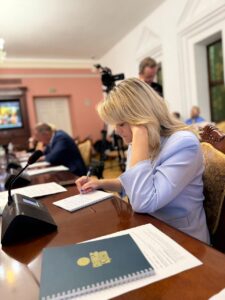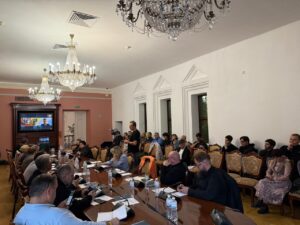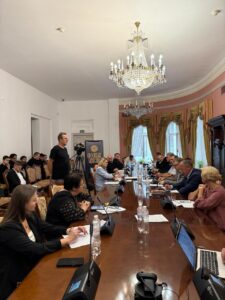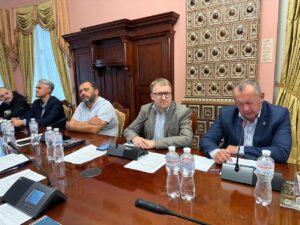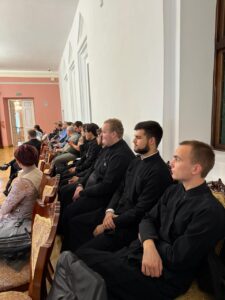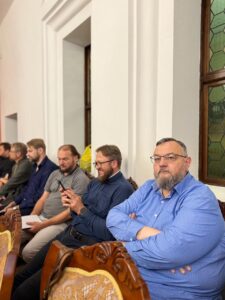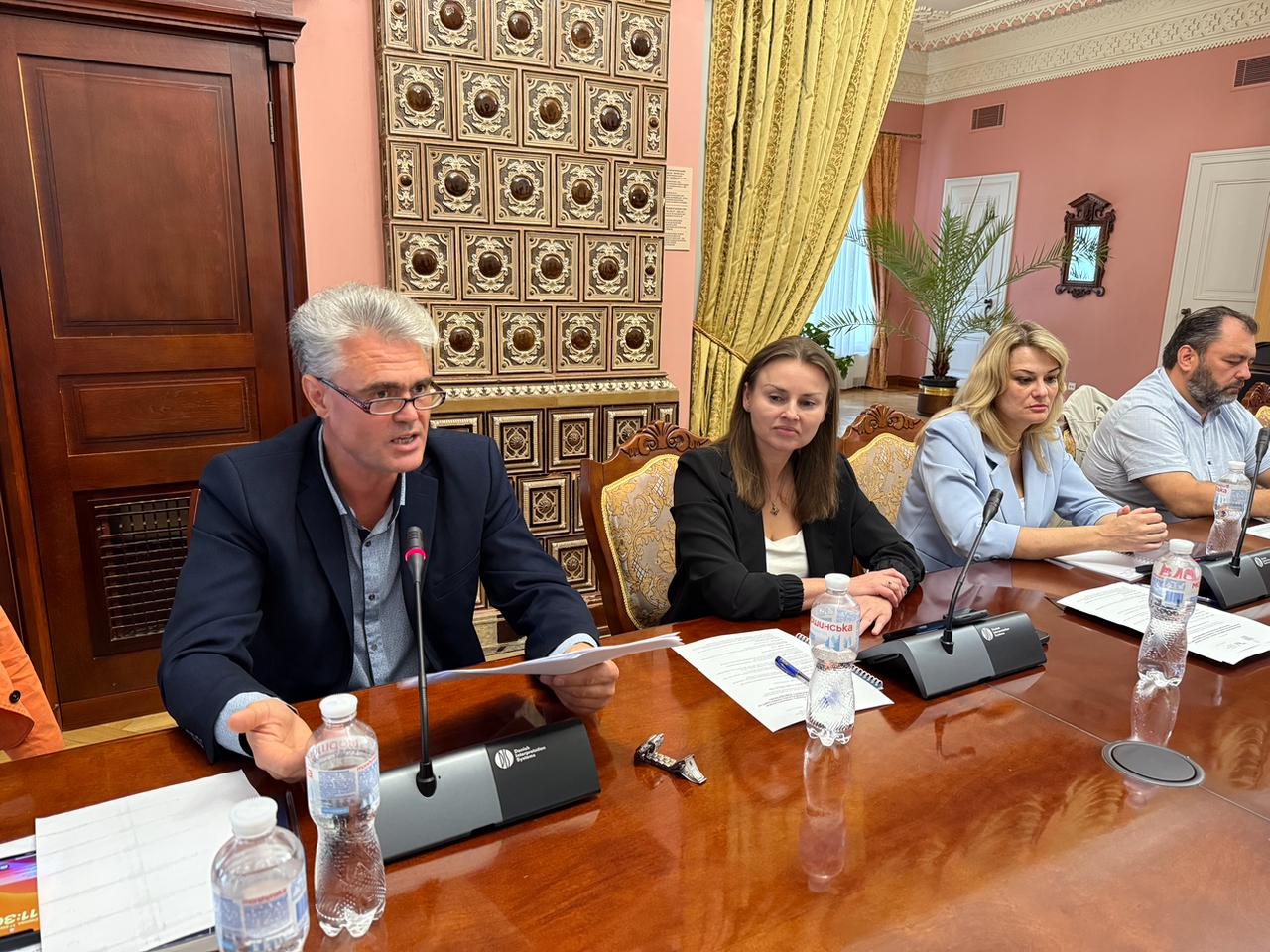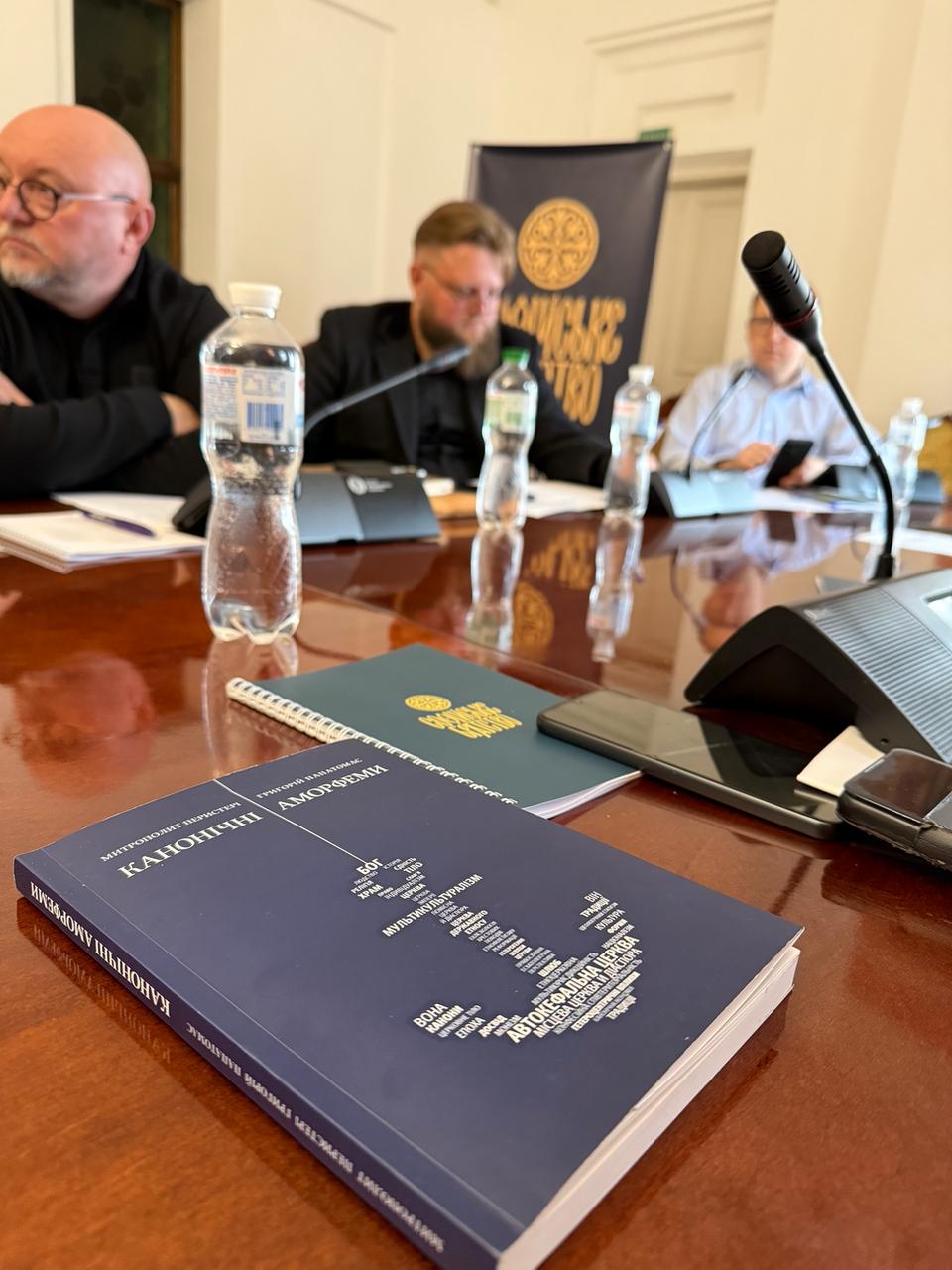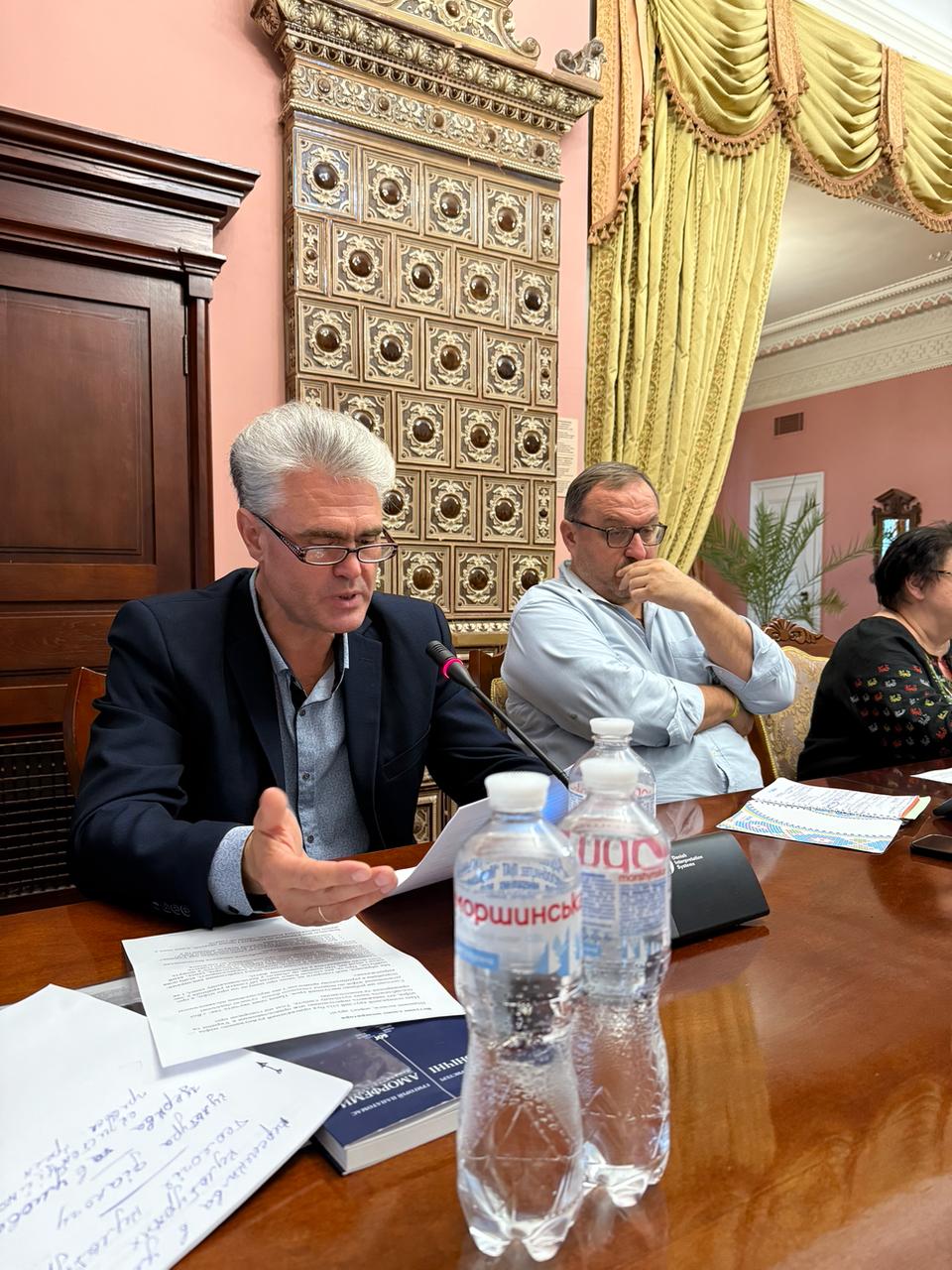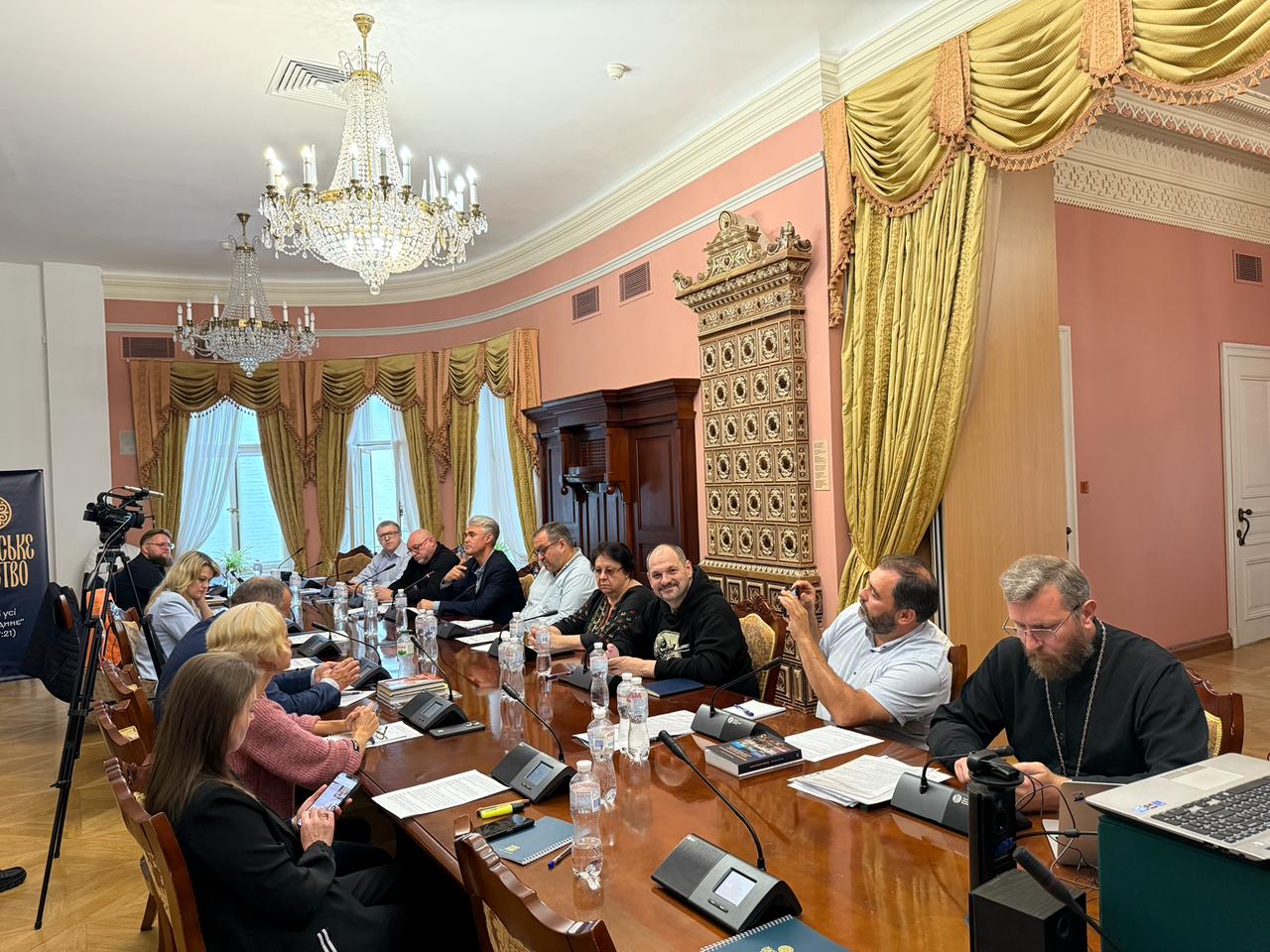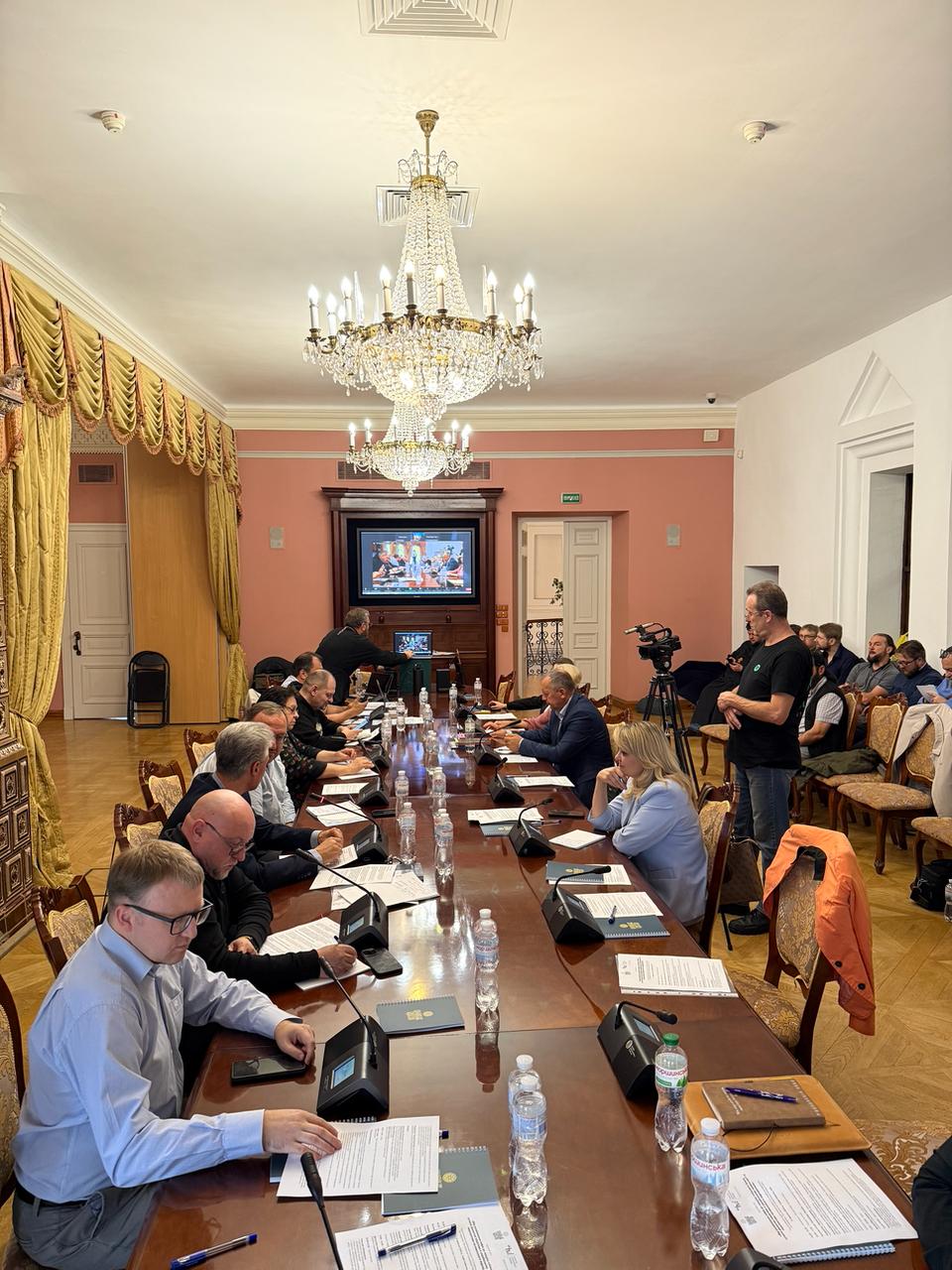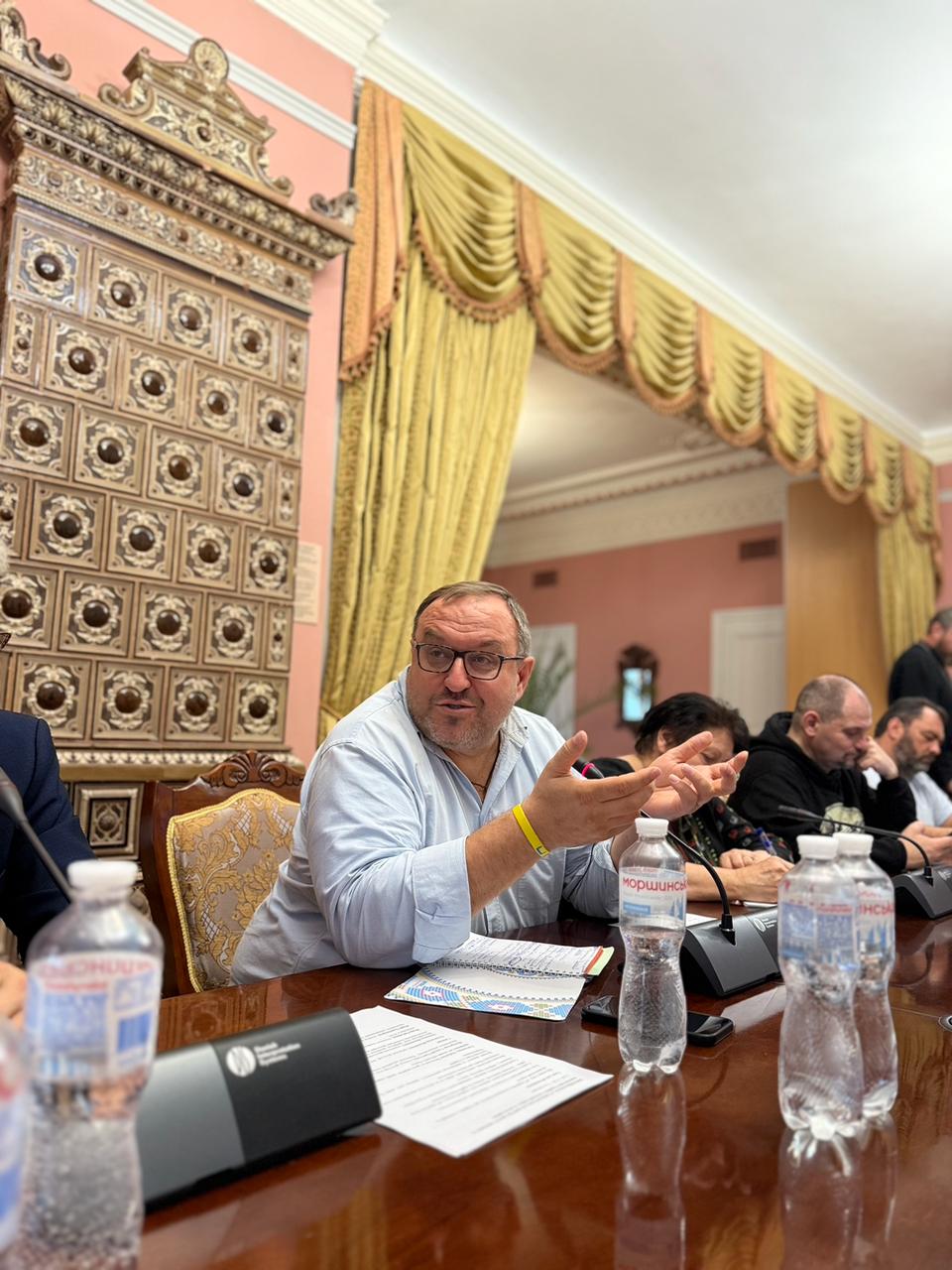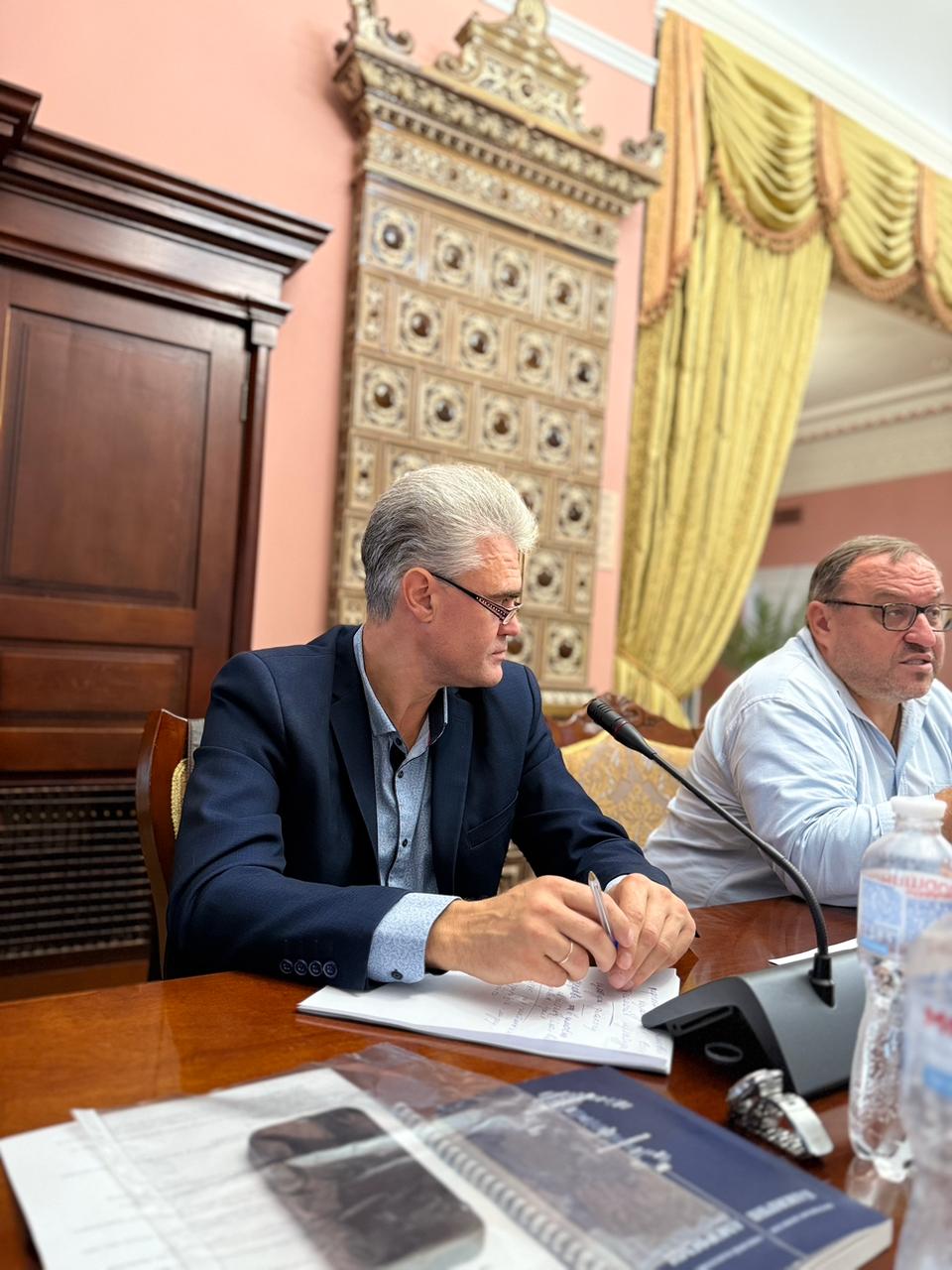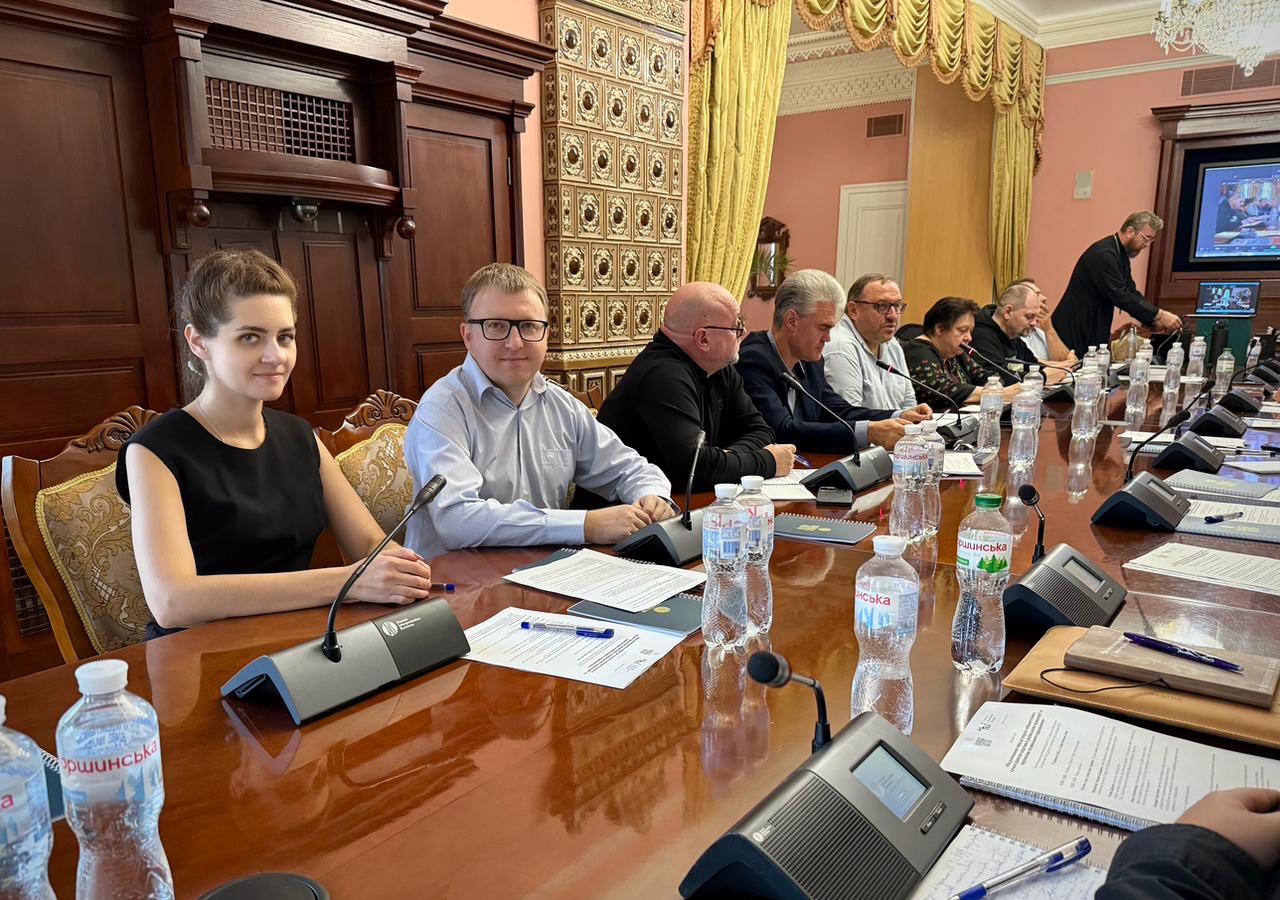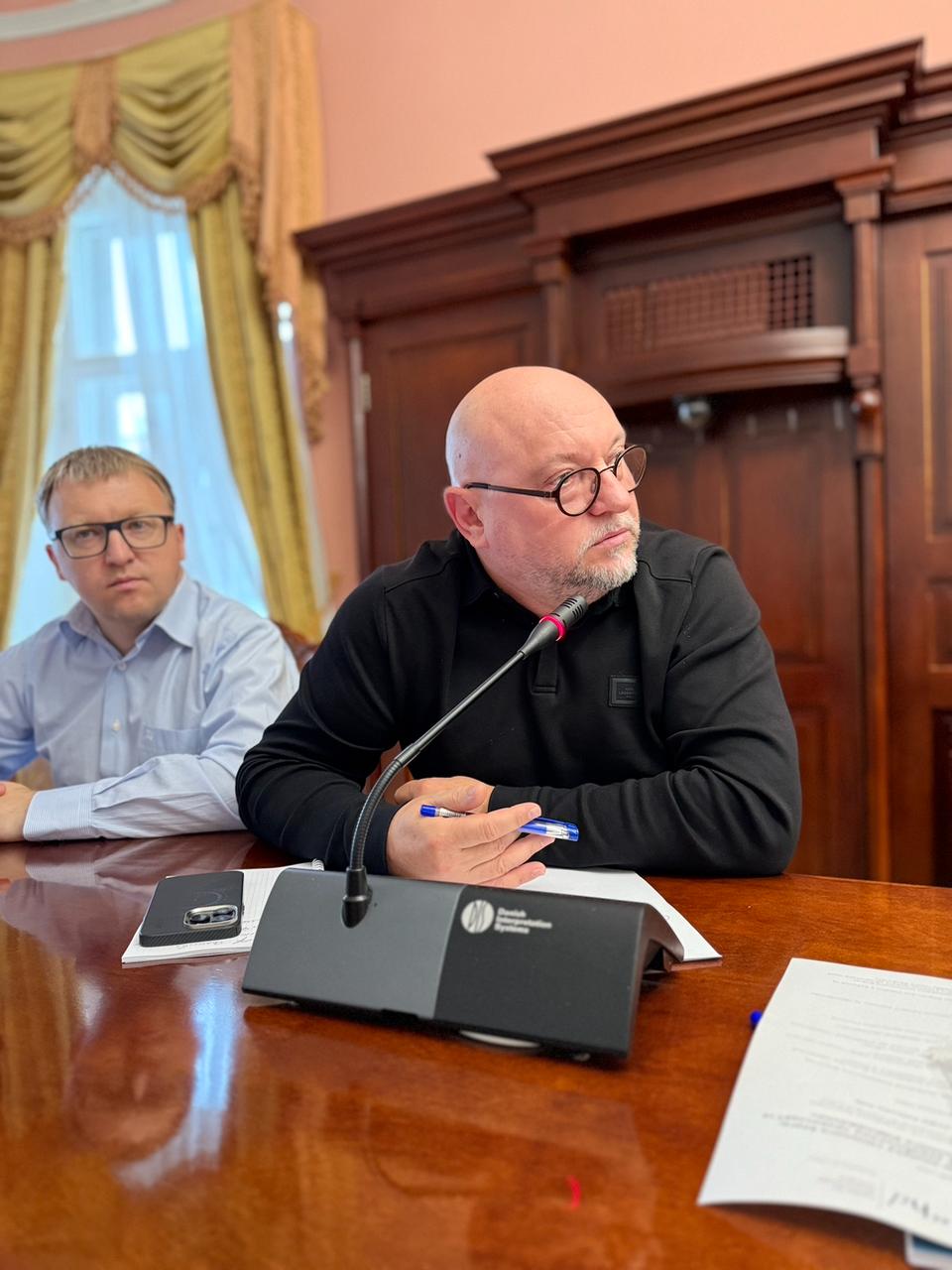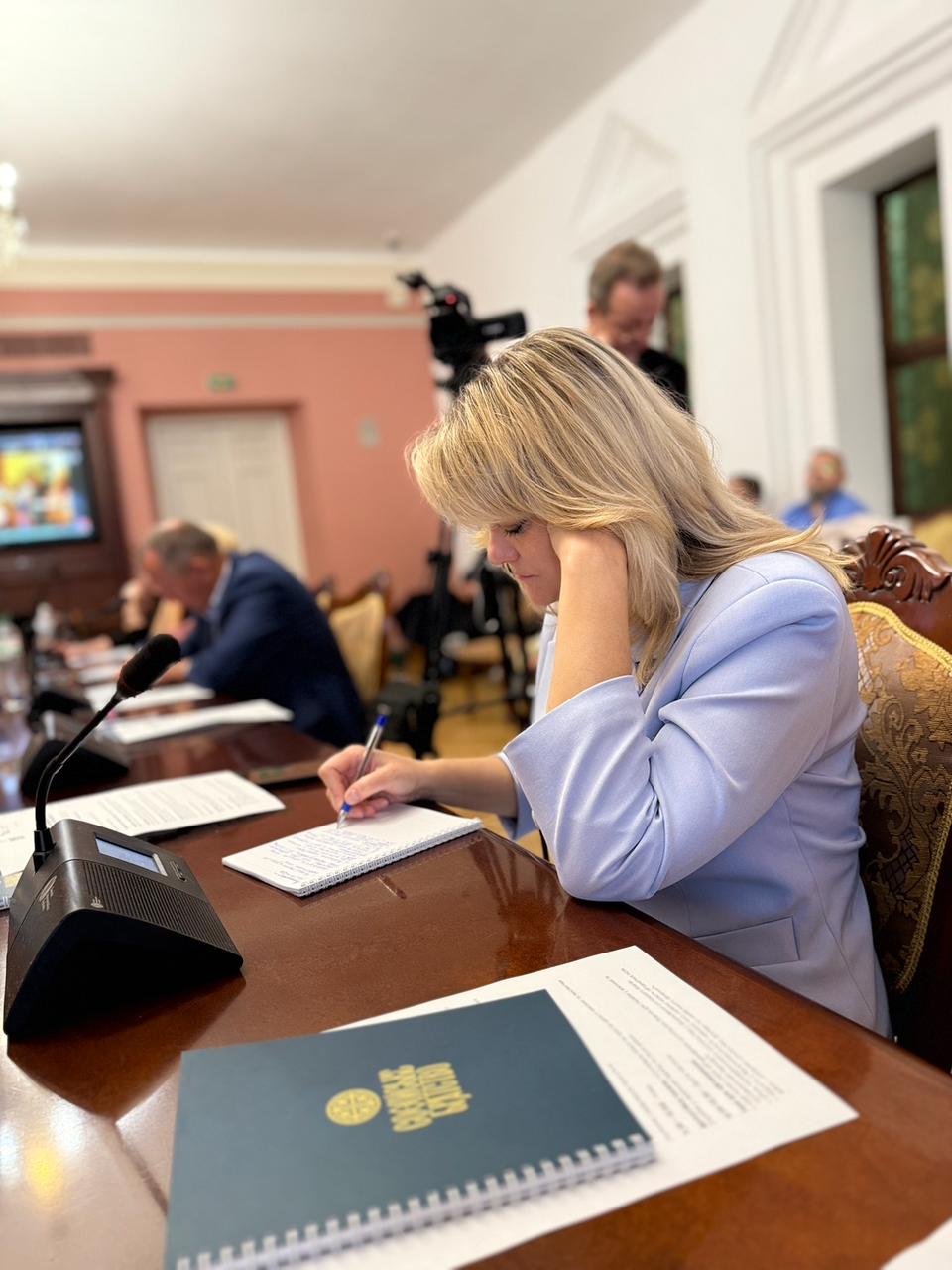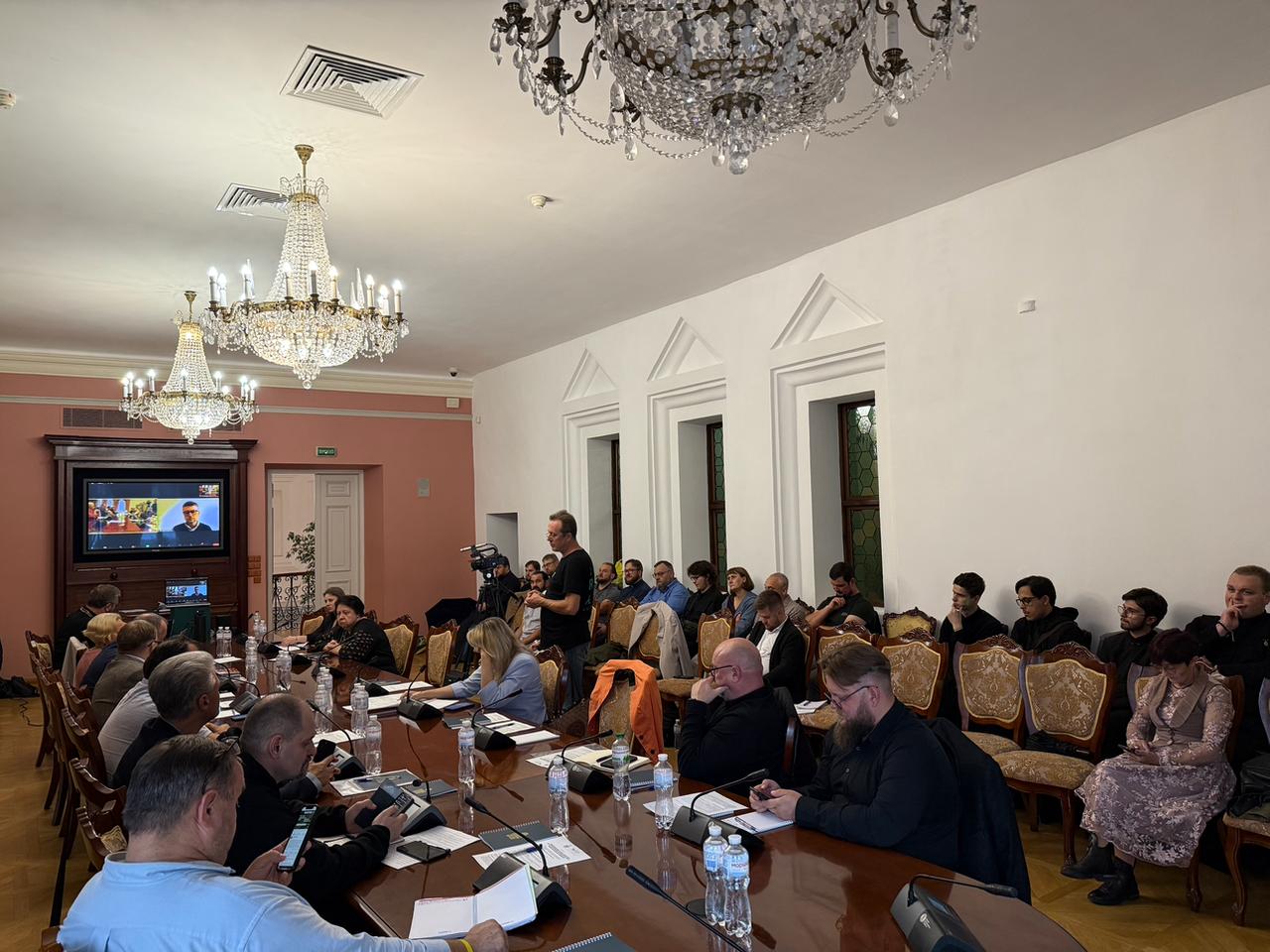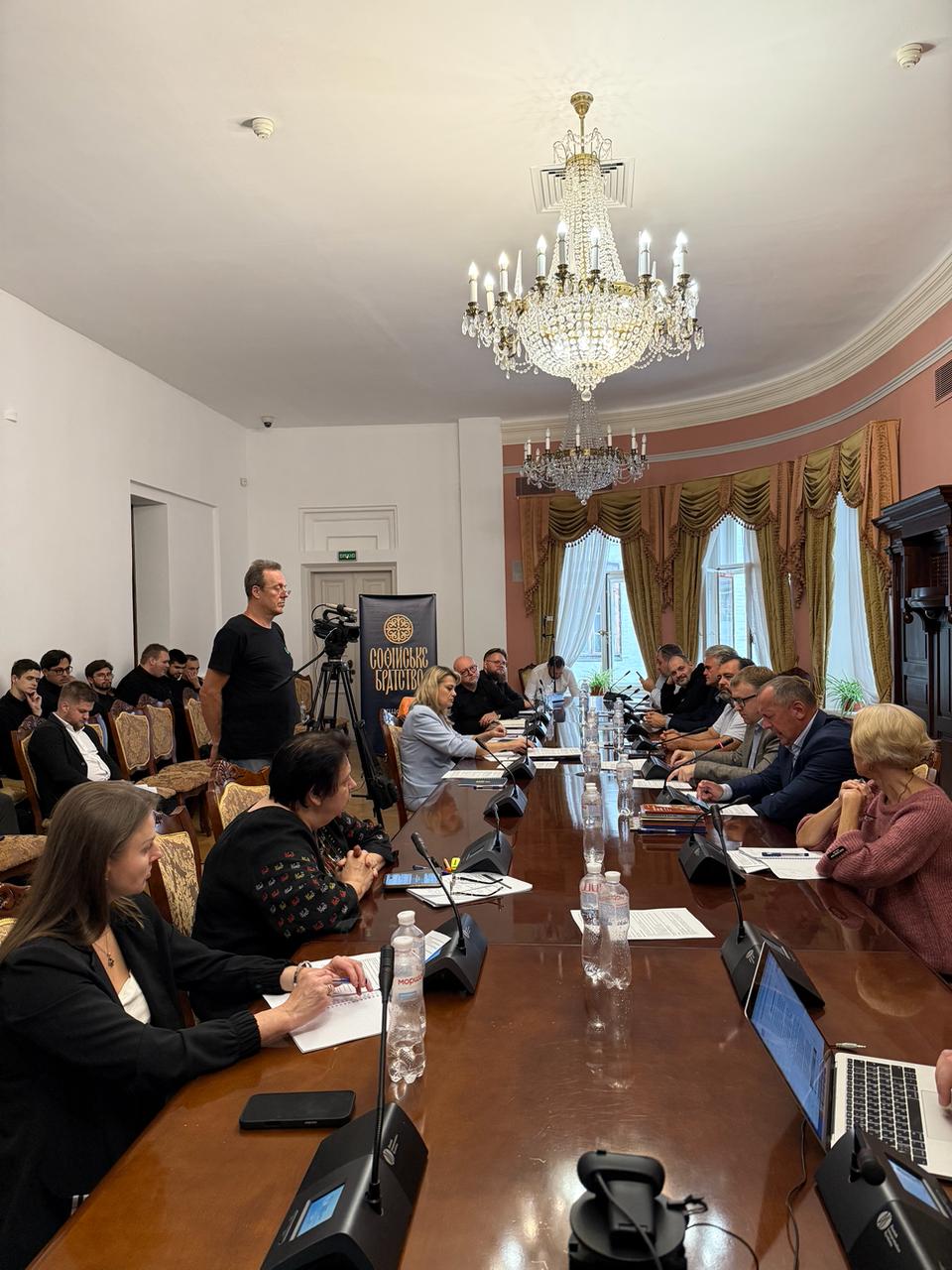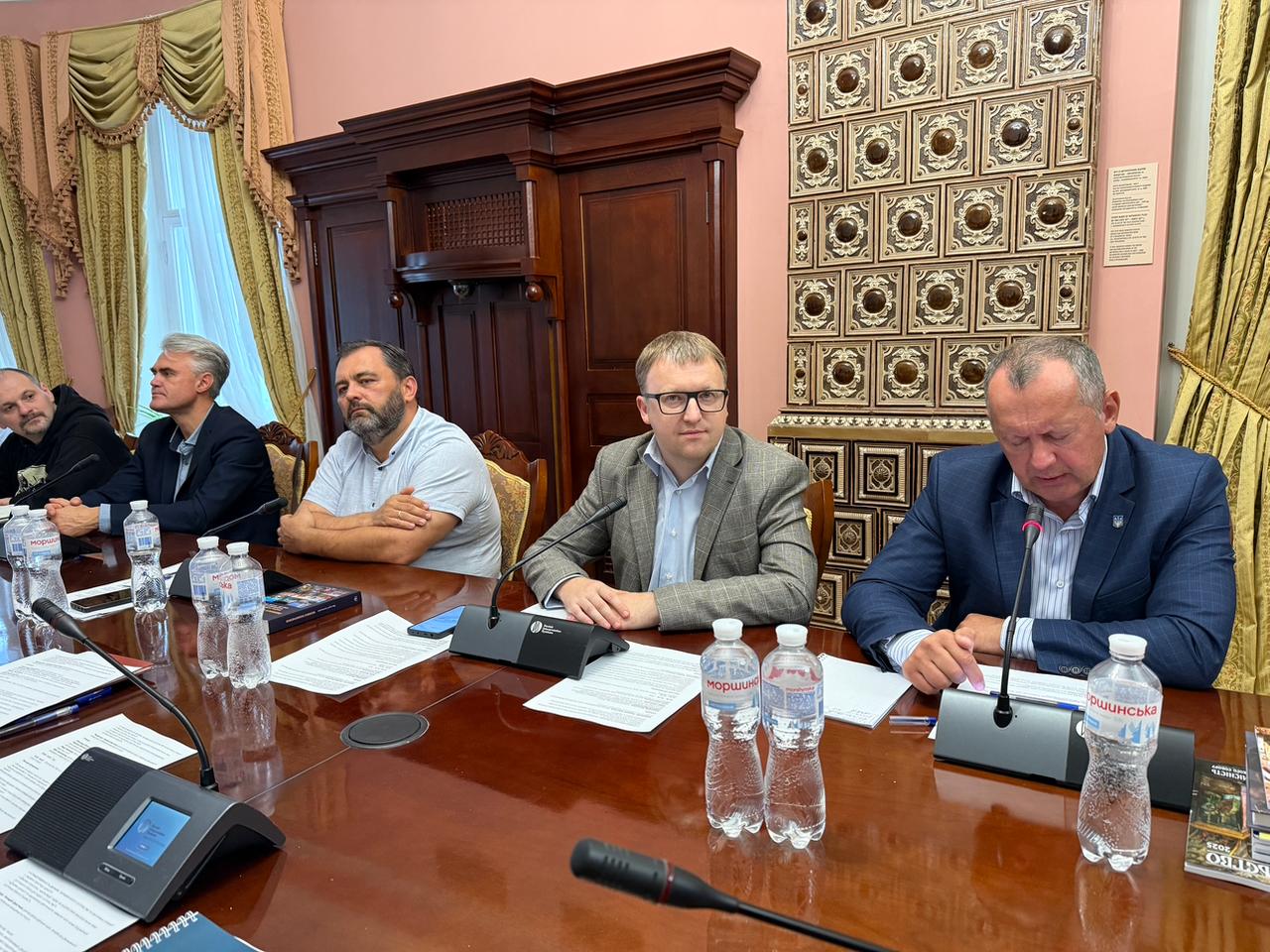
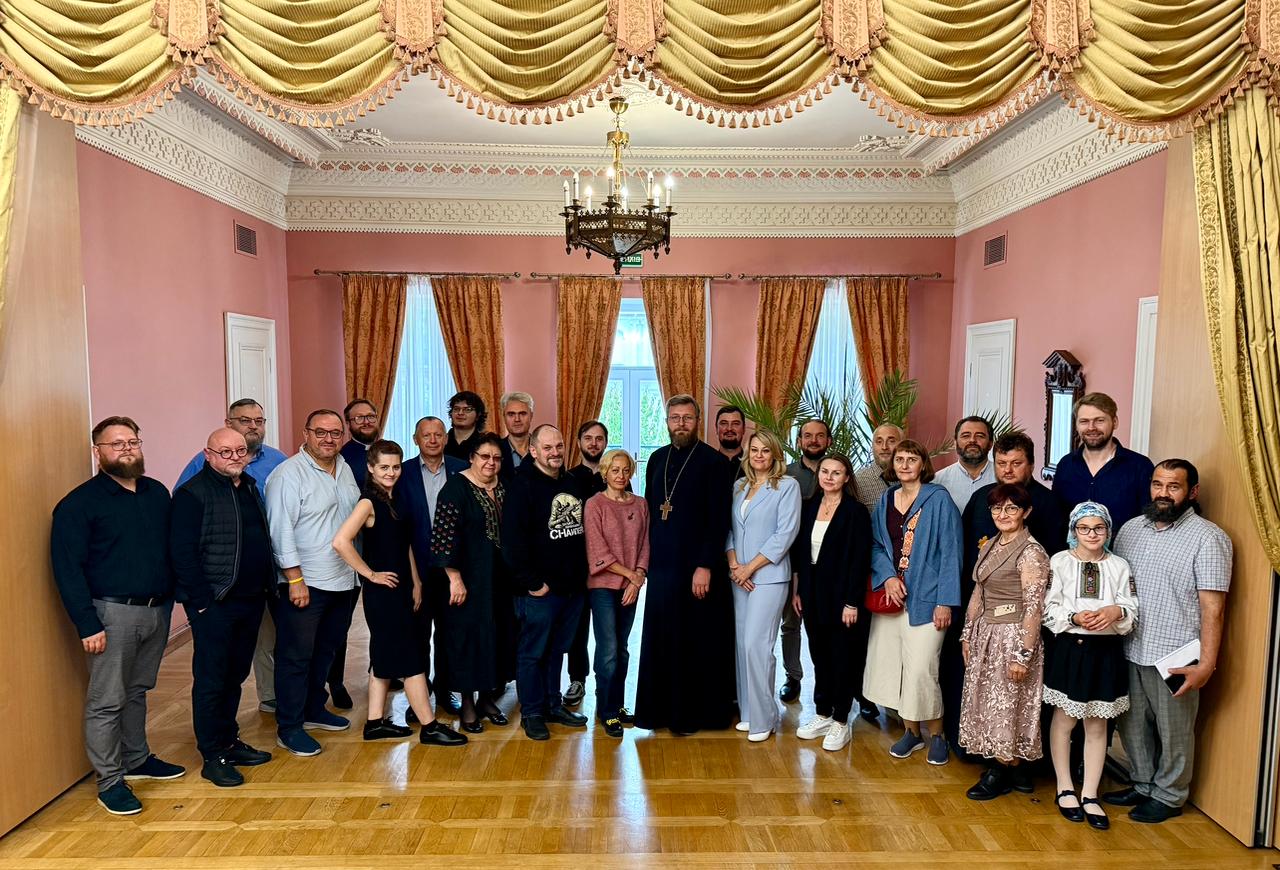
On 17 September 2025, at the National Reserve “St. Sophia of Kyiv”, the public association Sophia Brotherhood, with the support of the Renovabis Foundation (Germany) and the Centre for Humanitarian Dialogue (HD), held a round table entitled “From Debunking Myths to the Search for the Common Good: Contemporary Dialogue Initiatives in Ukrainian Orthodoxy and Prospects for Post-War Renewal.”
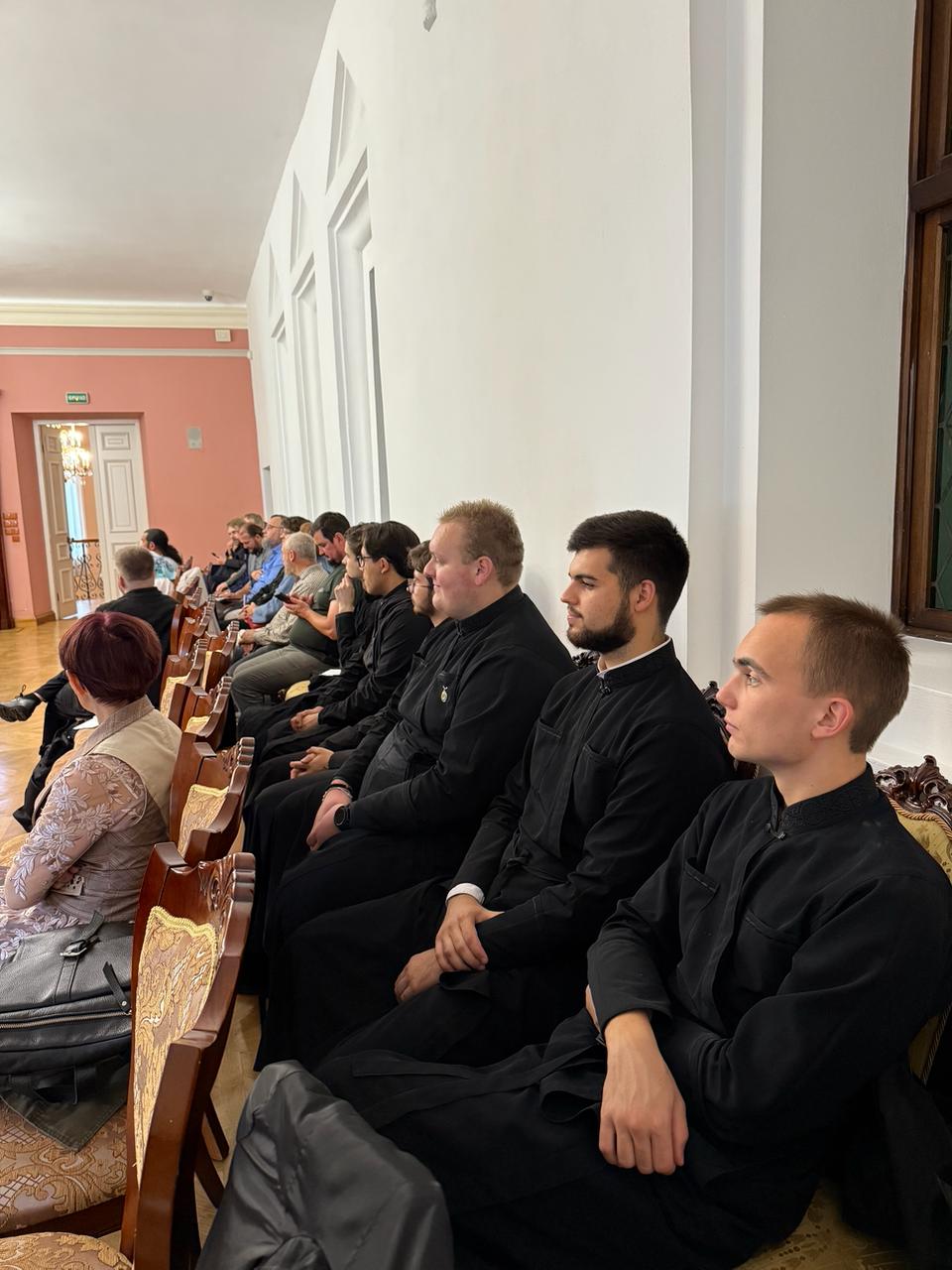
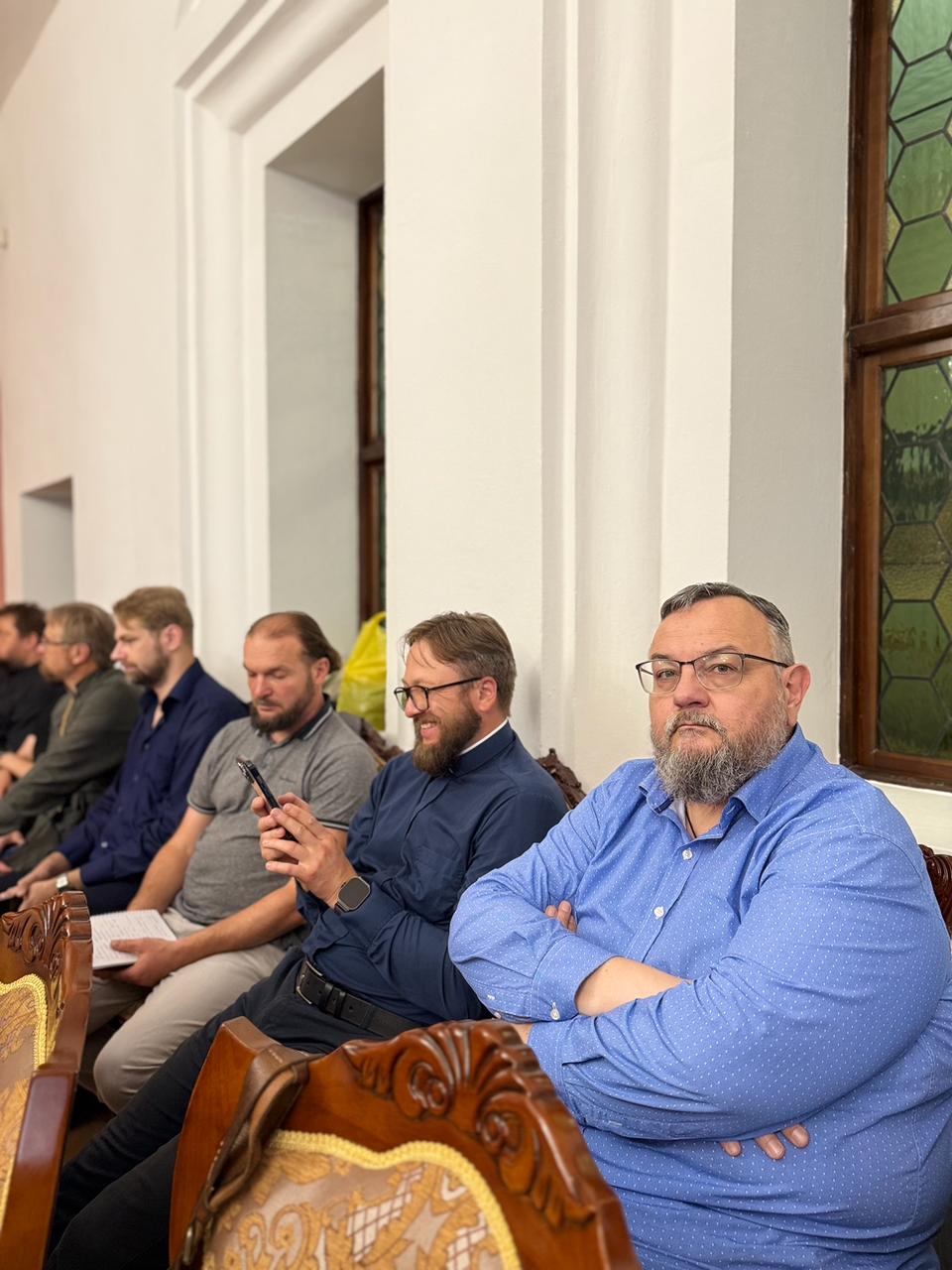
The round table brought together members of the Brotherhood as well as scholars, religious studies experts, public intellectuals, and journalists specializing in religious topics.
The event began with a moleben (prayer service) in the Warm Sophia and a welcome coffee. The first session was opened by Oleksandr Sorokin, Chair of the Brotherhood’s Board; the moderator was Maryna Burdeina, Head of Publishing Projects of the Stavropegion of the Ecumenical Patriarchate in Ukraine.
Speakers included: Tetiana Derkach, religious publicist; Ilona Sokolovska, Editor-in-Chief of the YouTube channel Viche; Hennadii Khrystokin, Doctor of Philosophy, Professor at the State University “Kyiv Aviation Institute.”
Key Highlights of the First Session
Tetiana Derkach emphasized that the Debunking Myths project teaches participants to step outside their “comfort zones.” When people write about their own pain and doubts, space for empathy emerges: polarized camps compete less in mutual suspicion and more in their ability to understand one another’s motivations. The format of reflective writing slows the pace, gives readers time to “let emotions settle,” and shifts discussion from quick reactions to considered judgments. In such conditions, labels are gradually replaced by arguments, and the urge to “win an argument” gives way to a desire to clarify positions. A particular value lies in reflective columns (“thinking aloud”), which normalize acknowledging one’s own mistakes and soften the tone of debate. Audiences increasingly perceive otherness as a resource for shared understanding of complex issues.
Ilona Sokolovska (Viche YouTube channel) stressed that high-quality moderation and an attentive tone transform the culture of commenting. Where emotional outbursts once dominated, clarifying questions, references to sources, and attempts to accurately summarize an interlocutor’s position are now more common. Viche has become a meeting platform for different church milieus, governed by shared rules of politeness, goodwill, and honest argumentation. Audiences increasingly expect not “sharpness” but substance: longer conversations with consistent explanatory logic are seen as the norm rather than a “boring exception.” This reduces conflict intensity—people are drawn to the chance to “hear things through,” not react to fragments. As a result, there is a growing demand for dialogue rather than “battle,” which gradually carries over into broader church and civic discussions.
Hennadii Khrystokin proposed viewing the “common good” as a horizon that helps move from competition of identities to a space of shared responsibility. His perspective is not “who is right,” but “how we live together,” with dignity, freedom, human rights protection, mutual forgiveness, and responsibility for history as guiding criteria. In this context, he referred to Metropolitan Gregory (Papathomas)’s work Canonical Amorphemes as a tool for identifying distortions of church-legal thinking– where canonical rhetoric replaces Gospel content or becomes an instrument of manipulation. Such analysis clears the ground for an honest conversation about unity. At the same time, he emphasized the need to orient oneself toward the ecclesiology of the Ecumenical Patriarchate as a methodological guide: the priority of conciliarity, the restoration of Eucharistic communion, and adherence to canonical order can become a shared language for overcoming mutual suspicions. Against this backdrop, autocephaly appears not as the “property” of an institution, but as a space of unity in which different communities learn to coexist without losing their own identities.
Discussion and Responses in the First Session
During the Q&A, participants clarified that unity does not mean rapid institutional merger. Rather, it implies long-term “bottom-up” work—through local initiatives, conversations, and shared efforts. It was emphasized that autocephaly should be understood as a meeting space for the fullness of Ukrainian Orthodoxy, not the property of a single jurisdiction; prospects for rapprochement should be sought in the ecclesiology of the Ecumenical Patriarchate and a culture of dialogue, rather than in top-down administrative decisions.
History emerged as a separate topic — as a field of reconciliation. From the audience came a proposal to jointly create a modern, максимально de-ideologized history of the Kyiv Metropolis as a tool for removing manipulations and rebuilding trust among different Ukrainian Orthodox milieus. The speakers supported the idea: history is often used as an extension of ideology, and thus needs to be returned to a scholarly framework with a unifying meaning.
Participants also discussed for whom the Brotherhood’s initiatives are intended. Despite active participation from the diaspora, most of the audience is in Ukraine; bot-attack attempts occur, but moderation and an “identified participation” format reduce their impact. Unexpectedly, rural audiences proved highly engaged—an evening online dialogue became a convenient way for many to participate.
Summarizing the exchange, media professionals noted a shift in tone: from mutual labeling to a desire to argue substantively and seek shared solutions. Across several discussion cycles, audiences of differing convictions converged, among other things, in rejecting the ideology of the “Russian world.” The team emphasized that their priority is not chasing views, but the quality of conversation, which reduces conflict and teaches how to distinguish facts from manipulation.
At a practical level, participants proposed moving from simple “networking of acquaintances” to coordinated joint action: uniting dispersed platforms, distributing concrete tasks, and engaging church communities in broader strategies for post-war recovery. The idea of synergy between secular and church teams, participants agreed, has significant potential.
Second Part of the Round Table
Discussion Panel: “The Common Good as a Space of Unity: Challenges and Prospects for Ukraine During Wartime and After the War”
This panel constituted the second part of the round table organized by the Sophia Brotherhood with the support of the Centre for Humanitarian Dialogue (HD). The moderator was Hennadii Khrystokin, Doctor of Philosophy, Professor at the State University “Kyiv Aviation Institute.” The discussion revolved around the question of which meanings can unite Ukrainians during wartime and in the post-war period, where the state, civil society, and religious communities intersect, and how to safeguard the notion of the common good from populism and manipulation.
Speakers’ Contributions
Oleksandr Filonenko — public philosopher, theologian.
Filonenko urged a sober view of reality: “There will be no idyllic post-war condition,” and therefore Ukraine needs a theological reflection on peace amid war, not only “after victory.” “We are always in a state of war… we must work hard so that peace exists at least somewhere,” he stressed, calling this a primary task for Christian communities.
A key to this work lies in semantic wars—wars over meaning. He described anomie as the loss of meaning afflicting society and proposed moving from a “language of values” to a language of virtues—practices that shape character and a culture of coexistence: “Christianity is the language of virtues.”
He also highlighted the role of cities: religious communities as “carriers of a city’s meanings” can create public spaces of unity—from local memory to a “new geography of holiness” and the reinterpretation of national shrines.
Liudmyla Fylypovych — Doctor of Philosophy, Professor, Leading Researcher at the Department of Religious Studies of the Institute of Philosophy, NAS of Ukraine.
Fylypovych emphasized the quality of the discursive space and the need to coordinate intellectual efforts: “A think tank is definitely needed”—an institution that stitches together academia, churches, and civil society. She noted the positive dynamics of the meetings: “We are drawing closer… so that this distance becomes smaller, so that we can indeed be closer.” Her focus was unity without coercion—through systematic communication and the development of shared standards of public dialogue.
Fedir Raichynets — theologian, Head of the program Theology of Transformative Leadership at UETS.
Raichynets outlined a Christian perspective on peace: “Blessed are the peacemakers…”—in wartime, here and now. “Shalom is not about the absence of the negative; shalom is about the presence of the positive,” he explained, emphasizing the inseparability of peace and justice: “We cannot speak about peace without speaking about justice.” Interpreting “I came not to bring peace but a sword,” he read the “sword” as a distinction between peace through violence and peace through justice, calling for communities that take responsibility for the vulnerable, especially veterans.
Yurii Chornomorets — Doctor of Philosophy, Professor at the Ukrainian State University named after M. Drahomanov.
Chornomorets diagnosed the cultural wars of postmodernity: “we live in an era of relativism,” where truth, good, beauty, and justice are eroded. He criticized patterns that make dialogue impossible—anti-intellectualism, conspiracy thinking, and a “cult of action” without truth (“action takes primacy over truth”)—and proposed an exit toward a broader cultural worldview beyond populism and manipulation: “the eternal Gospel is always relevant, and living Orthodoxy always flourishes if it is not hindered.”
What Participants Debated
• Unity (administrative) ≠ rapid merger. Priority lies in long-term bottom-up work: local initiatives, cooperation between communities and churches, and cultivating a language of trust rather than awaiting instant top-down solutions.
• Meanings versus relativism. Filonenko’s line (semantic wars, language of virtues) converged with Chornomorets’s warning about relativism and the “cult of action”: without intellectual discipline, the “common good” becomes a weapon of cultural wars.
• Institutions of memory. Participants discussed public places of unity—from local pantheons to national shrines (including the Lavras)—as material “anchors” of the common good, provided they are filled with living meaning.
• Coordination of milieus. Fylypovych’s proposal for a “think tank” gained support as an antidote to populism and fragmentation—a hub to maintain discourse quality and cooperation among academia, churches, and civic actors.
Source: facebook.com