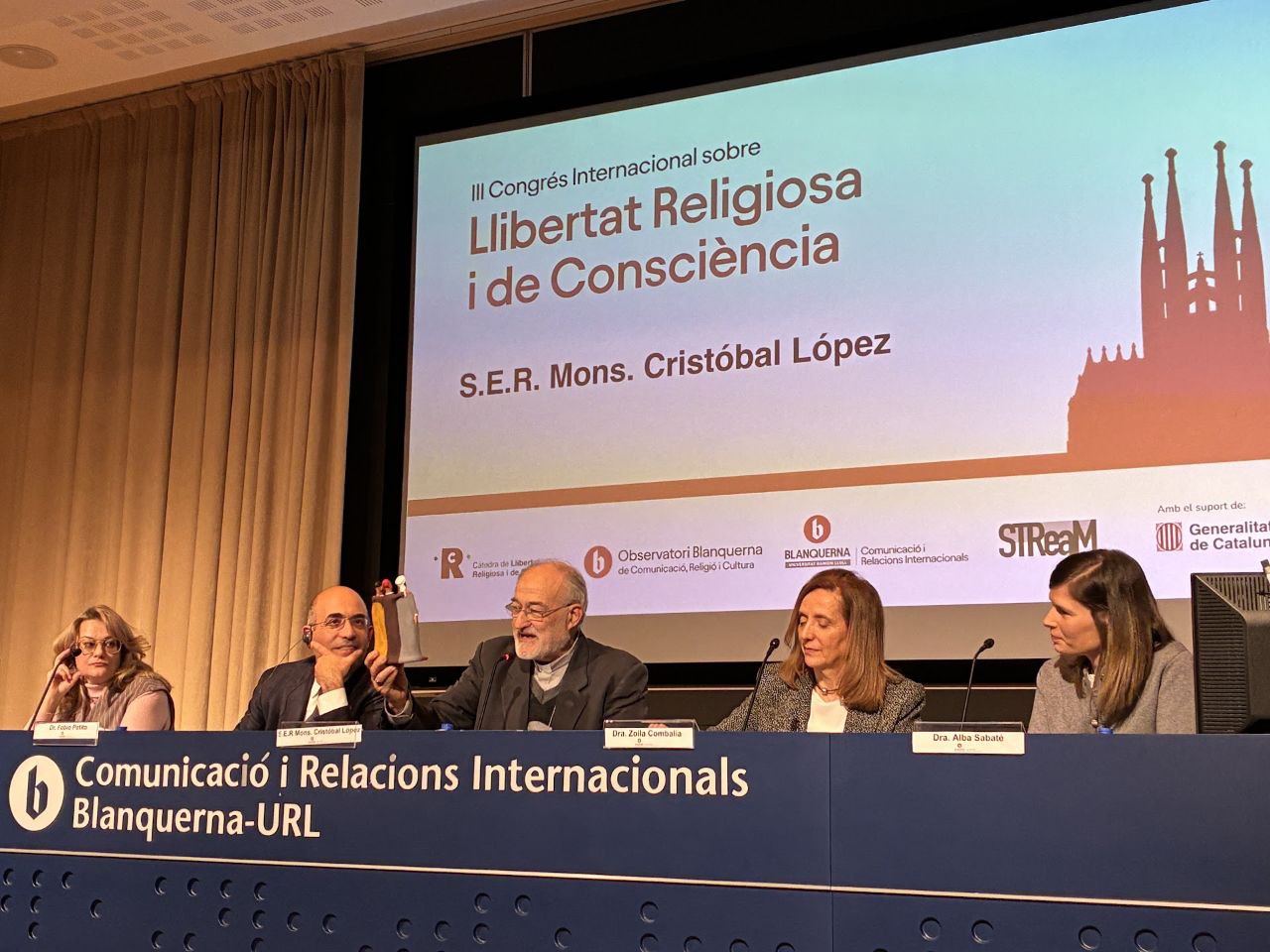
A presentation by religious publicist Tetiana Derkach at the Third International Conference on Freedom of Religion and Belief (Barcelona), organized by the Chair of Religious Freedom and Conscience of Catalonia and the Blanquerna Observatory on Media, Religion and Culture.
Dear Ladies and Gentlemen,
És un honor per a mi haver estat convidada a participar en aquesta conferència, i agraeixo profundament als organitzadors la seva invitació (catalan: it is an honor for me to be invited to take part in this conference, and I sincerely thank the organizers for their invitation).
Today I would like to talk about very sensitive issue for Ukraine: the relationships between the two largest Orthodox jurisdictions – autocephalous OCU and UOC under Moscow patriarchate and its impact on freedom of religion in the context of war. This issue is very complex because it lies at the intersection of religion, politics — even geopolitics — national security, and human rights. The relationships between these churches are very important, because ghe outline the framework of our understanding of religious freedom.
After gaining independence in 1991, Ukraine faced not only political but also religious transformations. At that time, an Orthodox split emerged as a reaction to political liberalization and the formation of a new national identity. Alongside the Ukrainian Orthodox Church under the jurisdiction of the Russian Orthodox Church, a new structure appeared — non-canonical Kyiv Patriarchate, which quickly gained public support. For many years, this split remained local and did not involve serious physical confrontation, but over time it became highly politicized and radicalized.
Ideologically, this conflict reflects a clash between an anti-Soviet civic Ukrainian identity and the expansionist concept of the “Russian world,” although both ideologies are based on religious motives. Unfortunately, from the very beginning both church jurisdictions built mutually exclusive projects. Each considered itself the only true one: the Ukrainian Orthodox Church as canonical, and the Kyiv Patriarchate as popular and patriotic.
For many years, the Ukrainian state followed a so-called multi-vector political approach and therefore supported the active presence of Russian interests, represented by the Ukrainian Orthodox Church of the Moscow Patriarchate. This church structure had many privileges and actively participated in the political process. Its opponent, the Kyiv Patriarchate, became associated with the movement for real freedom of religion and religious pluralism.
Unfortunately, churches in Ukraine often understood freedom of religion mainly as freedom for themselves, not as a universal right. As a result, each church built its own lobbying networks, and state policy became inconsistent and situational.
A new phase of the conflict began in 2018, when the Ecumenical Patriarchate, at the request of the Ukrainian authorities and believers, decided to grant autocephaly to the united Orthodox Church of Ukraine. This decision was motivated, among other things, by the desire to restore the priority of religious freedom and human dignity. It was expected that this step would open the way to reconciliation. In practice, however, most of the Ukrainian Orthodox Church ignored the unification process and moved into strong opposition to both the new church and the state.
Russia and the Russian Church organized a global campaign to demonize the Ecumenical Patriarch and invested significant resources to prevent the new church from being recognized by world Orthodoxy. Personal rivalries between church leaders further deepened the division. The new church — the Orthodox Church of Ukraine — chose a strategy of absorbing the Ukrainian Orthodox Church through parish transfers and redistribution of church buildings, sometimes using force. Against this background, dialogue between the churches became almost impossible. Both churches placed institutional survival above common faith, reconciliation, and dialogue.
The situation became much worse due to open Russian aggression.
The Russian Orthodox Church effectively sacralized the war by presenting it as “holy.” Unfortunately, some believers, clergy, and bishops of the Ukrainian Orthodox Church of the Moscow Patriarchate supported Russia’s position, which sharply undermined public trust in them. The war deepened emotional trauma, and in society religion began to be seen not only as faith, but also as a marker of political and security loyalty.
One of the most sensitive issues is the transfer of parishes. Formally, these processes were supposed to take place according to legal procedures and the will of religious communities, but in reality they were not always transparent and were sometimes accompanied by external pressure or conflict. The Orthodox Church of Ukraine, seeking to quickly strengthen its institutional presence, at times chose forceful solutions. In response, the Ukrainian Orthodox Church focused on defending its positions, including through an active international campaign with the participation of Russian diplomats and the Russian Orthodox Church, which in Ukrainian society is often perceived as confrontational or even “betrayal.”
Neither the state nor society was prepared for the fact that Russia would deliberately and systematically use its affiliated religious structures as instruments of geopolitical influence. As a result, the Ukrainian parliament adopted a very controversial law banning the activity of the Russian Church in Ukraine and religious organizations affiliated with it. From a human rights perspective, this law is highly problematic, as it introduces collective responsibility based on institutional affiliation and it does not solve the problem of countering the instrumentalization of religion.
Paradoxical, but I would not describe these measures as persecution of religious organizations on religious grounds. There is no forced conversion to another faith or renunciation of Christianity. Unfortunately, there are no ready and effective protocols to neutralize the instrumentalization of religion by an aggressor state. I must state that there is a “blind spot” in international law that protects religious rights.
During the full-scale invasion, documented cases of collaboration with the aggressor in occupied territories further strengthened the perception of the Ukrainian orthodox church under Moscow patriarchate as a security risk rather than an “ideal victim.”
At the same time, Russia’s full-scale war triggered a deep process of internal self-reflection within the Ukrainian Orthodox Church. Protest movements emerged — from symbolic refusal to commemorate Patriarch Kirill to open calls to break institutional ties with the Russian Orthodox Church. These groups clearly require a differentiated and sensitive approach, as they cannot be treated as a single security threat.
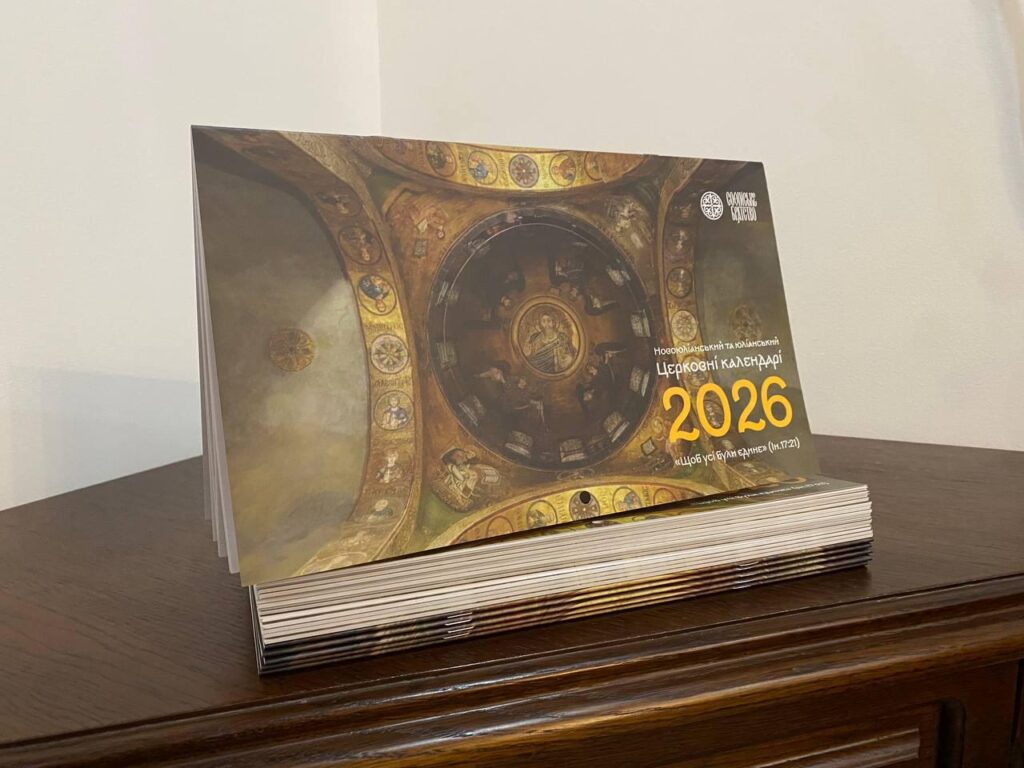
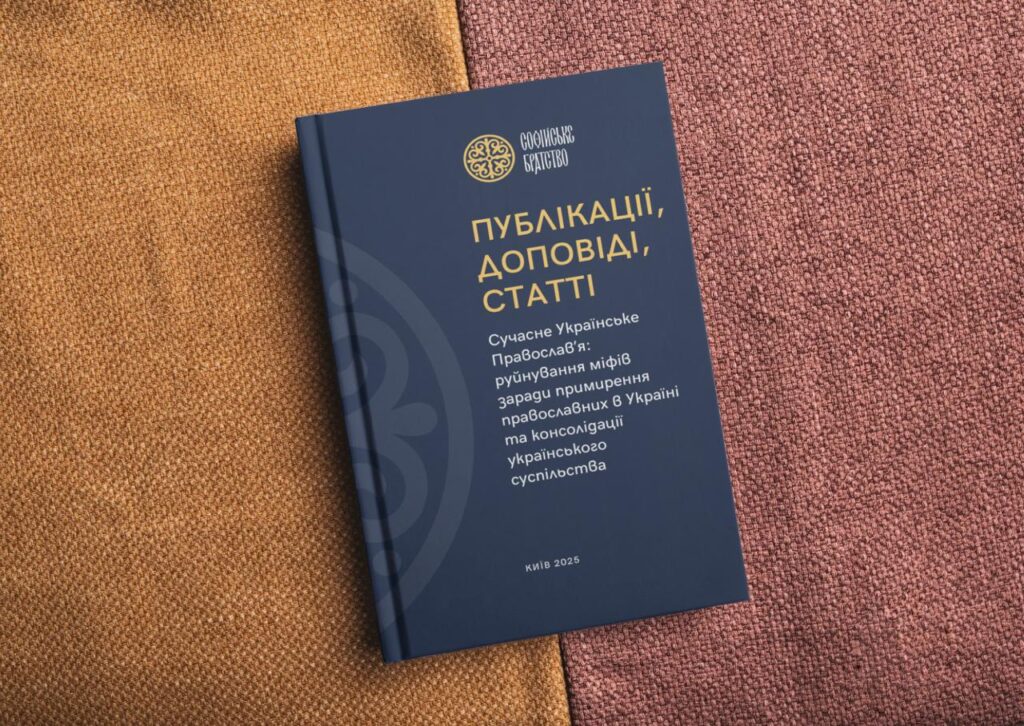
And we gave a positive example of dialogue. In April 2024, a civic organization called the “Sophia Brotherhood” was established, bringing together well-known priests from both churches, theologians, journalists, and intellectuals. The main goal of the Brotherhood is to promote inter-Orthodox dialogue in order to achieve unity of Ukrainian Orthodoxy. I have the honor to represent the Sophiian Brotherhood and to cooperate with its wonderful team.
Although the Ukrainian state has not yet developed a coherent policy toward this internal diversity, it is beginning to realize the need to combine security measures with support for religious transformation. There is growing understanding that countering the instrumentalization of religion should not lead to collective punishment. This shows Ukraine’s commitment to democratic principles even during war. At the same time, it must be admitted that there are still no adequate standards or protocols for freedom of religion in situations of large-scale armed aggression and religious instrumentalization.
The Ukrainian experience shows that the future of inter-Orthodox relations depends not only on state decisions or the security context, but also on the ability of the churches themselves to reflect and take responsibility for the escalating the conflict and make a conscious choice in favor of dialogue, shared responsibility, and openness.
Thank you for your attention!
Дякую!